Gulu, Uganda – Uganda AIDs Commission Mid-North Zonal Coordinator, Victor Rwengabo, says Uganda has 1.4 million HIV-positive individuals, with 1.2 million currently receiving treatment, with the national gender distribution dominated by females at 6.8% and males at 3.8%, according to the MOH Annual Estimates for 2021.
However, UNAIDS Fact Sheet 2022 reports that HIV prevalence between 15 and 49 years old stands at 5.1, while for women it stands at 6.5% and 3.6% for men, according to UNAIDS Fact Sheet 2022.
In 2022, it was estimated that over 52,000 people were newly infected, which translates to 1000 per week and is almost four times higher among female adolescents than their male counterparts.
He revealed that HIV prevalence in the Acholi region stands at 7.4% higher than Uganda’s 5.3%, with females having a higher rate at 9.3% compared to males at 5.3%.
According to Rwengabo, Acholi sub-region has the highest HIV prevalence when compared to other regions, with Pader district ranked as number one with 12.3% and Nwoya having the lowest at 3.4%, though new cases in Acholi decreased by 72% from 11,358 in 2017 to 3175 in 2021.

While Gulu City is at 11.3%, Gulu is at 10.4%, followed by Agago at 7.3%, Lamwo and Omoro at 6.8%, and Amuru at 5.1%, adding that a number of people who are not on treatment stand at 90%, while 84% of the people are on treatment and others are in hiding.
He predicts that by 2030, stigma and discrimination in the AIDS epidemic, including zero new infections and zero deaths, could be reduced, despite the current prevalence of 5.1% among 15- to 49-year-olds.

Juliet Aunu Okeny, a data clerk at Alero Health Centre III, states that HIV is primarily transmitted through sexually transmitted infections, mother-to-child transmission (PMTCT), and contact with infected body fluids.
Aunu explains that HIV symptoms vary based on infection stage, and it spreads more easily in the first few months, around 3+ months after infection, depending on an individual’s immunity, but many remain unaware until later stages.
She stated that individuals may not experience symptoms like influenza-like illness, fever, headache, rash, and sore throat within the first few weeks of infection.
“HIV infection weakens the immune system, causing symptoms like swollen lymph nodes, weight loss, fever, diarrhea, and cough. Without treatment, HIV patients can develop severe illnesses like TB, cryptococcal meningitis, bacterial infections, and cancers like lymphomas and Kaposi’s sarcoma. It also worsens other infections like hepatitis C, hepatitis B, and mpox,” she explained.
She revealed that HIV/AIDS has no permanent cure, but ART enrollment is the only solution once positive, minimizing infection and boosting body immunity with antigens, according to Aunu.
According to her, health workers are enhancing community access to HIV services through various means, including schools, churches, hospitals, markets, dance halls, and social gatherings.
Aunu says the intervention focuses on behavioral change and risk reduction through service delivery, risk assessment, socio-behavioral change communication, and service linkage as needed.
“Our main focus is on structural interventions, including addressing social, cultural, and religious beliefs, economic, legal, and political drivers of the HIV epidemic, and biomedical prevention interventions for prevention and treatment,” she said.
The HIV/AIDS fight faces significant challenges like stigma, discrimination, low client adherence to treatment, and missed appointments for patients.
She further says the lack of HIV treatment facilities, negative attitudes towards prevention methods, and low messaging about HIV in the community, religion, and media, except for funded sessions, contribute to the issue.
Among others are the myths and misconceptions about drugs, co-infections like TB and cervical cancer, and criticisms from cultural and religious groups about cures and non-disclosure status, particularly among youths and cohabiting couples.
Gladys Aber, youth counselor, attributed the high prevalence of HIV to a lack of youth corners, especially in Gulu district, and a limited scale of service points to help youth share ideas on innovation.
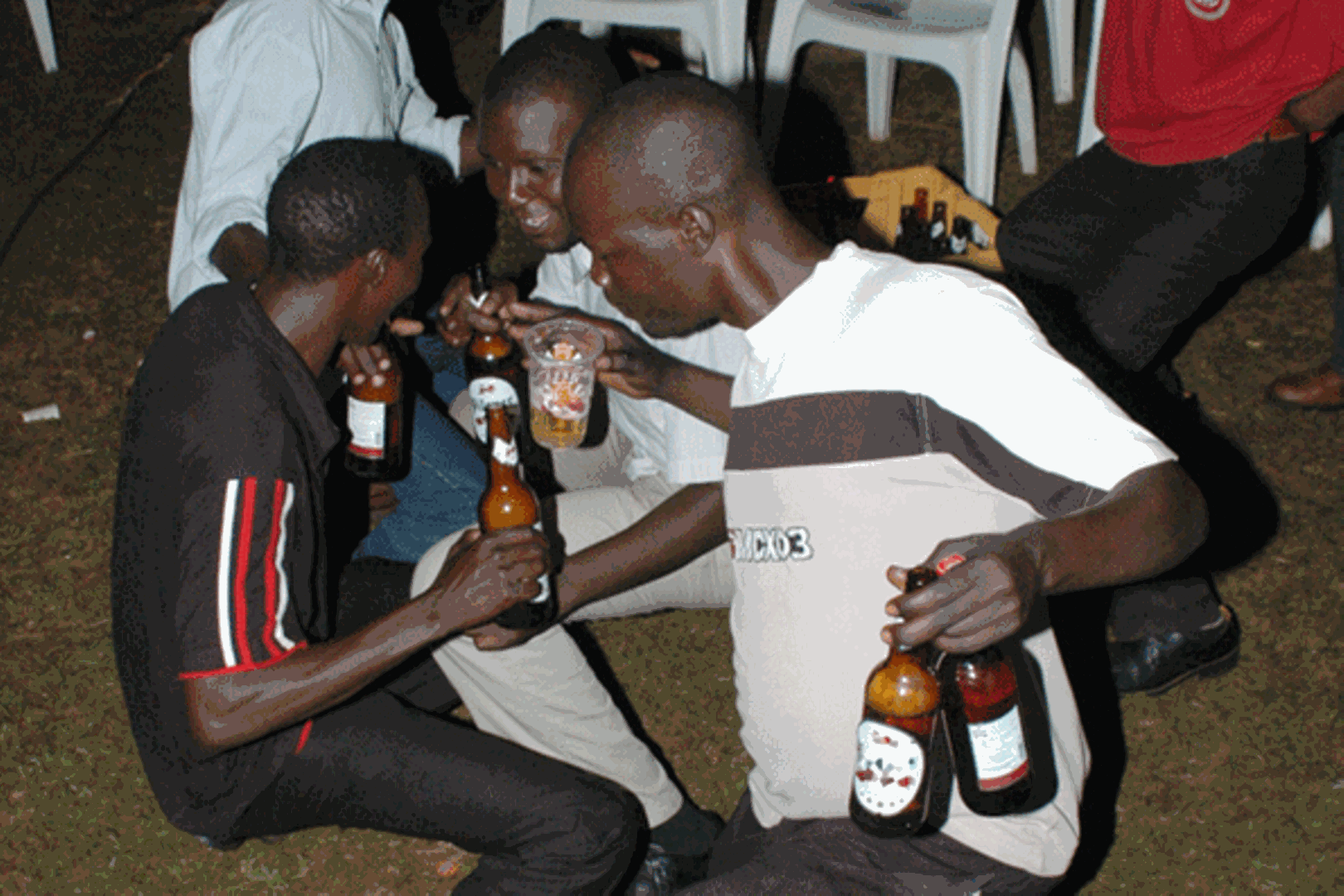
She, however, says drug abuse and addiction dominate as the major causes of the prevalence among the youth, and it can be as a result of limited social activities created for them, such as football, to keep them busy.