The Buganda Land Board (BLB) and Kampala Capital City Authority (KCCA) have pledged to reinforce their partnership to address challenges in land management, physical planning, and development control across the city.
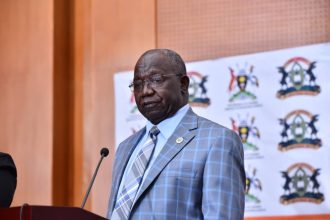
The commitment was made during a high-level meeting at City Hall, attended by KCCA Deputy Executive Director Benon Kigenyi, and a BLB delegation led by Prince David Wasajja, the Kabaka’s Attorney, Omuk. Simon Kabogoza, BLB’s Chief Executive Officer, Omuk.Bashir Kizito, Deputy CEO, Denis Bugaya, Senior Manager-Operations, Princess Sarah Ndagire, and BLB’s Chief Surveyor, Wamala James.
Prince Wasajja welcomed the engagement, calling it “long overdue” and crucial for coordinating land management efforts.
“Almost 50 percent of the land in Kampala belongs to the Kabaka. We are a major stakeholder and want to establish a special working relationship with KCCA,” he said. “If we work together, we can address issues such as illegal construction, waste management, and unplanned development more effectively.”


BLB CEO Omuk. Simon Kabogoza praised KCCA’s initiative, noting that stronger communication channels will enhance land administration.
“KCCA has shown goodwill, and it’s only right that we build on that. We should establish clear communication channels and work together where necessary,” Omuk. Kabogoza said.

His deputy, Omuk. Bashir Kizito emphasized the importance of regulating development on Kabaka land.
“Many people build without approved plans. We want to work with KCCA to ensure that all developments on Kabaka land are legal and compliant,” Omuk. Kizito said.
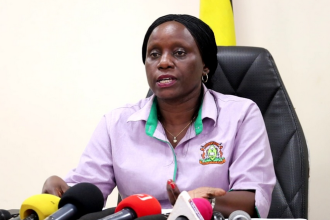
The deputy Chief Executive Director, Mr.Benon Kigenyi described the relationship between the two institutions as “symbiotic,” emphasizing that it has allowed several city development initiatives to progress smoothly.
“We recognize that several city government properties sit on land belonging to the Buganda Land Board, and there have not been any major disputes. This shows that our institutions have maintained a cordial and cooperative relationship,” Kigenyi said.

He underlined that collaboration with BLB is essential for effective land management and proper urban planning, especially given the increasing pressure on Kampala’s land.
“People occupying Kabaka land often fear to approach the rightful owners for documentation, and that’s why many end up building illegally. We want to work hand-in-hand with BLB to find a lasting solution,” Kigenyi said.
The deputy executive director also noted that land acquisition challenges for infrastructure projects remain a key hurdle, often leading to delays and inflated costs.
“The state of that road is embarrassing to all of us, but the problem lies in land ownership disputes. We valued the land and offered compensation, but some occupants refused. These people sit on BLB land; they shouldn’t make it so difficult for the road to be developed,” Kigenyi said, citing the Kasubi–Namungoona Road project.

Both institutions agreed to establish a framework for cooperation that will harmonize land management, improve development approvals, and guide sustainable urban growth.
“We want a situation where we can deliver this city with precision,” Kigenyi said.