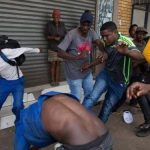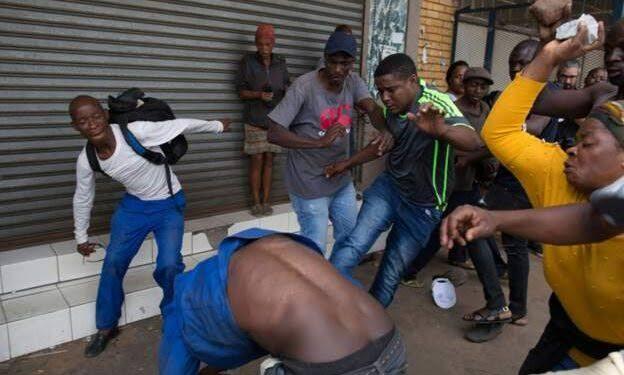

KAMPALA — The Government of Uganda has launched an emergency evacuation exercise to rescue hundreds of Ugandan nationals stranded in South Africa following a fresh wave of xenophobic violence that has claimed one Ugandan’s life and left many others living in fear.
In a statement issued on Sunday, the Ministry of Foreign Affairs said President Yoweri Museveni had directed relevant government agencies to immediately organize the safe return of Ugandans wishing to leave South Africa as security conditions continue to deteriorate.
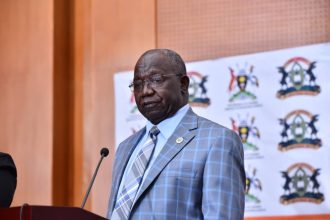
According to Acting Minister of Foreign Affairs Haruna Kyeyune Kasolo, at least 746 Ugandans have so far voluntarily registered for evacuation, with authorities expecting the number to increase as more people seek assistance.
“Currently, 746 Ugandans have voluntarily registered and sought assistance for evacuation due to security and safety concerns, and more are expected to register,” Kasolo said.
The evacuation operation is being coordinated by the Ministry of Foreign Affairs in collaboration with the Office of the Prime Minister, the Ministry of Internal Affairs, the Ministry of Works and Transport, Uganda’s High Commission in Pretoria, and leaders of the Ugandan community in South Africa.

Government officials say fears among Ugandans have intensified following reports that anti-immigrant groups had issued a June 30 ultimatum demanding that foreign nationals leave the country. The threats have prompted many migrants to flee affected areas, while others have opted to return home.
Under the government’s rescue plan, affected Ugandans will be registered across various provinces before being transferred to designated assembly centres. Emergency travel documents will also be issued to those whose passports were lost or destroyed during the unrest, while immigration clearance will be coordinated with South African authorities to facilitate their departure.

Kasolo confirmed that Uganda Airlines has been tasked with conducting special charter flights to transport the evacuees back home, with all costs being met by the Ugandan government.
“Arrangements are being made for Uganda Airlines to provide special charter flights for the evacuation exercise,” he said.
The government also confirmed the death of a Ugandan national during the ongoing violence in KwaZulu-Natal Province.
Uganda’s High Commissioner to South Africa, Ambassador Paul Amoru Omiat, identified the deceased as Wilber Niwamanya, also known as Joseph Ainebyona, who worked as a motorcycle delivery rider.
According to preliminary reports, Niwamanya was attacked by a mob before his motorcycle was stolen.
Ambassador Amoru said the Ugandan mission has requested South African authorities to preserve the body pending repatriation, which will be funded by the Government of Uganda. The embassy has also called for a thorough investigation to ensure those responsible are brought to justice.
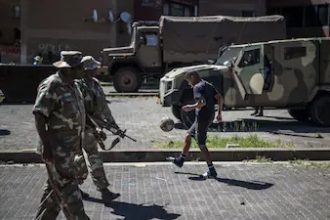
The latest violence comes amid renewed anti-immigrant protests in several South African provinces, where some groups accuse foreign nationals of taking jobs, contributing to crime, and placing pressure on public services.
The unrest has revived painful memories of previous xenophobic attacks that have periodically erupted in South Africa over the past two decades, including the deadly 2008 violence in which more than 60 people were killed.
Although South African President Cyril Ramaphosa has repeatedly condemned attacks on foreign nationals, his government has faced mounting domestic pressure to tighten immigration enforcement as frustrations over undocumented migration continue to grow.
Uganda is among several African countries that have initiated emergency repatriation programmes for their citizens. Malawi, Nigeria, Ghana, Zambia, and Mozambique have also announced evacuation efforts following the recent escalation in attacks targeting foreign nationals.
Meanwhile, humanitarian organisations have warned that thousands of refugees and asylum seekers who cannot safely return to their home countries remain at heightened risk as tensions continue to rise across parts of South Africa.