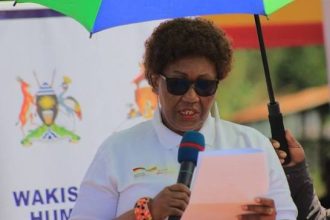
For nearly a decade, Hon. Babirye Milly Babalanda has served in key positions within the Presidency, a journey that eventually saw her appointed Minister for the Presidency—one of the most strategic and sensitive offices in Uganda’s government.
The position places her at the centre of coordinating the work of Resident District Commissioners (RDCs), monitoring government programmes, and ensuring that national priorities and manifesto commitments are implemented across the country.
Her appointment and continued service in this role demonstrate the confidence President Yoweri Kaguta Museveni has continued to place in her leadership, based on her years of political loyalty, administrative experience, discipline, and ability to execute government responsibilities.
A Long Political Journey Within the NRM
Hon. Babalanda’s political journey within the National Resistance Movement (NRM) stretches back several years. She previously served as Deputy Resident District Commissioner for Busia District before becoming Head of the Office of the National Chairman (ONC–NRM) at Kyambogo.
She is currently the elected Member of Parliament for Budiope West Constituency in Buyende District and has been re-appointed Minister for the Presidency.
Throughout her career, she has built a reputation as a committed mobiliser and a loyal cadre who has remained consistent through different political seasons. This experience placed her in a position of trust to handle both party coordination responsibilities and government oversight.
When she was appointed Minister for the Presidency in 2021, her responsibilities included supervising RDCs and their deputies, monitoring government programme implementation at the grassroots, and ensuring that public services effectively reach citizens.
She has also advocated for the recruitment of Assistant Resident District Commissioners to strengthen the capacity of RDC offices in mobilisation and monitoring government programmes.
Strengthening Government Oversight
Under her leadership, the Office of the President has continued strengthening the monitoring role of RDCs, RCCs, their deputies, and assistants in supervising government projects and programmes.
These include education initiatives, health facilities, road infrastructure projects, Emyooga, the Parish Development Model (PDM), and other wealth creation programmes.

Reports from districts have continued to provide government with feedback on challenges affecting implementation and progress made in different areas.
Minister Babalanda has also maintained emphasis on discipline within public service, supporting administrative actions such as transfers and reprimands against officials accused of misconduct.
Her approach reflects President Museveni’s long-standing focus on accountability, effective public administration, and ensuring that government officers remain committed to their responsibilities.
Political Consistency and Stability
Unlike some political figures who have become associated with internal party disagreements and public controversies, Minister Babalanda has largely maintained a disciplined public image, consistently supporting government programmes and the official NRM position.
This consistency is particularly important given the nature of her ministry, which operates at the intersection of politics, government coordination, and public administration.
Recently, her name has featured in online accusations and criticism alleging corruption and mismanagement. However, no formal charges or judicial findings have been presented against her in relation to these claims.
As is common with high-profile public officials, criticism and scrutiny often come with occupying influential government positions. While some critics view the allegations as signs of wrongdoing, others argue that they are politically motivated attempts aimed at damaging her reputation.
Her performance, however, should be assessed based on verifiable results, institutional performance, and the execution of her official duties rather than unverified allegations.

The continued coordination of RDCs, monitoring of government programmes, implementation of NRM manifesto commitments, and her frequent engagement in government activities remain indicators of her active role in public service.
Continued Presidential Confidence
President Museveni has continued to assign Minister Babalanda responsibilities representing the Presidency at official functions, government engagements, and NRM activities—something many observers interpret as a sign of continued confidence in her leadership.
Her role also places her among officials tasked with enforcing accountability at the grassroots level, a responsibility that can sometimes attract criticism from individuals or groups affected by increased oversight.
Ultimately, public confidence in leaders is shaped by several factors, including service delivery, institutional performance, consistency, and commitment to national priorities.
Whether criticism strengthens or weakens a public official’s standing often depends on how effectively they continue delivering on their mandate and how allegations are addressed through established legal and institutional processes.
In the end, many citizens are likely to judge leadership not by the volume of online criticism but by whether government programmes reach communities, public services improve, and accountability systems function effectively.
President Museveni’s continued confidence in Hon. Babalanda suggests that he still views her as an important member of the team responsible for strengthening government supervision and advancing national programmes, despite ongoing attempts by some individuals to challenge her reputation.
The author is the NRM Youth League Chairperson for Mayuge District.