By Richard Onapatum
KOTIDO, KARAMOJA — Centenary Bank has extended support worth Shs40 million to religious institutions in Kotido, combining immediate assistance with a long-term plan to strengthen food production through a solar-powered irrigation demonstration project for farmers in Karamoja.
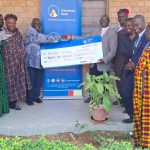
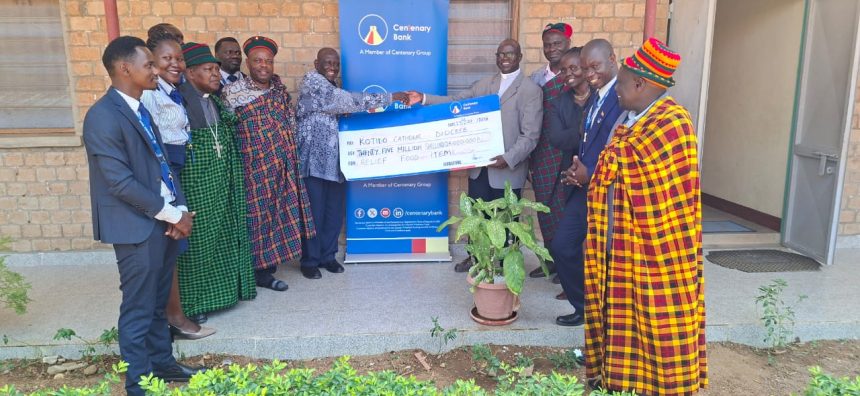
The support was handed over yesterday at the diocesan offices in Kotido during a ceremony attended by Centenary Bank officials, religious leaders, and other stakeholders.
The bank donated posho and beans worth Shs15 million to the Anglican Diocese of Kotido, while the Catholic Diocese of Kotido received two cheques totalling Shs25 million—a Shs15 million cheque and an additional Shs10 million cheque to support the purchase of medical items.
The support was handed over in the presence of Centenary Bank Chairman Gustavio Bwacho, Board Member Dr. Basil Ajer, Director Hon. Tom Aliti, Director Chris Byaruhanga, Regional Manager Sarah Achen, and Kotido Branch Manager Jhanan Obong Olum.

The function was also attended by Rt. Rev. Callist Rubaramira, Bishop of Kabale Diocese, who challenged stakeholders to focus on sustainable solutions that address the root causes of poverty and vulnerability in communities.
The Bishop said communities need interventions that go beyond responding to immediate challenges and instead create lasting opportunities for self-reliance.

“We need to find sustainable projects that can transform communities and provide lasting solutions for the people,” the Bishop said.
He welcomed Centenary Bank’s plan to support agriculture, saying empowering farmers with sustainable production methods is critical for Karamoja, a region that continues to experience the effects of drought, food insecurity, and climate change.
Speaking on behalf of Centenary Bank, Director Hon. Tom Aliti said the bank remains committed to supporting initiatives that improve livelihoods, particularly in agriculture, which remains a major source of income for many households.
He said the planned solar-powered irrigation demonstration project will provide farmers with a practical model of using renewable energy to access water, increase production, and reduce dependence on unreliable rainfall.
Hon. Aliti said the project is expected to become a learning center where farmers can acquire knowledge on modern farming methods, water management, and climate-smart agriculture.
He added that supporting agricultural productivity is key to helping communities build resilience, improve household incomes, and strengthen food security.
At the Catholic Diocese of Kotido, the cheques were received on behalf of the church by Rev. Fr. Monsignor Daniel Nabuya, who appreciated Centenary Bank’s continued partnership and support for communities in Karamoja.
Rev. Fr. Monsignor Daniel Nabuya said the support, including assistance for the purchase of medical items, comes at a critical time when communities continue to face challenges affecting their well-being. He noted that the intervention will help strengthen support services while complementing efforts to improve the lives of vulnerable people in the region.
Meanwhile, Centenary Bank Kotido Branch Manager Jhanan Obong Olum thanked the dioceses, local leaders, and communities for embracing the bank’s partnership and support.
Religious leaders welcomed the intervention, saying the combination of food support, medical assistance, and investment in sustainable farming provides both immediate relief and a pathway to long-term development.
The leaders said the irrigation initiative is timely because many farmers in Karamoja continue to rely heavily on rainfall despite recurring dry spells that affect crop production.
The planned solar-powered irrigation scheme is expected to serve as a model for farmers by demonstrating how technology can support year-round production, improve yields, and encourage commercial farming.
Karamoja has, in recent years, faced serious challenges related to drought, declining agricultural productivity, and food insecurity, increasing calls for investment in irrigation, value addition, and climate-resilient farming.
The Centenary Bank initiative reflects a shift from responding only to immediate needs to investing in sustainable solutions that empower communities. By combining food assistance, medical support, and investment in solar-powered irrigation, the bank seeks to contribute to long-term livelihood improvement, food security, and economic resilience among communities in Karamoja.