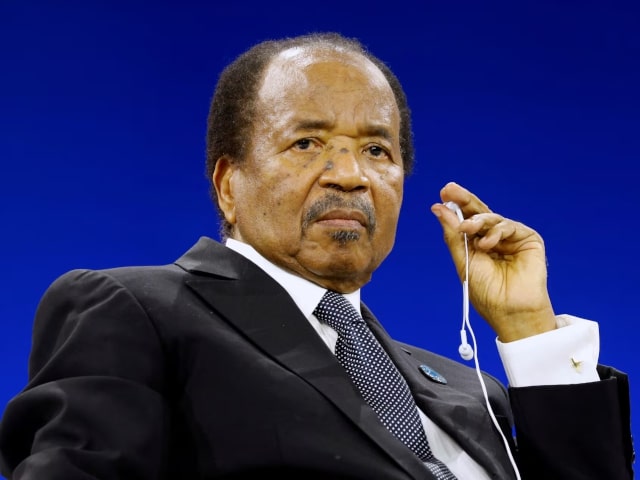
YAOUNDÉ, CAMEROON – Concerns over leadership and government inactivity in Cameroon have intensified after President Paul Biya spent nearly 50 days outside the country, reigniting debate about his health, political future and the direction of the government he has led for more than four decades.
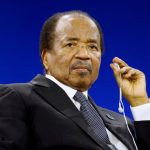
Biya, who is 93 years old and the world’s oldest serving head of state, left Cameroon on June 7 for what the government described as a “short, private stay in Europe” alongside his wife, First Lady Chantal Biya. However, his prolonged absence in Switzerland has sparked renewed criticism from opposition leaders and civil society groups.
The Cameroonian government has repeatedly dismissed speculation about the president’s health. On June 18, Communication Minister René Emmanuel Sadi rejected reports claiming that Biya had been hospitalised at a clinic in Geneva, describing the claims as false.
Despite the government’s assurances, opposition figures argue that the president’s absence has exposed what they describe as a leadership vacuum.
Mamadou Mota, vice-president of the opposition Cameroon Renaissance Movement (MRC), said Biya’s absence reflected a “glaring institutional vacuum,” while the opposition Social Democratic Front (SDF) accused the country of operating on “autopilot.”

The criticism is not new. Biya has faced similar concerns during previous long stays abroad, including in late 2024 when he spent about 50 days outside Cameroon.
Patricia Tomaino Ndam Njoya, leader of the Cameroon Democratic Union (UDC), has called for a clear and impartial process to determine whether a president is temporarily or permanently unable to perform his duties.

However, officials from the ruling Cameroon People’s Democratic Movement (CPDM) have dismissed claims of a leadership crisis. Higher Education Minister Jacques Fame Ndongo said Biya continues to receive government files and remains involved in state affairs regardless of his location.
The debate comes months after Biya secured an eighth presidential term in an October election that was contested by opposition groups and met with criticism from some observers. Protests following the election were reportedly suppressed, with the government acknowledging several deaths but not releasing a full figure.
In his New Year address on December 31, Biya promised to appoint a new government team “in the coming days,” but months later, no major cabinet reshuffle has taken place.
The delay has further fuelled public frustration, with analysts saying many Cameroonians are demanding political renewal after more than 40 years under the same leadership.
Political tensions have also increased over the question of succession. Cameroon recently introduced constitutional changes creating the position of vice-president and replaced the leaders of both chambers of parliament, but no person has yet been appointed to the new position.
The uncertainty has encouraged speculation about the post-Biya era, with reports of divisions among influential figures close to the president.
Political scientist Stephane Akoa said there have been increasing reports of disagreements among factions within Biya’s inner circle, with First Lady Chantal Biya’s name frequently mentioned in discussions about government decisions and appointments.
Under Cameroon’s constitution, if the presidency becomes vacant, the Senate president, Aboubakary Abdoulaye, would assume leadership temporarily until a presidential election is organised.
As Biya’s absence continues, pressure is growing on Cameroon’s political establishment to provide clarity on the president’s situation and the country’s leadership transition plans.