Rwanda’s Ministry of Foreign Affairs has issued a detailed statement in response to ongoing allegations of its involvement in the turmoil and unrest in the Eastern Democratic Republic of Congo.
Videos circulating on social media depict individuals fleeing from the aggressively advancing M23 rebels in the resource-rich region.
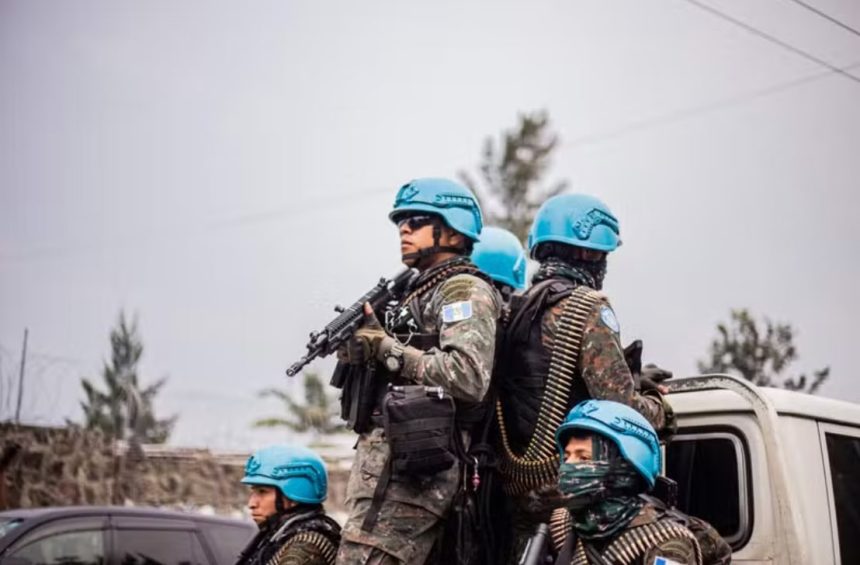
Various peacekeeping forces from African nations and the UN have been attempting to restore order and combat the March 23 (M23) rebels, resulting in at least nine reported casualties, with two confirmed deaths occurring last Friday.
In response to the escalating violence and territorial gains by the rebels this month, the DRC has cut diplomatic ties with Rwanda, accusing it of supporting the M23.
As the conflict heats up, Congolese army spokesman General Sylvain Ekenge stated that their forces are focused on “pushing back the enemy.” “Rwanda is intent on taking control of Goma,” he asserted.

The UN has prompted an urgent meeting to discuss the situation and is in the process of relocating non-essential personnel. Meanwhile, the governments of the US, UK, and France have advised their citizens to exit Goma while the airports remain operational.
There have been rising tensions between Rwanda and Kinshasa, with Felix Tshisekedi blaming Paul Kagame for orchestrating the unrest in Eastern DRC.
In its statement, Rwanda acknowledged the defamatory comments from parties that lack a comprehensive understanding of the situation in Congo. The statement indicated that the hostilities in the region stemmed from violations of the cease-fire by the Congolese National Army (FARDC), which is supported by the UN.
Rwanda emphasized that the ongoing clashes near its border pose a significant security threat, necessitating a defensive stance. Moreover, the statement clarified that the M23 did not originate from Rwanda, despite being unjustly blamed. It also expressed Rwanda’s commitment to pursuing a lasting and peaceful resolution.
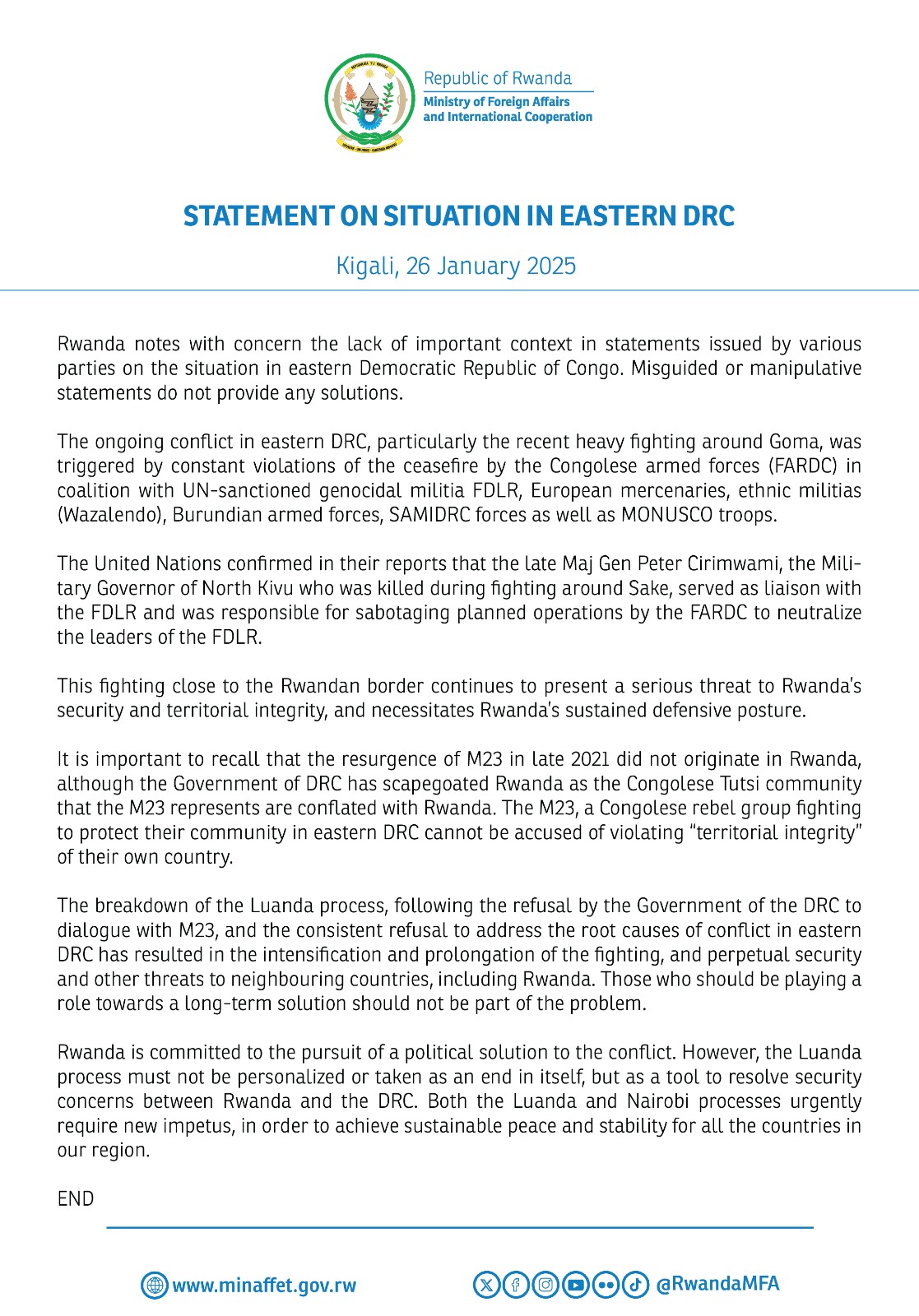
“Rwanda notes with concern the lack of important context in statements issued by various parties on the situation in eastern Democratic Republic of Congo. Misguided or manipulative statements do not provide any solutions.
The ongoing conflict in eastern DRC, particularly the recent heavy fighting around Goma, was triggered by constant violations of the ceasefire by the Congolese armed forces (FARDC) in coalition with UN-sanctioned genocidal militia FDLR, European mercenaries, ethnic militias (Wazalendo), Burundian armed forces, SAMIDRC forces as well as MONUSCO troops.
The United Nations confirmed in their reports that the late Maj Gen Peter Cirimwami, the Military Governor of North Kivu who was killed during fighting around Sake, served as liaison with the FDLR and was responsible for sabotaging planned operations by the FARDC to neutralize the leaders of the FDLR.
This fighting close to the Rwandan border continues to present a serious threat to Rwanda’s security and territorial integrity, and necessitates Rwanda’s sustained defensive posture.
It is important to recall that the resurgence of M23 in late 2021 did not originate in Rwanda, although the Government of DRC has scapegoated Rwanda as the Congolese Tutsi community that the M23 represents are conflated with Rwanda.
The M23, a Congolese rebel group tighting to protect their community in eastern DRC cannot be accused of violating “territorial integrity” of their own country.
The breakdown of the Luanda process, following the refusal by the Government of the DRC to dialogue with M23, and the consistent refusal to address the root causes of conflict in eastern DRC has resulted in the intensification and prolongation of the fighting, and perpetual security and other threats to neighbouring countries, including Rwanda. Those who should be playing a role towards a long-term solution should not be part of the problem.
Rwanda is committed to the pursuit of a political solution to the conflict. However, the Luanda process must not be personalized or taken as an end in itself, but as a tool to resolve security concerns between Rwanda and the DRC.
Both the Luanda and Nairobi processes urgently require new impetus, in order to achieve sustainable peace and stability for all the countries in our region.”