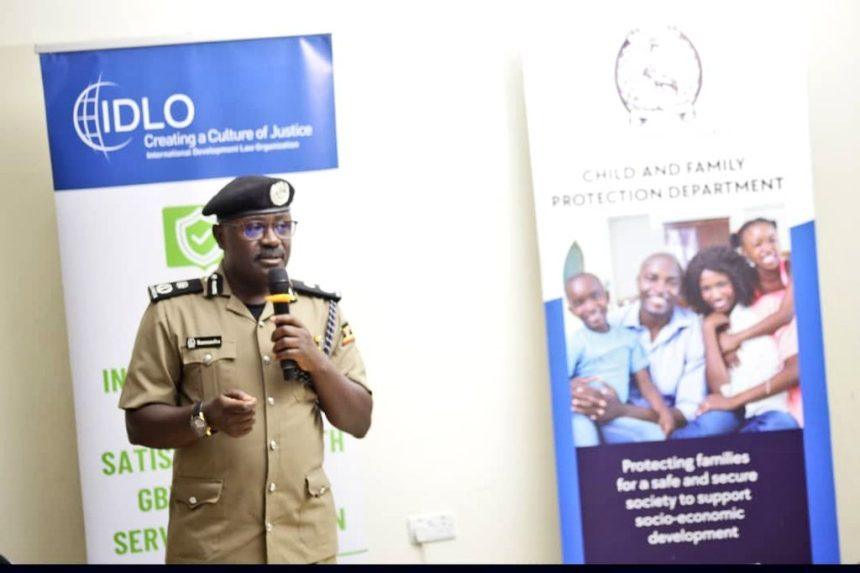
Inspector General of Police Abbas Byakagaba has hailed the successful completion of a four-day training on the prevention and response to Gender-Based Violence (GBV) and Violence Against Children (VAC) in refugee settlements and host communities.
The training, held at Acholi Hotel in Gulu, brought together officers from the Uganda Police Force, representatives from partner organisations, and community actors.

IGP Byakagaba said the session was a strong reminder of the responsibility shared by all institutions working to protect vulnerable populations.
“This training will have a significant impact on the lives of those we serve,” he said. “The discussions and shared experiences were enriching, and I am confident that the knowledge gained will translate into meaningful change.”
The workshop was organised in partnership with the International Development Law Organization (IDLO) and the Uganda Police Force. The IGP applauded the collaboration, noting that the fight against GBV and VAC requires united efforts.
“I extend my sincere appreciation to IDLO and the Uganda Police Force for their collaboration,” he added. “Their partnership has been key in bringing together diverse stakeholders to address such a critical issue.”

He urged participants to put their new knowledge into practice, especially in improving policing approaches within refugee-hosting districts.
“I encourage all participants to apply what they have learned to create a safer and more supportive environment for refugees and host communities,” he said.
Byakagaba noted that GBV and VAC remain complex issues that demand a coordinated, multi-sector response involving law enforcement, humanitarian agencies, community leaders, and social support systems.
The IGP called on stakeholders to maintain the momentum built during the training.
“Let us continue working together to prevent and respond to these cases and promote a culture of respect, dignity, and safety for all,” he concluded.
The training comes at a time when humanitarian settlements continue to face increased protection concerns, making stronger collaboration and improved policing essential in safeguarding vulnerable groups.