As Uganda steadily approaches the 2026 general elections, the political conversation is gradually shifting away from candidates and manifestos to a deeper, more consequential question: how power is exercised, and who ultimately controls political space.
More than ever, governance in Uganda is increasingly shaped by the presence and influence of security institutions. What began as a response to instability and insurgency has, over time, evolved into a defining feature of civilian administration, political competition and public order.
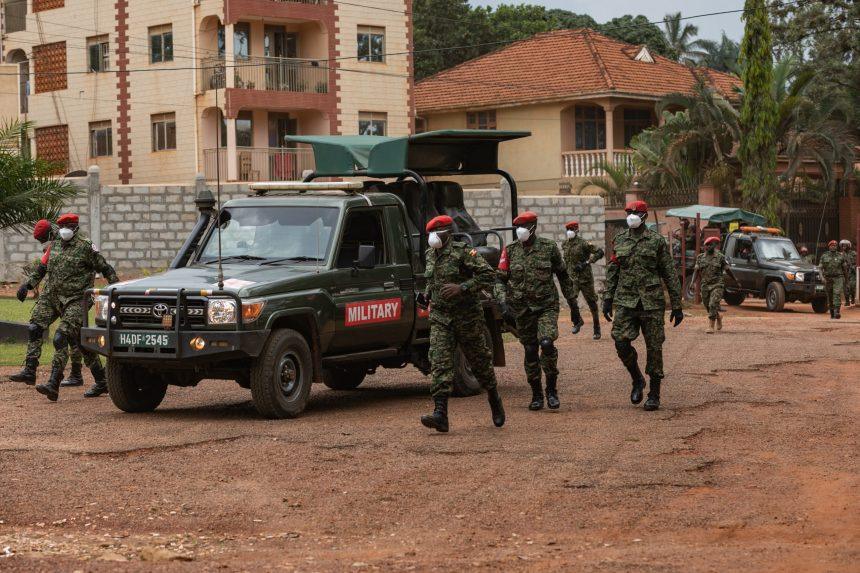
This shift has sparked growing debate among legal scholars, political analysts and civil society actors about whether Uganda is witnessing the gradual militarisation of governance—and what that means for democracy.
From Barracks to Bureaucracy
Uganda’s Constitution establishes a clear principle: the country is governed by civilians, while the military exists to defend sovereignty and territorial integrity under civilian oversight.
In practice, however, the boundary between military and civilian authority has become increasingly porous.
Across the country, the Uganda People’s Defence Forces (UPDF) and other security agencies are visible in roles traditionally performed by civilian institutions—law enforcement, crowd control, infrastructure works, fisheries enforcement, and even dispute resolution.

Military engineers repair roads, clear drainage systems, and supervise public works. Joint security teams regulate political gatherings. Armed personnel enforce executive directives in markets, villages and urban centres.
Government officials argue this involvement enhances efficiency, discipline and national security—especially in a region plagued by armed conflict and transnational threats.
But critics warn that normalising military solutions to civilian challenges weakens democratic institutions and shifts accountability away from the people.
Elections Under Security Management
Election cycles in Uganda have historically been intense, but recent years suggest a qualitative change in how political activity is managed.
Opposition rallies are frequently postponed, restricted or dispersed on security grounds. Police often cite lack of clearance, intelligence reports or public order concerns. In many instances, these operations are supported by military units, blurring the distinction between policing and military intervention.
A Kampala-based political analyst, speaking on background, observes:
“When political mobilisation is treated primarily as a security risk, democratic competition becomes conditional. Politics turns into something to be permitted, not a right to be exercised.”
This environment has fostered self-censorship among citizens. Attendance at rallies, political meetings and even online engagement is increasingly weighed against personal risk.
For many Ugandans, political participation has become cautious rather than enthusiastic.
The Question of Civilian Justice
One of the most contested developments in recent years has been the use of military courts in politically sensitive cases and the broader role of security agencies in law enforcement.
Legal experts argue that when civilians are subjected to military-style processes or when security agencies dominate political dispute management, the rule of law is weakened.
A constitutional lawyer based in Wakiso explains:
“Military systems are designed for command and discipline, not pluralism and dissent. When they encroach on civilian justice, constitutional safeguards become fragile.”
The government maintains that exceptional threats require exceptional measures, insisting that national security and law enforcement sometimes overlap.
However, civil society organisations warn that temporary measures have a way of becoming permanent—especially when they face little institutional resistance.
Security vs Democracy: A False Dichotomy
Supporters of an expanded security role often frame the debate as a choice between stability and chaos.
Uganda’s leadership routinely points to the country’s troubled past, regional conflicts, and threats such as terrorism to justify a strong security posture.
But governance experts argue that security and democracy are not opposing forces.
“Democracy is itself a form of security,” says a governance researcher in Gulu. “When citizens trust institutions and believe they can change leadership peacefully, the likelihood of instability reduces, not increases.”
Heavy reliance on coercive power may suppress dissent in the short term, analysts say, but it risks storing unresolved grievances beneath the surface—grievances that can resurface more forcefully over time.
The Political Cost to Local Leaders
Militarisation does not only affect national politics; it reshapes governance at the local level.
District leaders, councillors and Members of Parliament often find themselves caught between citizens demanding services and security agencies exercising control over community activity.
Local leaders are held politically accountable for service failures, yet increasingly lack authority over implementation, security approvals or public mobilisation.
“In the eyes of voters, we are in charge,” says a district councillor from eastern Uganda. “But in practice, many decisions are made elsewhere—often by people who are not elected.”
This disconnect erodes trust in civilian leadership and deepens the perception that real power lies beyond electoral processes.
Media, Civil Society and the Shrinking Space
The effects of militarised governance are also visible in the media and civil society sectors.
Journalists frequently operate under pressure, making editorial decisions that prioritise safety over confrontation. Civil society organisations face regulatory scrutiny, surveillance and restrictions on assembly.
While officials insist these measures ensure accountability and prevent foreign interference, observers argue they cumulatively narrow the space for independent voices—an essential pillar of democracy.
A senior editor at a major media house notes:
“There is no single dramatic shutdown. Instead, space shrinks quietly, through warnings, phone calls and presence.”
Implications for 2026
As the 2026 elections draw closer, the role of security agencies will be central—not just on polling day, but throughout the pre-election period.
Key questions remain:
Will security forces act as neutral guarantors of peace?
Will all political actors enjoy equal freedom to campaign?
Will citizens feel safe to associate, speak and vote without fear?
Election credibility, analysts argue, is shaped long before ballots are cast.
What This Means for Ordinary Ugandans
For citizens struggling with the cost of living, unemployment and access to services, debates about militarisation may feel abstract.
Yet the consequences are tangible.
Democracy weakens when:
Community meetings are restricted
Youth mobilisation is criminalised
Citizens fear political expression
Accountability shifts away from elected leaders
Over time, politics becomes distant, transactional and distrustful—undermining citizen engagement.
A National Choice at a Critical Moment
Uganda stands at a crossroads.
The country can invest in strengthening civilian institutions, professional policing, independent oversight and political tolerance—building stability through consent. Or it can continue relying on security dominance to manage political life, risking long-term democratic erosion.
History suggests that reversing militarisation is difficult once entrenched but not impossible.
As 2026 approaches, the central question is not whether Uganda needs security. It is whether security will continue to overshadow democracy—or protect it.
The answer may define not only the next election, but the character of the Ugandan state for years to come.