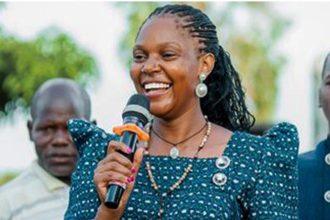
President Yoweri Kaguta Museveni ended his campaign tour of the Kigezi subregion with an extended interactive session at Irenga State Lodge in Ntungamo, bringing together journalists from across Kigezi, NRM leaders and several opinion shapers. The engagement, which was broadcast live on local FM stations, came after days of rallies in Kabale, Kanungu and Rukungiri where he presented the NRM Manifesto for 2026–2031 and called for continuity in development ahead of the 2026 elections.
Speaking calmly but firmly, Museveni framed the meeting as a moment to reflect on the NRM’s work over the last 40 years and to answer regional concerns directly. He repeated what he called the NRM’s seven major contributions: peace and security, unity, economic development, wealth creation, skills enhancement, job creation and strategic defence. He urged journalists to focus on factual reporting and to help the public understand what he described as the real gains made over the years instead of what he called misleading opposition narratives.

Peace was the point he returned to most, saying it was the foundation for everything else. He reminded the audience that those living close to the Democratic Republic of Congo border, especially in Kigezi, know better than anyone the value of stability and a capable national defence. He credited Uganda’s independent strategy and the UPDF for keeping the region secure without relying on outside powers.

He went on to outline infrastructure plans that he said are central to unlocking Kigezi’s potential. These included upgrades on several key routes such as the 149-kilometre stretch covering Hamurwa, Kerere, Kanungu, Butogota, Hamayanza, Ifasha and Ikunza. He said better roads would support trade and tourism and reduce the cost of doing business for ordinary people. On agriculture, he acknowledged the challenge of irrigation in the hilly terrain and announced that government would work on systems that can lift water up the slopes, allowing farmers—especially those growing tea and coffee—to produce consistently throughout the year. This, he said, ties into the earlier allocation of Shs 310 billion to revive the tea sector, which employs over 160,000 people in the region.
Wealth creation and industrialisation also featured prominently. Museveni repeated the four-acre model as a reliable approach for households with smaller pieces of land and encouraged families to take it seriously. For Kanungu, where tea is central, he announced a special fund that will be channelled through SACCOs to make fertilisers more affordable, similar to the support already extended to sugarcane and fishing communities. He told young people to take advantage of emerging factories and skilling hubs and warned that remaining unskilled only leaves them stuck in low-earning roles.
Museveni also expressed satisfaction with the way religious leaders in Kigezi recently resolved internal misunderstandings after consultations, saying unity remains essential for national harmony. He cautioned against sectarian tendencies, which he said derail progress and distract from the bigger picture.
Journalists used the opportunity to ask about infrastructure, succession debates, and long-standing regional pledges such as the Kabale International Airport. Museveni answered at length, saying the NRM manifesto is not just a document of promises but one backed by real projects on the ground, including roads, schools and the skilling hub serving the wider Kigezi area.
The session capped a busy campaign stretch marked by large rallies in Kabale and Rukungiri, with local leaders pushing for improvements in tourism access and economic recovery. Museveni tied his message together by saying that Uganda’s story—from Busoga to Kigezi—was one of steady progress built over time, and that protecting what has already been achieved remains central as the country heads toward the 2026 elections.