
For years, Jian Namuhenge spent nearly Shs 80,000 every month on charcoal to prepare meals for her family. Like millions of Ugandans, she depended on a traditional charcoal stove, unaware that a more efficient and cost-effective alternative existed.
Today, that same sack of charcoal lasts her nearly three months. The difference is not a change in income or lifestyle, but a shift in technology.
“With the traditional stove, I used to buy a sack of charcoal at about Shs 80,000, and it would last only one month,” Namuhenge says. “But with the eco-stove, the same sack can last up to three months.”
The savings have significantly improved her household finances.
“I am now able to save money and use it for other family needs. The stove is easy to light and has a fan that keeps the fire burning. It feels almost like cooking on gas because I can control the heat,” she adds.
Namuhenge is among thousands of Ugandans benefiting from a growing clean cooking revolution spearheaded by Detra Energy and Environmental Contractors Limited, a company using innovation and strategic partnerships to address one of Uganda’s most pressing energy challenges.
Founded in 2022, Detra Energy and Environmental Contractors Limited entered the market with a mission to provide practical and sustainable solutions that improve livelihoods while protecting the environment.

The company operates in renewable energy, waste management, water and sanitation, environmental compliance, eco-friendly construction, and capacity building. However, clean cooking technologies have emerged as one of its most impactful areas of intervention.
Uganda remains heavily reliant on charcoal and firewood for cooking, a dependence that contributes to deforestation, environmental degradation, and household air pollution.
To address this challenge, Detra introduced a range of modern clean cooking solutions designed to reduce fuel consumption while improving convenience, safety, and efficiency.
Its product portfolio includes Digiwave Electric Pressure Cookers and advanced charcoal-saving cookstoves such as Biolite Jiko Safi, Biolite Jiko Malkia, Ecoa Char Grill, Ecoa Char Plus, Ecoa Char Pro, and Ecoa Char Classic.
These technologies enable households to spend less on fuel while minimizing the environmental damage associated with traditional cooking methods.
Despite growing interest in clean cooking technologies, affordability remained a major obstacle for many Ugandan households.
This changed in 2024 when Detra Energy partnered with Equity Bank Uganda and EnDev GIZ under a Results-Based Financing (RBF) programme aimed at expanding access to clean cooking solutions.
The programme provided incentives that substantially lowered the cost of acquiring energy-efficient stoves.
As a result, products that previously sold for approximately Shs 140,000 became significantly more affordable. Households in refugee and host communities could purchase the stoves for Shs 70,000, while other Ugandan consumers accessed them for as low as Shs 60,000.
For many families, the subsidies made the difference between wishing for a clean cooking solution and actually owning one.
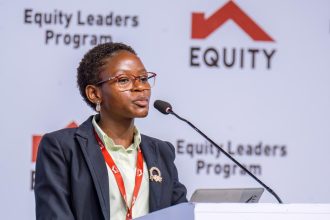
“Many Ugandans want solar systems, clean cookstoves, and renewable energy solutions, but the initial costs remain too high for households and small businesses. As Equity Bank, we are enabling communities to access these technologies through Results-Based Financing,” says Virginia Semakula, Equity Bank’s Head of Energy, Environment and Climate Change.
According to David Ucha, Director of Detra Energy and Environmental Contractors Limited, the partnership has been instrumental in accelerating adoption and strengthening the company’s growth.
“Even though we had only been operating in the clean cooking sector for a few years, Equity Bank Uganda and GIZ trusted us as a partner,” Ucha says.
“The partnership enabled us to reach people who could not previously afford these technologies. It has helped us penetrate the market, build credibility, and position ourselves for future growth.”
The benefits of the clean cooking technologies extend far beyond affordability.
According to Ucha, the stoves consume significantly less charcoal than traditional alternatives, produce less smoke, and contain ash more effectively. The result is cleaner kitchens, healthier households, and lower fuel expenses.
For users like Namuhenge, the impact is immediate and measurable.
By reducing charcoal consumption by nearly two-thirds, families can redirect money previously spent on fuel toward education, healthcare, business investments, and other essential needs.
At a national level, wider adoption of clean cooking technologies could help reduce pressure on Uganda’s forests, which continue to face significant threats from charcoal production and firewood harvesting.
Building on the success of its household products, Detra Energy is now expanding into institutional cooking solutions.
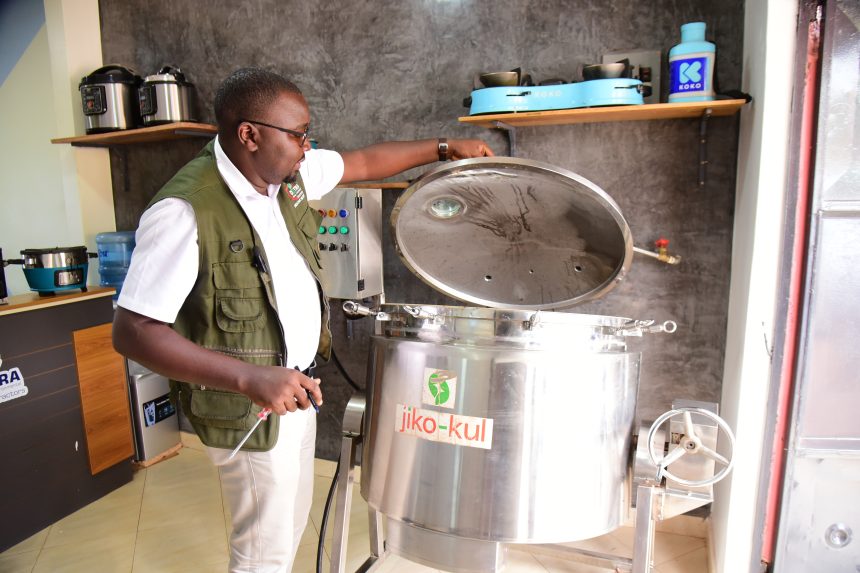
One of the company’s latest innovations is the Jiko-Kul, a high-capacity pressure cooker designed for schools, hospitals, and other large institutions.
Unlike conventional electric cooking appliances, the system combines oil-based heat retention technology with electric coils, allowing food to continue cooking even after electricity has been switched off.
The innovation addresses one of Uganda’s persistent challenges—unreliable power supply—while significantly reducing cooking time and energy costs for institutions.
It also reflects the company’s broader vision of developing locally relevant technologies that respond directly to the realities faced by Ugandan consumers.
Although still a relatively young company, Detra Energy is rapidly establishing itself as an important player in Uganda’s clean energy transition.
Its growth demonstrates how strategic partnerships, innovative financing mechanisms, and customer-focused technologies can accelerate access to sustainable energy solutions.
For households, the benefits are reflected in lower fuel costs, cleaner kitchens, and improved cooking experiences. For businesses like Detra Energy, Results-Based Financing provides the resources and confidence needed to scale operations and reach underserved communities.
For Uganda, the expansion of clean cooking technologies represents a significant step toward achieving national goals on energy access, environmental conservation, and climate resilience.
As demand for cleaner and more efficient energy solutions continues to grow, Detra Energy’s journey offers a powerful example of what can be achieved when innovation, affordability, and partnerships come together.
For thousands of households across the country, the transition to cleaner cooking has already begun, one stove at a time.