The national budget for the financial year 2026/27 is built around one big idea: helping every Ugandan enter the money economy. Government calls this “full monetisation,” meaning that instead of people working only for survival, they should be able to earn real income from farming, business, services, technology, or any productive activity.
The theme of the budget reflects this: commercial agriculture, industrialisation, services, digital transformation, and market access. In simple terms, the government wants to help Ugandans produce more, add value, sell more, and earn more.
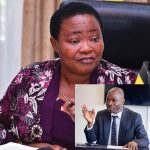
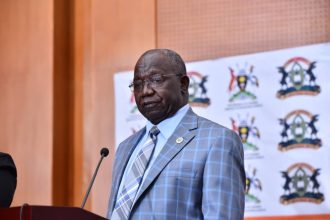
The Minister of Finance, Henry Musasizi, explained that Uganda enters this new political term from a position of strength. Unlike past election years that brought inflation and instability, this time the economy is stable, growing, and attracting investment. According to the speech, Uganda’s economy grew by 6.4% in 2025/26 and is expected to grow by 10.2% in 2026/27 once oil production begins.
The size of the economy is now about USD 69.3 billion (Shs 250 trillion), and GDP per person has risen to USD 1,420. These numbers matter because they show that Uganda is producing more goods and services than before, and that the average Ugandan’s share of the economy is increasing.Inflation remains low at 3.8%, which means prices are rising slowly. This is important for ordinary people because it protects the value of their money.
The shilling is also stable, supported by strong foreign exchange inflows. Uganda’s foreign reserves have grown to USD 6 billion, almost double what they were a year earlier. This stability helps businesses plan and reduces the cost of imports.Exports have been one of Uganda’s biggest success stories. In the last five years, exports have grown by 204%, reaching USD 18 billion by March 2026. Coffee alone brought in USD 2.46 billion. Uganda now sells more goods to the Middle East, Africa, Europe, and Asia. This growth in exports brings in dollars, creates jobs, and strengthens the economy.

Tourism has also recovered strongly, earning USD 1.86 billion in 2025, higher than before COVID‑19.Jobs are increasing too. Formal private sector jobs have grown from 672,000 in 2017 to over 2.3 million in 2025. The public sector employs about 503,000 people, and the informal sector has over 10 million workers.
More Ugandans are moving from agriculture into services and industry, which is a sign of economic transformation. But the government acknowledges that job creation must accelerate because the population is young and growing fast.

Government revenue is also improving. Uganda collected Shs 35.7 trillion in domestic revenue in 2025/26, and this funded 80.9% of the discretionary budget.
In 2026/27, domestic revenue is expected to rise to Shs 45.6 trillion. The government says increasing domestic revenue is not just about money—it is about sovereignty. A country that funds its own development has more control over its future.
Public debt stands at USD 34.86 billion (Shs 126 trillion), about 53% of GDP. The government argues that this debt is sustainable and has been used to build infrastructure such as roads, electricity, water systems, industrial parks, and ICT backbone networks. These investments are meant to support long‑term growth.A major part of the budget is accountability for what was done in 2025/26.
Government focused on wealth creation, strategic investments in key sectors, and strengthening enablers like infrastructure and human capital. The Minister reported that progress has been made, especially in wealth‑creation programmes. Over the years, government has invested Shs 11 trillion in programmes that help households, farmers, youth, women, and small businesses access capital and grow.The Parish Development Model (PDM) remains the flagship programme. Government has sent Shs 4.4 trillion to all 10,589 parishes, reaching over 4 million beneficiaries. The idea is to help households move from subsistence to commercial production. The next phase of PDM will focus on productivity, value addition, and market access. Government also plans to eventually create a PDM Bank to make the programme self‑sustaining.Other wealth‑creation programmes include Emyooga, which has received Shs 760 billion and now has over 2.48 million members saving Shs 95 billion. The Katale Loan Facility is helping market vendors access affordable loans at 8% interest. The Small Business Fund has supported over 4,000 SMEs with Shs 82 billion. The Agricultural Credit Facility has disbursed Shs 1.35 trillion to farmers and agro‑processors. Large‑scale farmers have accessed Shs 169 billion in loans with government paying the interest. UDB has been capitalised with Shs 1.6 trillion and has financed over 600 businesses. Women and youth programmes have also received significant funding, supporting hundreds of thousands of beneficiaries.
In 2026/27, government will spend Shs 2.49 trillion on wealth‑creation programmes to push more Ugandans into the money economy.
Beyond wealth creation, the budget focuses on ATMS—Agro‑industrialisation, Tourism, Minerals (including oil and gas), and Science, Technology and Innovation. These are the sectors expected to drive Uganda’s next phase of growth. Government believes these sectors have the highest potential to create jobs, increase exports, and raise incomes.
In agriculture, government is investing in research, irrigation, mechanisation, and disease control. The anti‑tick vaccine facility in Nakyesasa is now producing 36 million doses a year, serving 18 million livestock. Foot‑and‑mouth disease vaccines are also being produced locally. Irrigation projects in Isingiro, Bulambuli, Pakwach, Bukedea, Bududa, Bukwo, and other districts are progressing. Solar irrigation is being expanded to reduce dependence on rainfall. Mechanisation centres and animal health centres are being established in districts like Kiruhura, Mbale, Kiryandongo, Bunyangabu, Nakaseke, and Katine.All these efforts aim to increase productivity, reduce losses, and help farmers earn more from their work.The budget also emphasises tourism, which has recovered strongly. Government plans to invest more in tourism infrastructure, security, and marketing through embassies abroad.
Minerals and oil are expected to play a major role in the coming years, especially with commercial oil production starting soon. Science, technology, and innovation—including ICT and the creative arts—are also being prioritised to support a modern, competitive economy.
Overall, the budget tries to balance stability and transformation. It celebrates Uganda’s economic progress but also recognises the need to ensure that growth benefits ordinary people.
The government’s message is that Uganda has built a strong foundation, and now the focus must shift to jobs, incomes, and enterprise development. Every major intervention in the budget will be judged by how much it improves the lives of Ugandans.
For an ordinary Ugandan, the key takeaway is that this budget is about helping people earn more money—whether through farming, small business, tourism, technology, or industry. It is about giving people capital, skills, markets, and infrastructure so they can participate fully in the economy. It is also about ensuring stability—low inflation, a strong shilling, and sustainable debt—so that the economy can grow without shocks.
The Author is the Assistant RCC for Nyendo Mukungwe, Masaka City.