On behalf of the Bamasaba Cultural Institution, the Cabinet fraternity, and the entire Bamasaba people, allow me to salute and recognize the following officials with whom we have worked so closely to ensure that the cultural leadership in Bugisu is strengthened through mediation, particularly the Hon. Minister for Constitutional Affairs, Hon. Norbert Mao; the Chief Justice, both Their Lordships Owiny-Dollo (Chief Justice Emeritus) and His Lordship Dr. Zeija, the current Chief Justice; the Principal Judge, Her Ladyship Jane Abodo; and Justice Andrew Khaukha, the Director of the Judicial Training Institute.
Special thanks to the panel of mediators led by His Lordship Justice Anthony Butera, Deputy Chief Justice Emeritus; Director of the Judicial Training Institute, Prof. Andrew Khaukha; the Director of Alternative Dispute Resolution in the Judiciary; former Solicitor General Francis Atooki; and Francis Gimara, former Law Council President.
We salute them as men of notable experience in mediation and, as a cultural institution, they deserve their flowers for the excellent and professional guidance in helping to extinguish a dispute that had created havoc, intrigue, malice, name-calling, bad blood, and death threats for the last 15 years in the Bugisu Region, with a terrible and obnoxious environment, especially on social media.
How did the issue of resolving disputes in the Bamasaba Cultural Leadership come about? I can officially trace it to the Munyonyo Alternative Justice Conference of 2025, at which the Chief Justice organized a capacity-building workshop for spokespersons of cultural institutions and selected other actors, including Prime Ministers, clan chairpersons, and members of the Inter-Religious Council of Uganda.
During the conference, which was attended by notable participants from cultural institutions and the Judiciary, I put up a spirited fight for resolving the Bamasaba Cultural Institution leadership dispute using Alternative Dispute Resolution (ADR) as opposed to relying on litigation, which was very adversarial and was tearing our community apart. Notable figures at that conference included the Hon. Minister for Constitutional Affairs, Hon. Mao; the Chief Justice, His Lordship Owiny-Dollo; the DPP, Her Ladyship Jane Abodo; the then Deputy Chief Justice, Dr. Zeija; Prof. Andrew Khaukha; and the Chairman of the Judicial Training Institute, His Lordship Mike Chibita. Among other attendees, they agreed with my resolution, and I moved that we use ADR to resolve all cultural-related conflicts in Uganda, beginning with the Bamasaba Cultural Institution.

What is Alternative Dispute Resolution?
There are several schools of thought that attempt to explain what Alternative Dispute Resolution is. The Arbitration and Conciliation Act, Cap. 6, Laws of Uganda, defines ADR as the resolution of disputes outside the traditional courtroom and also includes resolving disputes using court-annexed mediators, as was the case in the Bamasaba Cultural Institution leadership issues.

Black’s Law Dictionary defines mediation as resolving disputes through mediation rather than litigation.
Mediation is traceable to Professor Frank E.A. Sander, who developed this idea way back in the 1970s. Uganda, as a country, has done sufficient benchmarking in several countries in trying to promote the Alternative Justice System and Alternative Dispute Resolution as a one-stop centre for resolving disputes outside litigation. For example, both doctrinal and non-doctrinal research findings indicate that over 95% of disputes in communities are resolved either through the Alternative Justice System or Alternative Dispute Resolution, with only 5% finding their way to court.
Professor Frank proposed the revolutionary idea of a multi-door courthouse to resolve conflicts outside traditional litigation. The courthouse theory of ADR envisions the justice system as a building with multiple doors, where disputes filed in court are referred to specialized portals such as mediation and arbitration, among others.
Using the above model as proposed by Prof. Sander, disputes filed in court will be sorted out for mediation instead of rushing to litigation.
In Uganda, the Civil Procedure Rules allow for mediation of cases before proceeding to litigation. It should actually be shown on the court record that mediation was attempted and failed, which is perhaps why a certain matter has found itself before the adversarial court.
In Uganda, mediation is constitutionally and statutorily founded and supported by the Conciliation and Arbitration Act and several sections of the Cultural Leaders Act, such as Sections 15(1) and 15(2), and Article 126(2), which enjoins warring parties to extinguish community disputes using mediative means as opposed to litigation.
Bamasaba cultural claimants had over 100 cases against the cultural leader and the Government of Uganda, and the cases were all resolved using Alternative Dispute Resolution mechanisms, which had eminent members of the panel led by former Deputy Chief Justice Emeritus Anthony Butera and other distinguished panelists, including Prof. Andrew Khaukha, Solicitor General Emeritus Francis Atooki, and Counsel Francis Gimara.
On behalf of the Bamasaba Cultural Institution, we salute the other parties, particularly Mzee Wagabyailre, Mzee Sakwa Darlington, and other distinguished disputants who agreed to the mediation terms, and we extinguished our concerns using ADR.
The Bugisu Region is now peaceful as we prepare for the Imbalu launch and the third coronation anniversary of His Highness the Umukuka, Jude Mike Mudoma.
Alternative Dispute Resolution is associated with several benefits, such as the restoration of relationships between disputing parties and community cohesion.
Parties in a dispute also meet their own costs, unlike in litigation, in which the losing party meets the costs of the suit. Whenever there is a dispute, try mediative justice, and you will never go wrong. Hitherto, disputing parties will emerge from the courtroom smiling and talking to each other, while in litigation, disputants will emerge from court abusing each other.
In the Bamasaba Cultural Institution dispute, which was resolved on Tuesday, the key points of agreement were:
That the Umukuka of the Bugisu Cultural Institution will now henceforth be referred to as the Umukuka of the Bamasaba people, and the Inzu Ya Masaba Constitution will undergo a consultative constitutional process to realign it with the Cultural Leaders Act, 2011.
We further agreed that His Highness the Umukuka will reign until 2028, and all cases in court will be withdrawn.
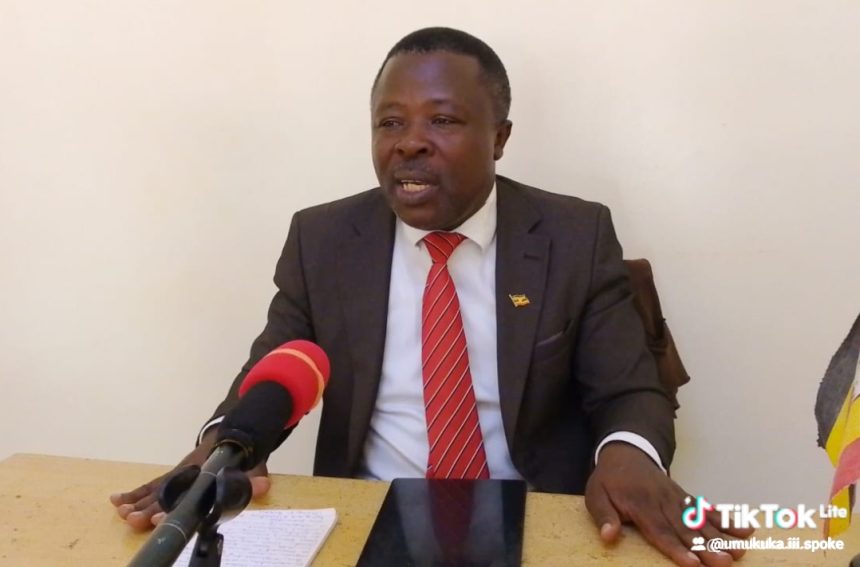
Below is the Umukuka of the Bamasaba people, His Highness Jude Mike Mudoma, and the spokesperson of the Bamasaba Cultural Institution, Steven Masiga, dressed in blue with a red tie, at the Mbale High Court during mediation.
The writer is a High Court mediator, legal scholar, and spokesperson of the Bamasaba Cultural Institution. Tel: 0782231577.