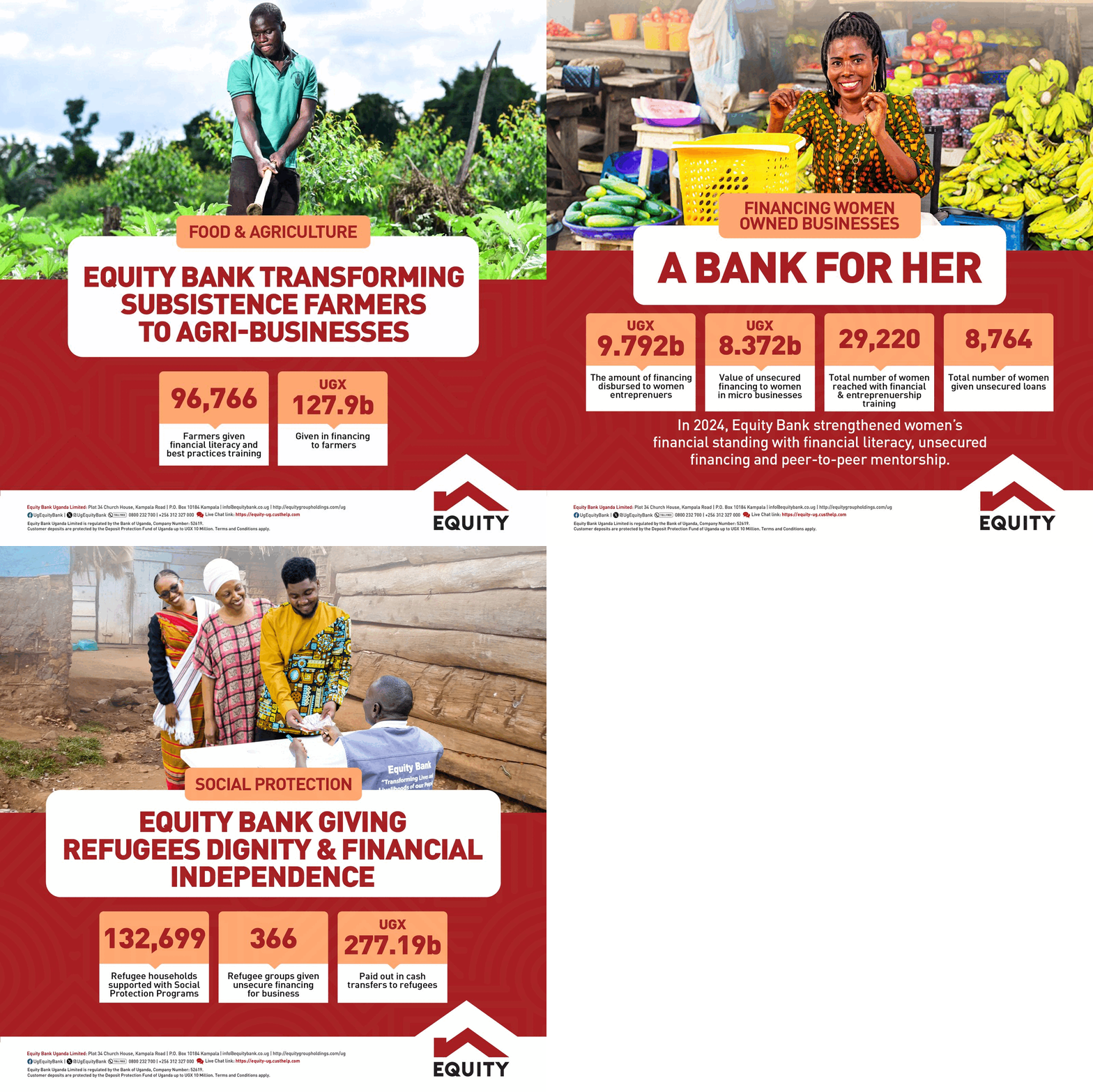
BUVUMA – Women entrepreneurs in Buvuma District are set to benefit from affordable loans, business training and enterprise development support following the extension of the Government’s Generating Growth Opportunities and Productivity for Women Enterprises (GROW) Project to the hard-to-reach island district.

The initiative, implemented by the Government of Uganda with support from the World Bank and the Private Sector Foundation Uganda (PSFU), seeks to improve women’s access to affordable financing and business development services to enable them to establish, strengthen and expand their businesses.
Equity Bank Uganda is among the participating financial institutions implementing the programme, which provides eligible women entrepreneurs with loans and additional support to grow their enterprises.
According to Nelson Mugisha, Enterprise Development Manager at Equity Bank Uganda, the extension of the programme to Buvuma followed a review of its national coverage by PSFU and participating financial institutions.
“The review established that the project had already reached 134 of Uganda’s 136 districts, leaving Buvuma and Otuke as the only districts yet to benefit. We are pleased to be part of the effort to bridge that gap and ensure women entrepreneurs in these districts can also access the opportunities available under the programme,” Mugisha said.

Under the GROW Project, eligible women entrepreneurs can access loans ranging from Shs1 million to Shs100 million, depending on their business needs and loan category.
However, Mugisha emphasised that Equity Bank’s support goes beyond providing loans, noting that the bank also offers free financial literacy training and helps women entrepreneurs formalise and digitalise their businesses.
“Many people think the GROW Project is only about loans, but there are several other opportunities available to women. We provide free financial literacy training, support business registration and formalisation, as well as business digitalisation,” he said.
The training equips participants with practical business skills, including budgeting, record keeping, debt management and financial planning. Beneficiaries are also guided through business registration and formalisation processes to help them improve their operations, access new markets and build sustainable enterprises.
The programme also seeks to address some of the challenges women face when accessing credit, particularly difficulties in providing collateral security. Under the GROW framework, married women may use their spouses’ collateral to support loan applications, subject to the applicable requirements.
Equity Bank’s outreach in Buvuma is also expected to complement other development initiatives the bank is implementing in the district, including the National Oil Palm Project, which has seen many women participate in commercial agriculture.
Silverstar Kagga, a Financial Literacy Trainer at Equity Bank Uganda for the Eastern Region, said the bank recognised the need to ensure women in Buvuma were not left behind as the programme expanded across the country.
“Buvuma was one of the districts that had not benefited from the GROW Project. Our focus was to ensure that women in the district also have an opportunity to access the financing, skills and support available under the programme,” Kagga said.
He added that the interest shown by women already participating in the National Oil Palm Project further reinforced the need to extend GROW services to the island community.
Beyond providing credit, Equity Bank is encouraging women entrepreneurs to develop a savings culture and embrace digital banking services, which can help reduce the time and costs associated with travelling long distances to access financial services.
Kagga also urged women to borrow responsibly by assessing their business needs and repayment capacity before taking out loans.
He noted that women who may not qualify for financing under the GROW Project can still explore other banking products designed to support their businesses.
The extension of the programme to Buvuma is expected to give women entrepreneurs greater access to financial services, business knowledge and enterprise development opportunities, helping strengthen local businesses, improve household livelihoods and contribute to economic growth.