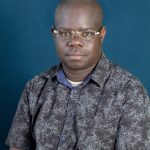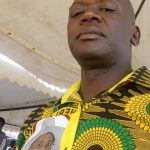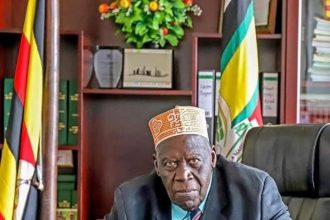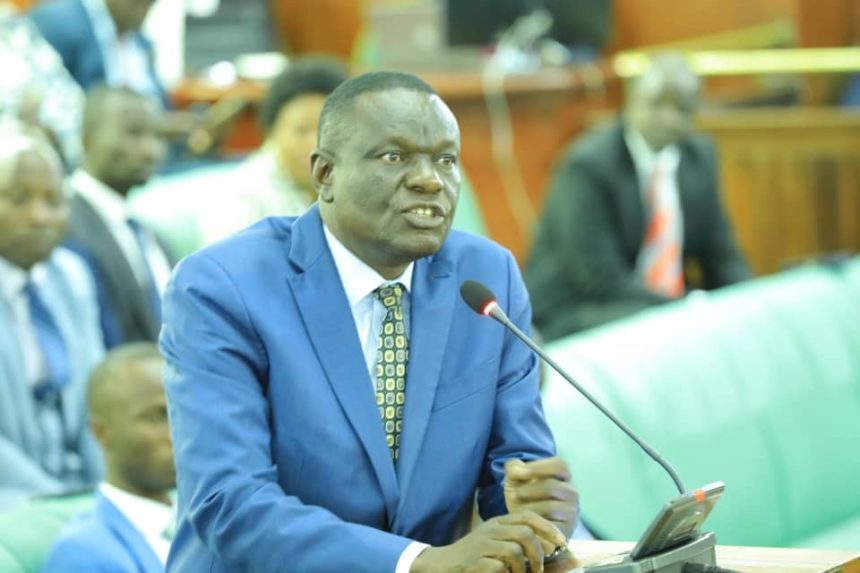
Former Dokolo South lawmaker Felix Okot Ogong has broken his silence on the recent cabinet reshuffle, dismissing the four ministerial slots allocated to the Lango sub-region as inadequate compensation for the area’s overwhelming electoral support for the ruling NRM government.
Speaking in an exclusive interview over the weekend, the seasoned politician who served as a Member of Parliament for nearly three decades argued that Lango deserved “key positions” such as Vice President or Prime Minister rather than standard cabinet ministerial posts.
“Lango entrusted the NRM government under the leadership of Yoweri Kaguta Museveni with a lot of votes, but the reward of four ministers is not enough for the Lango region,” Okot said.
‘NRM failed the examination’
The outspoken former legislator went further, comparing the appointment process to an examination that the NRM government had failed completely when it came to recognising Lango’s contribution to the party’s electoral success.

“If the appointment were an examination, the NRM government failed completely in Lango to give only four ministers,” he said.
Okot asserted that Lango’s voting pattern warranted the region being awarded one of the highest offices in the land.

“Lango should have been given key positions in the recent appointment like Prime Minister or Vice President, not just cabinet ministers. Lango deserves to have the Prime Minister post or Vice President post, any of the highest positions,” he insisted.
The former legislator also expressed frustration over what he termed unfulfilled pledges made by the NRM government to the people of Lango, saying that several commitments remained unmet.
“Several pledges were made by the NRM government in Lango but were not met or fulfilled. Giving only four ministers is not fair,” he said.
A legacy of service in Dokolo
Okot Ogong, who first entered Parliament in 1996, leaves behind a significant legacy in Dokolo South after choosing not to contest in recent elections. Having served 30 consecutive years in Parliament by the end of his term, he remains one of the longest-serving legislators in the region’s history .
During his tenure, the 59-year-old former State Minister for Youth and Children’s Affairs (2001-2006) was credited with supporting the construction of churches across Dokolo, transforming them from grass-thatched structures into permanent buildings . He also gained recognition for sponsoring the education of bright but disadvantaged children from the constituency .
In a practical gesture that endeared him to his constituents, Okot purchased plastic chairs and a public address system that residents can use at social gatherings for a nominal cleaning fee of Shs10,000 . More recently, he pledged to construct a Health Centre III in Dokolo Town Council and establish a secondary school in Kangai Sub-county to improve access to essential services .
However, some constituents have offered mixed assessments of his legacy. Mr Wilson Odyek, a 53-year-old former village chairman, told this newspaper: “Money has helped him a lot to retain that seat. Okot Ogong has not done much for the people of Dokolo South but because of poverty, he uses a lot of resources during elections” .
Call for unity among Lango leaders
Beyond his critique of the national cabinet appointments, Okot called on the broader Lango community to unite and address the region’s developmental and political challenges.
“I call on Lango people to come together and streamline the challenges, especially the MPs and top government officials in Lango,” he said.
Turning his attention to the recent election of Lango Parliamentary Group leaders, Okot offered words of encouragement while urging the new leadership to prioritise collective action. He wished the newly elected officials well and asked them to remain united for effective service delivery to the people of Lango .
Lango’s electoral calculus
Okot’s frustration stems from a voting pattern that has increasingly favoured the NRM. Opinion polls indicate that President Museveni commands approximately 65 per cent support in Lango, representing a seven per cent increase from previous election cycles . This shift marks a significant political realignment for a sub-region that had strongly voted for opposition parties until 2006 .
Despite this support, the Lango sub-region “home to over three million people” secured only four ministerial positions in the latest “No More Sleep” cabinet . The appointees include Dr Jane Ruth Aceng Ocero as Minister of Information, Communications Technology and National Guidance; Sam Engola as Minister for Relief, Disaster Preparedness and Refugees; Santa Sandra Alum Ogwang as Minister of State for Economic Monitoring; and Dr Mercy Faith Lakisa as Minister of State for Youth and Children’s Affairs .
The meagre allocation to the sub-region ” which comprises nine districts and one city” has raised eyebrows among political observers. By comparison, other regions with similar or smaller populations have traditionally secured more significant representation in the executive branch.
Unfulfilled promises
Okot’s reference to unmet pledges appears to reflect persistent grievances within the region regarding infrastructure development. According to a report by the Equal Opportunities Commission, Lango has only five per cent tarmac road coverage, the lowest among all Ugandan regions . This statistic holds stark significance given that President Museveni has repeatedly pledged to improve connectivity in the area.
During a December 2025 campaign event at Lango College in Lira City, President Museveni acknowledged concerns about regional connectivity and pledged to review the issue of eastern access to ensure balanced infrastructure development. “It makes no sense for someone from Namasale in Amolatar to travel all the way through Lira, Kamdini, and Karuma when Nakasongola is just across the water,” the President said .
Government Chief Whip Denis Hamson Obua highlighted at the same event that the sub-region has seen notable achievements, including the establishment of Lira University, the upgrading of Lira Hospital to regional referral status, the construction of Akii Bua Stadium, and progress on strategic roads such as the Dokolo–Kaberamaido–Namasale route . However, Obua also noted that much work remains, particularly regarding road infrastructure.
A pattern of political discontent?
Okot’s critique is not an isolated sentiment. The veteran politician, who has witnessed the ebb and flow of Lango’s political fortunes from the frontlines of Parliament, argues that Lango people “have the NRM government in their heart but benefit less from government compared to other regions.”
The former legislator decried how Lango people are being “used by the government” without receiving adequate recognition in terms of rewards and appreciation through key government positions.
His comments come at a time when the Lango Parliamentary Group has elected new leadership under Oyam South MP Patrick Ogwang Obura, who secured 11 votes to narrowly defeat Kole North MP Dr Samuel Opio Acuti. The new leadership has pledged to foster collaboration among members and advocate for policies that uplift the Lango sub-region .
The question that remains is whether Okot’s critique will catalyse a broader political conversation about equitable representation or whether it will be dismissed as the parting shot of a veteran politician watching from the sidelines.
For now, the man who served Dokolo South for thirty years has made his position unequivocal: Lango’s contribution to Uganda’s ruling party demands more than four ministers. It demands a seat at the highest table of national leadership.