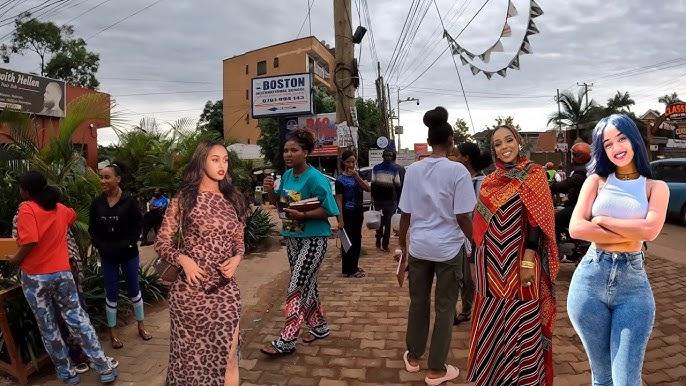
Kampala neighborhoods of Kansanga and Buziga are at the center of a heated debate online after reports emerged that many shops, restaurants, and pharmacies in the area now display names written in Ethiopian and Eritrean languages.
A widely shared tweet warned: “Eritreans and Ethiopians have officially captured and conquered Kansanga and Buziga, shops, pharmacies and restaurants now have names written in Ethiopian and Eritreans languages. We need to get serious about this before it’s too late.”
The tweet sparked a flurry of reactions, reflecting a mix of concern, acceptance, and criticism among Ugandans. Some expressed alarm at what they perceive as a cultural takeover. One user wrote: “People in replies yapping how USA has Chinatown, have you ever seen a Chinese man in USA fighting for a passport and being part of their culture when he or she is not born there? Here those guys want to become a full tribe in a country which is not theirs, they want to hold our +”
Others urged tolerance and reminded critics that Uganda itself benefits from labor migration abroad. A user noted: “As a country with so many of our countrymen in other countries trying to earn a shilling’ we sure ain’t so hospitable. Let people go and earn from wherever they can better their lives. As long as they abide by the host’s rules and regulations. Heck even US has Chinatown.”
Some Ugandans reflected on historical parallels in the West: “When immigrants were taking over America and Europe just a few years ago, we were laughing and thinking it’s people trying to look for greener pastures, yet the situation was very serious and the local citizens were being badly affected… Now it has come to our countries also.”

Others highlighted the role of landlords in shaping the situation. “Before you blame Eritrean, how about the landlords who are so greedy that they charge abnormal money for ramshackle . Which only Eritrean can afford. It another serious country a foreigner is given second choice whether they have money or not.”
Not everyone was hostile. Some users condemned xenophobic attitudes, emphasizing the need for coexistence: “Look at this fool, this is how people like you fuel apartheid & xenophobia gabalemye kola musiliwala this world is too big & enough for everyone stop being greedy! Deira is flooded by Ugandans in Dubai why don’t they chase you away? you’re a very vile person.”

Uganda has a long history as a host to refugees, particularly from volatile regions like the Horn of Africa, which has endured decades of conflict and political instability. The presence of Eritrean and Ethiopian businesses in Kampala can partly be seen as an extension of Uganda’s reputation as one of Africa’s most hospitable countries for displaced communities.
Yet the debate reveals underlying tensions. Some Ugandans fear economic competition and cultural erosion, while others see opportunities for diversity, entrepreneurship, and strengthening Uganda’s image as a safe haven for refugees.
As Uganda continues to host thousands of refugees and migrants from neighboring countries, the balancing act between inclusion, economic opportunity, and cultural identity remains delicate—and highly visible in neighborhoods like Kansanga and Buziga.