KAMPALA, Uganda — President Yoweri Museveni has ordered the immediate dismissal of six senior engineers from the Ministry of Works and Transport and the Uganda Civil Aviation Authority (UCAA), citing alleged corruption, inflated project costs and persistent delays in the implementation of major infrastructure projects across the country.
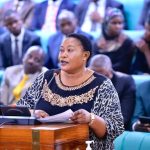
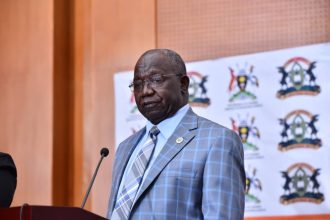
The directive, announced by Works and Transport Minister Fred Byamukama before Parliament’s Committee on Physical Infrastructure on Monday, marks the beginning of what the President described as a broader clean-up campaign within the ministry.
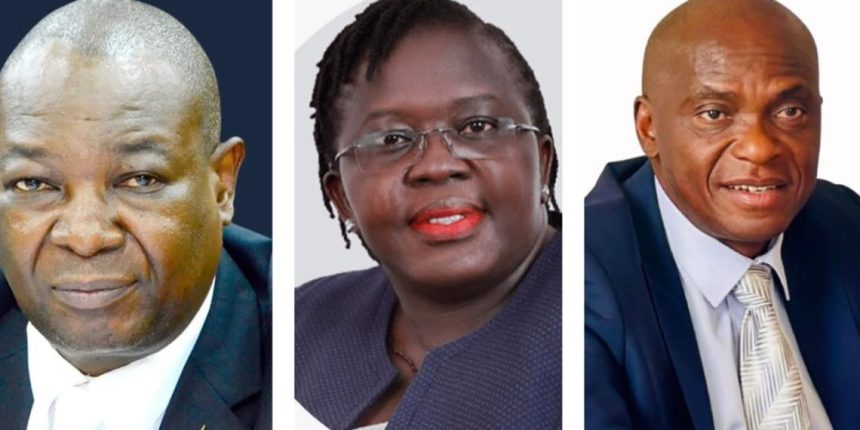
According to a copy of the President’s letter, the officials ordered to leave office with immediate effect are
- Eng. Steven Kitonsa, the Engineer-in-Chief at the Ministry of Works and Transport;
- Eng. Ronald Olaki, the Project Manager for the stalled Masaka–Kyotera–Mutukula Road;
- Eng. Roggers Kisambira, the Project Manager overseeing road projects in Hoima and Kampala being constructed ahead of the 2027 Africa Cup of Nations (AFCON);
- Eng. Ronald Twesigye, the Head of the Contracts Committee at the Uganda Civil Aviation Authority (UCAA);
- Eng. Sooma Ayoub, the Director of Entebbe International Airport; and
- Hellen Wenene, the Head of Legal at UCAA.
In his letter, Museveni accused officials in the ministry of presiding over widespread corruption that has undermined the delivery of critical infrastructure projects.
“I have been getting reports that there is massive corruption in the Ministry of Works. Proof of the corruption has been the delays in road construction, reconstruction, repair and maintenance,” the President said.

He cited several projects as examples, including the Busega–Mpigi Expressway, the Mubende–Mutukula Road, Jinja Road, procurement of scanners at Entebbe International Airport, and alleged attempts to increase the cost of AFCON roads from Shs4 billion to Shs8.5 billion per kilometre.
Invoking powers granted under Article 99 of the Constitution, Museveni directed that the six officials be retired “in the public interest.”

“They should vacate office immediately. Organise for their handovers. I will look for patriotic Ugandans to replace them,” the President instructed.

Appearing before the committee chaired by Mbarara City South MP Mwine Mpaka, Minister Byamukama revealed that the six dismissals are only part of a wider anti-corruption crackdown.
He said several engineers are currently recording statements before the Inspectorate of Government (IGG), while former government officials are also under investigation over alleged irregularities linked to delayed road projects, including the Busega–Mpigi Expressway.
“The people who are suspected were implicated. That is why you saw the Permanent Secretary, Bageya Waiswa, being interdicted. We have a number of engineers recording statements with the IGG, and even those who left government are being investigated following the President’s guidance,” Byamukama told MPs.
According to the minister, corruption has significantly contributed to delays in project implementation through unnecessary design changes, slow approval of certificates and contract variations that have driven up construction costs.
To address the recurring challenges, the Ministry of Works has introduced reforms aimed at improving accountability and reducing delays.
Among the new measures, government will no longer sign road construction contracts before acquiring a substantial portion of the required land for the project.
Byamukama said at least 50 percent of the right of way must be secured before contracts are signed, while President Museveni has recommended that land acquisition should ideally reach 75 percent before construction begins.
“We must stop exposing government to unnecessary claims arising from delayed land acquisition,” the minister said.
The parliamentary committee also questioned ministry officials over the slow progress of the 23.7-kilometre Busega–Mpigi Expressway, which has faced repeated delays due to funding constraints, land acquisition challenges and allegations of irregular design changes.
The project, funded by the African Development Bank (AfDB) and being constructed by China Civil Engineering Construction Corporation (CCECC), had reached 47.15 percent physical progress and 49.44 percent financial progress by June 2026.
Construction began in November 2019 and is currently expected to be completed in December 2028, although Byamukama admitted the target may not be met.
“We must be honest. Even after 2028, we may not complete the project depending on the challenges we have seen. However, the contractor is doing good work and government is committed to ensuring the project progresses,” he said.
Government has so far invested Shs547.5 billion in the project and is processing additional financing after Parliament approved a new AfDB loan. However, the contractor is still owed approximately Shs82.1 billion, a factor that has slowed construction.
Committee chairperson Mwine Mpaka also demanded accountability over alleged alterations to the original road design, claiming sections were diverted from dry land into wetlands, resulting in higher construction and compensation costs.
Officials from the Ministry of Works acknowledged that new regulations have since been introduced to ensure every officer responsible for approving design changes is clearly identified and held accountable.
Parliament’s Committee on Physical Infrastructure is expected to continue its investigations into several road projects as it seeks answers over escalating costs, prolonged delays and allegations of corruption in Uganda’s road infrastructure programme.