(Kampala) – Ugandan opposition leader Bobi Wine has raised concerns over President Yoweri Museveni’s recent comments about reviving the coffee industry through the government’s Operation Wealth Creation program. According to Bobi Wine, the president’s claims overlook years of neglect and questionable policy choices that have hindered the sector’s growth. He questioned the Uganda Coffee Development Authority’s (UCDA) sidelining and criticized Museveni’s use of family influence to control the coffee market.
Bobi Wine claims that Museveni’s administration played a role in the decline of the coffee sector, dismantling support systems like the Coffee Marketing Board and several cooperative societies. When the government took power in 1986, it sold off the Coffee Marketing Board’s assets in a rapid privatization push, raising only six billion Ugandan shillings despite assets valued at 33 billion. Bobi Wine contends that these assets ended up in the hands of people close to the president, questioning the administration’s commitment to coffee growers.
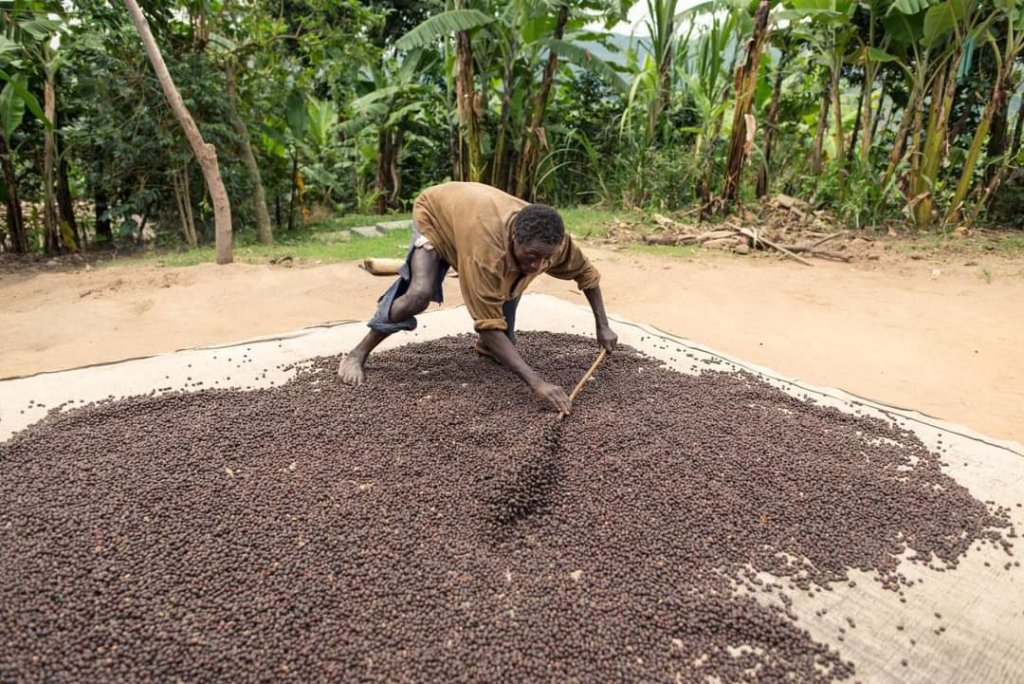
Wine argues that Museveni’s actions over the years reflect a pattern of neglect toward the coffee sector. Despite coffee being one of Uganda’s top foreign exchange earners, the UCDA operated for decades on a modest 1% export levy, with limited support from the government. A major government program called Operation Wealth Creation was launched in 2013 to provide seeds and seedlings, but it was short lived, plagued by mismanagement, and was eventually abandoned.
Bobi Wine criticized the execution of Operation Wealth Creation, describing how soldiers were tasked with distributing coffee seedlings with little support or training. Many seedlings ended up being abandoned, with only a small portion reaching actual coffee farmers. In contrast, he pointed out that cooperative societies, before their dismantling, had successfully managed this role.
The UCDA launched an ambitious Coffee Road Map in 2017 to increase production from 4.7 million bags to 20 million bags by 2030. Yet, according to Bobi Wine, the government has failed to fully fund this initiative, with budgets for the UCDA declining since 2019. This lack of financial commitment, he says, contradicts Museveni’s claim of supporting the sector’s growth.

Wine also questioned Museveni’s recent push for “value addition” in coffee, suggesting that such efforts, if genuine, should have begun when the president first assumed office. He pointed out that if the Coffee Marketing Board’s original processing initiatives had been supported instead of privatized, Uganda could have developed a substantial presence in the global coffee market.
The opposition leader further criticized the decision to bring in foreign investor Enrica Pinetti to run an instant coffee factory under the Vinci Coffee brand. Bobi Wine argued that instead of collaborating with established players like Olam or Kyagalanyi, the government provided substantial taxpayer funds to a family friend with no background in the industry. He suggested that this decision reflected a pattern of favoring close connections over experienced local entities like the Bugisu Cooperative Union.

In another criticism, Bobi Wine pointed to the Ministry of Agriculture’s performance record, arguing that placing the coffee sector under its control would likely repeat past failures seen with other agricultural products like fish, maize, and sugarcane. He suggested that Uganda’s coffee sector needs a dedicated regulatory authority, and he advocated for the UCDA’s continued independence to better support local coffee producers.
According to Bobi Wine, what Ugandans truly desire is not an overly large government but one that is efficient and responsive. He cited examples from the National Unity Platform’s 2021 manifesto, which included calls for reducing the size of Parliament and limiting the number of ministries. Instead, he observed, Museveni’s administration has expanded, creating numerous new roles that come with high taxpayer costs.
Bobi Wine called for a more consultative approach, emphasizing the need for government accountability and stakeholder input in the coffee sector. Instead of enforcing top-down decisions, he argued, the administration should have consulted players like the Buganda Kingdom’s Emwanyi Terimba initiative and other cooperative unions. He criticized the government’s push for a bill opposed by many in the coffee industry, suggesting that it reflects a disregard for democratic processes.
The question of how Uganda’s coffee industry should be managed remains central, as both sides of the political spectrum debate the best path forward. While Museveni’s administration argues for rationalizing coffee sector management, critics like Bobi Wine see these moves as another attempt to centralize control at the expense of independent institutions. The coffee industry, once a pillar of Uganda’s economy, is now the center of a growing debate over the role of government, the influence of powerful families, and the future of agricultural policy in the country.