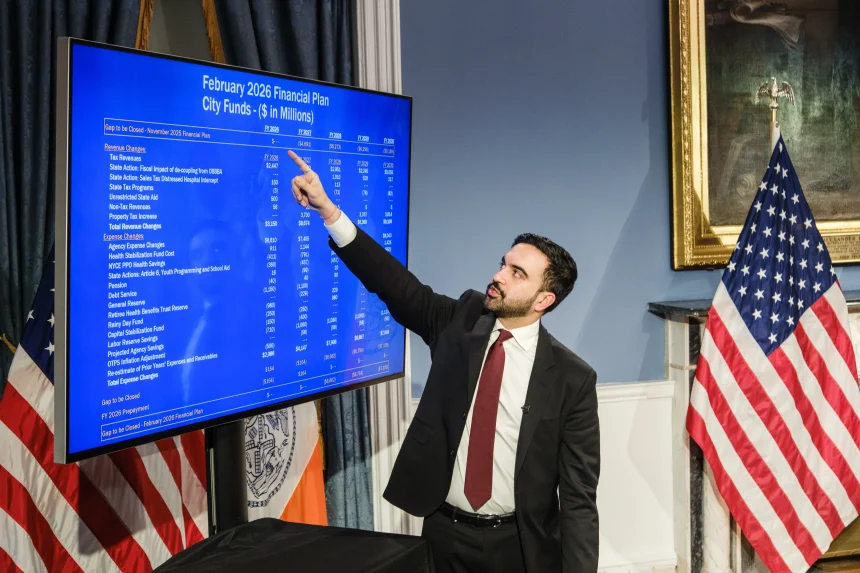
NEW YORK CITY — New York City Mayor Zohran Mamdani has presented a $127 billion preliminary budget for fiscal year 2027, outlining measures to address a projected $5.4 billion shortfall and setting off an intense political debate.
The mayor attributed the deficit to what he described as prior fiscal mismanagement under former mayor Eric Adams, arguing that key areas such as shelter operations, rental assistance, and special education were left underfunded.
According to City Hall, the new spending plan narrows the budget gap through agency savings, improved tax revenue forecasts, and additional state support.
The proposal seeks approval from Albany for new taxes targeting high-income earners and certain businesses. However, that effort faces resistance at the state level, including from Governor Kathy Hochul.
In the absence of state authorization, the administration has indicated it may implement a 9.5 percent property tax increase projected to generate $3.7 billion, alongside withdrawals from city reserves, including the rainy-day fund and the retiree health benefits reserve.

City Comptroller Mark Levine cautioned that heavy reliance on reserves and property tax increases could pose fiscal risks and place additional strain on property owners.
Critics argue that such measures may have broader economic consequences, while supporters maintain that the administration inherited structural budget challenges and is attempting to safeguard essential services.

The budget announcement has drawn widespread attention online and across political circles, with supporters defending the plan as a necessary corrective step and opponents questioning the sustainability of the proposed measures.
The preliminary budget now moves to the City Council and state lawmakers for further review and negotiation, a process expected to shape the city’s fiscal outlook in the months ahead.