As the world marks World Refugee Day, a growing number of displaced families in Uganda are moving beyond survival and building sustainable livelihoods through access to financial services.
Observed annually on June 20, World Refugee Day serves as a reminder that behind every refugee statistic lies a human story—a parent forced to flee conflict, a child separated from education, or a family compelled to abandon its home, livelihood, and community in search of safety.
For many refugees, displacement comes with an additional challenge: exclusion from formal financial systems. Without documentation, collateral, credit history, or access to banking infrastructure, many struggle to save, borrow, invest, or establish businesses. As a result, countless families remain dependent on humanitarian assistance long after arriving in host countries.
In Uganda, however, that narrative is gradually changing.
Through targeted financial inclusion initiatives, thousands of refugee households are gaining access to banking services, credit facilities, digital payments, and economic opportunities that are helping them rebuild their lives with dignity and self-reliance.
One institution at the forefront of this transformation is Equity Bank Uganda, which has invested heavily in expanding financial access for refugees and host communities. Working alongside humanitarian and development partners, the bank has introduced practical solutions designed to address barriers that have historically excluded displaced populations from the formal economy.
One of its notable achievements has been facilitating cash transfers to more than 132,699 refugee households, channeling over Shs301.7 billion through its growing digital banking network. The support has helped families meet basic household needs, improve food security, and launch or expand income-generating activities.

Beyond providing humanitarian support, the initiative has introduced thousands of refugees to formal banking services, creating pathways toward long-term financial independence.
Access to financial services remains one of the biggest challenges in refugee-hosting districts, many of which are located far from traditional banking infrastructure. To bridge this gap, Equity Bank has deployed more than 262 banking agents across refugee settlements and host communities.
The decentralized network allows refugees to open accounts, receive digital payments, save money, and access financial products without traveling long distances. It has also reduced reliance on cash-based aid systems while encouraging greater participation in the formal economy.
Financial inclusion, however, goes beyond simply opening bank accounts. For many refugees, access to credit can mean the difference between dependency and opportunity.
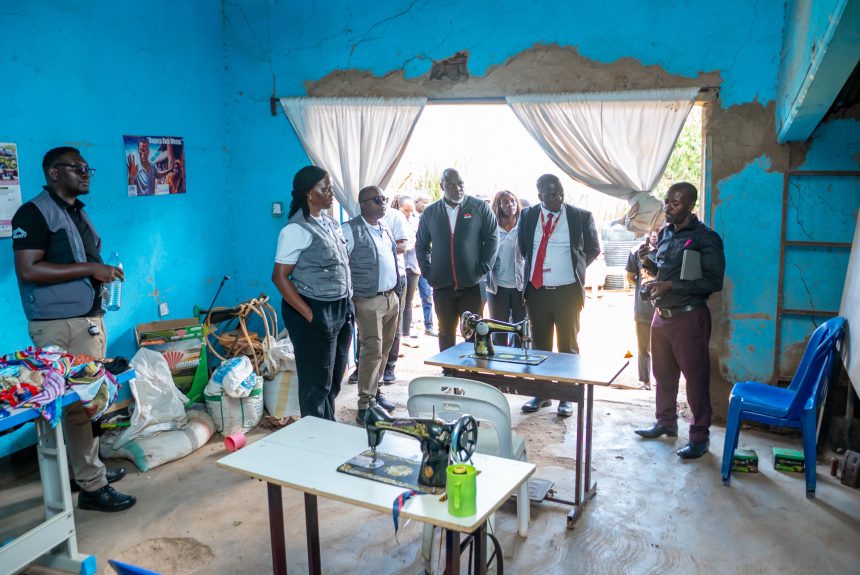
Recognizing this need, Equity Bank Uganda introduced a tailored credit programme for refugee entrepreneurs three years ago. The initiative assesses borrowers based on character, business potential, and cash flow rather than traditional collateral requirements.
As a result, 381 refugee groups have accessed loans worth more than Shs1.8 billion, financing a range of enterprises including tailoring businesses, agricultural projects, retail shops, and small-scale trading ventures.
These businesses are not only generating income for refugee families but are also creating employment opportunities and stimulating local economies.
The impact has been particularly significant among women. Of the beneficiaries reached through these initiatives, 7,182 are women compared to 3,867 men.
Studies consistently show that women are more likely to reinvest their earnings in education, healthcare, and nutrition, creating wider social and economic benefits for families and communities.
Uganda’s progressive refugee policy has also played a crucial role in enabling these successes. Unlike many countries, Uganda grants refugees the right to work, move freely, and establish businesses. This policy framework has created opportunities for financial institutions and development partners to support refugees as active economic participants rather than passive recipients of aid.
The result is a model in which refugee and host communities grow together. As humanitarian funds flow through formal financial channels, local businesses benefit, jobs are created, and economic activity expands across entire regions.
The impact extends beyond individual households, strengthening local markets and promoting social cohesion between refugees and host communities.
As Uganda joins the rest of the world in commemorating World Refugee Day, Equity Bank’s experience offers an important lesson: refugees do not simply need assistance, they need opportunity.
When access to finance is combined with supportive policies and strategic partnerships, displaced populations can become entrepreneurs, employers, and contributors to economic growth.
The story emerging from Uganda’s refugee settlements is no longer defined solely by displacement and vulnerability. Increasingly, it is becoming a story of resilience, empowerment, and economic transformation.