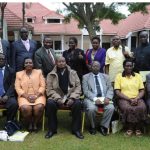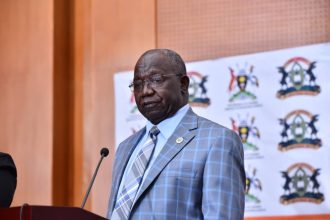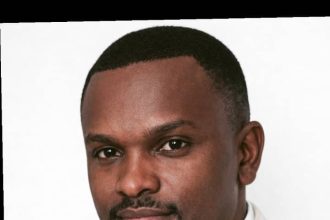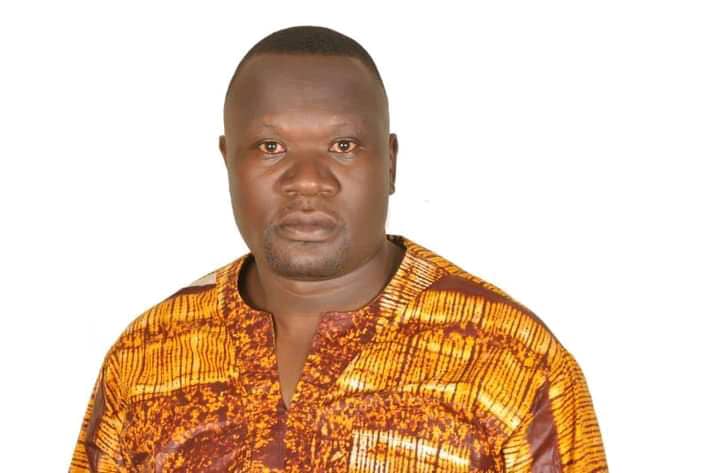

When over 250 Members of Parliament and at least 15 ministers gathered to witness Hon. Fadil Twala take over the reins as Secretary General of the Patriotic League of Uganda, the symbolism was impossible to ignore. It was not merely a handover; it was a declaration.
A declaration that the PLU, once dismissed by some as a fringe pressure group, has now evolved into a formidable political organism with the gravitational pull to summon nearly a third of the legislature and a significant portion of the executive to a single event. In Uganda’s political culture, attendance is a language of its own, and on that day, it spoke loudly. It suggested that the transition many have whispered about may not be looming in the distance but could already be quietly taking shape behind the curtains of power.
The ceremony itself carried the weight of a coronation. Kabanda David, whose tenure as SG was marked by raw energy and street-level mobilization, ceded authority to Hon. Fadil Twala, a man whose profile, temperament, and political grooming represent a different chapter in the PLU story. Kabanda’s contributions cannot be underestimated; he was part of the early vanguard that gave PLU its initial fire, its rebellious edge, its disruptive identity. But as the movement grew, so did the expectations of its supporters and observers. Many felt that the image of PLU needed refinement, sophistication, and a leadership structure that mirrored the seriousness of its ambitions. Figures like Kabanda and Frank Gashumba, though instrumental in the early days, were increasingly seen as misaligned with the evolving brand of a movement now positioning itself as a national contender rather than a street-level crusade. Their exit, therefore, was not merely administrative—it was strategic.
Gen Muhoozi Kainerugaba, the central figure around whom PLU revolves, has shown an acute sensitivity to public perception. His ability to listen, to observe, and to recalibrate has become one of the defining features of his leadership style. The restructuring of the PLU Central Command is perhaps the clearest demonstration of this. The inclusion of figures such as Attorney General Kiryowa Kiwanuka, Defence Minister Oboth Oboth, Deputy Speaker Thomas Tayebwa, and other seasoned political heavyweights marks a profound shift. These are not accidental additions; they are deliberate signals. They represent legal intellect, parliamentary mastery, executive experience, and national credibility. They bring with them constituencies, networks, and institutional memory. Their presence transforms PLU from a youthful movement into a political machine capable of navigating the complexities of statecraft.
This metamorphosis is not merely cosmetic. It reflects a deeper strategic realignment. The old PLU was defined by passion, spontaneity, and a certain rebellious charm. The new PLU is defined by structure, hierarchy, and strategic depth. The old PLU thrived on social media waves and public rallies; the new PLU is embedding itself in Parliament, in ministries, in legal circles, and in regional power blocs. The old PLU was a movement; the new PLU is becoming an establishment. And this evolution is precisely what has led many observers to conclude that the transition toward the grand scheme of national leadership is no longer speculative—it is unfolding in real time.

The attendance at the handover ceremony is perhaps the clearest indicator of this. Ugandan politicians are not known for attending events without calculation. Their presence is often a barometer of political winds. For over 250 MPs and 15 ministers to show up is to acknowledge PLU not as a fringe outfit but as a center of gravity. It is to recognize that Gen MK’s political star is not dimming but rising. It is to signal alignment, or at the very least, readiness to align. In Uganda’s political lexicon, this is how transitions begin—not with declarations, but with attendance, with body language, with subtle shifts in loyalty.
What makes this transformation even more remarkable is Gen MK’s man-management style. In a political environment often defined by suspicion, rivalry, and factionalism, he has managed to attract individuals from all classes, regions, and ideological backgrounds. He has drawn in young activists, seasoned politicians, technocrats, military veterans, business elites, and cultural influencers. His ability to maintain loyalty to the NRM while simultaneously building a parallel movement that commands national attention is a balancing act few have mastered. It speaks to a political instinct that blends respect for the old order with a vision for a new one.

This dual loyalty—both to the NRM and to the emerging PLU identity—has allowed him to avoid the pitfalls that often accompany political transitions. Rather than positioning PLU as a rival to the ruling establishment, he has framed it as an extension, a rejuvenation, a generational bridge. This has made it easier for ministers, MPs, and senior officials to associate with PLU without feeling they are betraying the NRM. It has also allowed PLU to grow without triggering institutional resistance. This is political engineering at its finest.
The new Central Command reflects this philosophy. Kiryowa Kiwanuka brings legal gravitas and institutional discipline. Oboth Oboth brings legislative experience and a deep understanding of national security. Thomas Tayebwa brings parliamentary charisma and political sharpness. Add to this other newly inducted figures—regional mobilizers, technocrats, and respected public servants—and the picture becomes clear: PLU is no longer a movement of the future; it is a movement of the present, preparing for the responsibilities of governance.
The contrast between the old and new PLU is therefore not a critique of the past but a recognition of growth. The early phase required firebrands, disruptors, and mobilizers. The current phase requires strategists, administrators, and statesmen. The early phase required noise; the current phase requires negotiation. The early phase required visibility; the current phase requires credibility. This is the natural evolution of any political movement that seeks national leadership.
What remains undeniable is that the PLU metamorphosis has shifted the political landscape. The handover ceremony was not just a change of guard; it was a declaration of readiness. A readiness to move from activism to administration, from mobilization to governance, from aspiration to execution. And the overwhelming attendance was the country’s political class acknowledging that readiness.
Whether the transition is looming or already quietly underway is a matter of interpretation. But what is clear is that PLU, under its new leadership and expanded command, is edging ever closer to the center of national power. And Gen MK, with his unique blend of loyalty, charisma, and strategic patience, stands at the heart of that journey.
The writer is the Deputy Resident City Commissioner for Nakawa.