Juliet Kyinyamatama: The Hidden Hand Behind Uganda’s Recent Political Crisis
In the curious world of Ugandan politics, where the National Unity Platform’s (NUP) headquarters are besieged, opposition MPs face violent arrests, and NUP supporters languish in unlawful detention, an unknown name emerged from the shadows, hoping to divert the attention of the nation – Juliet Kyinyamatama.
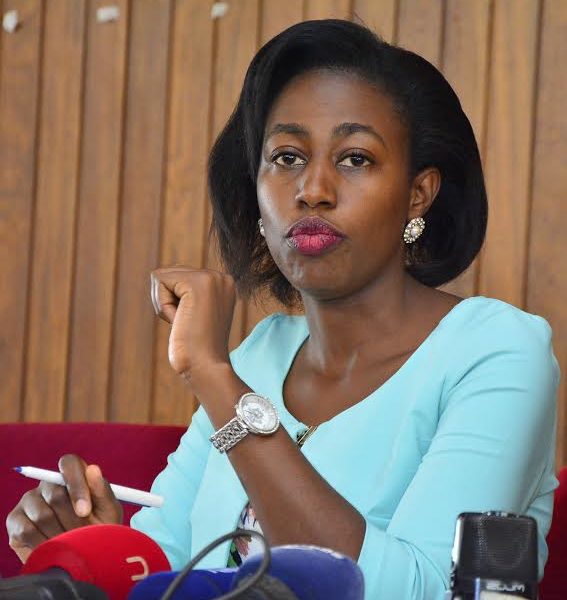
Meet Juliet Kyinyamatama, alias Kobusingye Juliet, a member of Uganda’s ruling National Resistance Movement (NRM) party and until then a relatively obscure politician, who embarked on a covert mission to derail the parliamentary discussions addressing the country’s deteriorating human rights situation.
While the nation’s human rights discussion took center stage in the hallowed halls of Parliament, Kyinyamatama quietly schemed to hijack the agenda, leaving us to wonder: is she just a stooge in the grand political theater?
It all began when Butambala MP Muwanga Kivumbi unveiled the shocking brutality and intolerance shown by the state towards opposition figures. The response? Opposition MPs staged a walkout in protest, drawing national attention to the dire human rights situation.

Sensing that the House was drowning in demands for the release of unlawfully detained individuals and pleas to end the NUP office siege, Kyinyamatama concocted a diversionary maneuver. She accused Francis Zaake, Mityana Municipality MP, of an altercation. Some MPs argued that the incident was outside the purview of Parliament and thus not worthy of discussion within its chambers.
In the end, Kyinyamatama’s ploy succeeded. Deputy Speaker Thomas Tayebwa adjourned the House after a two hour standoff, leaving the pressing human rights crisis largely unaddressed.

Unmasking the Mysterious MP
But who is Juliet Kyinyamatama Suubi, formerly known as Kobusingye Juliet, beyond her diversionary tactics? Not much information is available about this enigmatic MP, but her history tells a tale of quiet influence.
To put it simply, she’s a parliamentarian shrouded in obscurity. In fact, she made it onto The Observer Newspaper’s list of the “most silent MPs” in 2016, a testament to her unassuming presence in the political arena.
Born on December 22, 1988, Juliet Kyinyamatama Suubi, as she’s officially known, ventured into politics and was elected as the district woman representative for Rakai in 2011. Remarkably, she secured re-election in the 2016 and 2021 Uganda General elections. But what sets her apart is that she started as an independent candidate after losing in the National Resistance Movement primaries. A true rebel or a political maverick?
Here’s a quick glance at some of her notable moments in the political spotlight:
| Year | Event |
|---|---|
| 2017 | Juliet Kinyamatama Suubi stood up against payments in dollars, advocating for transactions in Ugandan Shillings. |
| 2017 | She supported the removal of the presidential age limit, asserting that it would not lead to a lifetime presidency. |
| 2021 | Juliet Kyinyamatama declared her candidacy to unseat Rebecca Kadaga as Speaker of Parliament, vowing to bring accountability and equitable representation to the House. |
| 2021 | She pledged to allocate a “sizeable” budget to the youth, as they make up 77% of the population, focusing on job creation in the public and private sectors. |
She first came into the spotlight in 2016 when she appeared on The Observer Newspaper’s list of the most silent MPs. A woman of few words, she has quietly navigated the political landscape. In 2017, she raised eyebrows when she declared her opposition to paying rent and other fees in dollars, despite most transactions in the country being conducted in shillings.
Kyinyamatama’s support for the removal of the age limit clause further added to her intrigue. She argued that age limits stifled political inclusion and should be eradicated to level the playing field. The opposition MPs led by Ssemuju Nganda did beg to differ, and they had a point when they raised concerns about MPs being given $8,000 for consultations on the controversial bill to change the age limit. It seems President Museveni had a different idea about how to convince MPs.
The Unconventional Bill that Shocked Parliament
Her moment in the sun came when she sought the House’s permission to introduce the “Public Holidays (Amendment) Bill, 2020.” However, this was met with outright rejection by the House, under the guidance of the then unyielding Speaker, Ms. Rebecca Kadaga. Kyinyamatama was allotted a mere 10 minutes to justify her audacious bill.
Her argument? Public holidays are meaningless when they fall on weekends, as most Ugandans prefer to rest and prepare for the workweek. She cited the upcoming Women’s Day, which happened to fall on a Sunday, suggesting it wouldn’t get the attention it deserved because people would be too preoccupied with work preparations. The MP further explained that moving public holidays to weekdays would give Ugandans more actual rest days, relieving them of extra obligations on weekends.
But her proposal sparked an uproar in the parliament, with members interrupting her speech, hesitating, and ultimately rejecting her notion of shifting public holidays to weekdays. Perhaps it was too futuristic for the House to handle.
But Kyinyamatama’s most audacious move came in 2021 when she declared her bid to unseat Rebecca Kadaga as Speaker of Parliament. Her independent but NRM-leaning candidacy ruffled feathers and intensified the competition for the position.
In her announcement, Kyinyamatama promised to bring accountability, equitable representation, and youth inclusion to Parliament. She emphasized the need to foster a sense of nationalism and unity among the Ugandan people.
She promised quarterly updates to the people and a “sizeable” budget for the youth, who make up 77% of the population. She believed that they deserved 50% of the budget to create jobs and prosperity. Her fear wasn’t her competition, but failing to represent her country and Rakai effectively.
Kyinyamatama’s campaign faced challenges, including smear campaigns and monetization, but she stood firm on her principles, urging MPs to vote based on substance, not financial incentives.
As we dig into Kyinyamatama’s background, we find that she holds a Bachelor’s degree in Social Work and Social Administration from Uganda Christian University and a certificate in Global Health from the University of Geneva.
Before her parliamentary career since 2011, she held roles such as Social Work Assistant and Social Work Manager at Partners in Health. This eclectic mix of experiences doesn’t align with the typical politician’s CV.
So, is she a stooge or a misunderstood genius? Juliet Kyinyamatama’s journey from the shadows to the parliamentary spotlight may be unorthodox, but in the realm of Ugandan politics, who’s to say what’s normal?