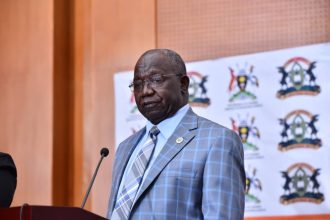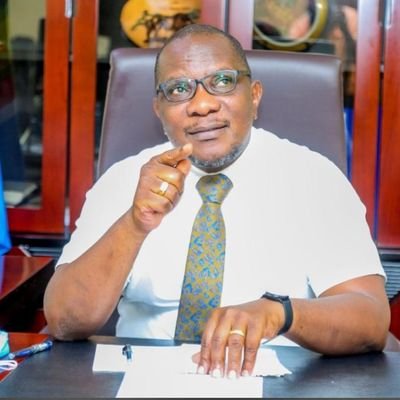
KAMPALA, Uganda — For more than three decades, Eng. David Ssali Luyimbazi has worked quietly behind some of Uganda’s most transformative infrastructure projects from highways and urban roads to digital revenue systems and strategic public sector reforms.
Now, growing whispers within government circles suggest the Oxford-trained engineer and programme manager could be heading for a dramatic return to frontline public service, with reports linking him to two of Uganda’s most struggling ministries: the Ministry of Works and Transport, and the Ministry of Water and Environment.
Sources within government say such an appointment would signal President Yoweri Museveni’s intention to inject fresh energy and technocratic leadership into sectors long criticised for bureaucracy, delayed projects, and weak service delivery.
Luyimbazi’s résumé spans more than 30 years in public infrastructure management and strategic planning. Between 2020 and 2024, he served as Deputy Executive Director of Kampala Capital City Authority (KCCA), where he was directly accountable to Parliament for the authority’s budget and operations.
During his tenure, KCCA reconstructed more than 200 kilometres of urban roads, increased locally generated revenue from UGX 80 billion to over UGX 120 billion annually through digital reforms, and implemented Africa’s first city-scale digital twin technology to improve urban planning.

However, many sector experts point to his earlier role at the Uganda National Roads Authority (UNRA) as the period that cemented his reputation as one of Uganda’s most effective infrastructure technocrats.
As Director of Planning between 2008 and 2015, Luyimbazi oversaw the preparation of more than 3,400 kilometres of road projects and helped secure over US$1 billion in financing from development partners including the World Bank, JICA, the European Union, and China EXIM Bank.

He also played a key role in structuring Uganda’s first Public-Private Partnership (PPP) road project — the US$1.2 billion Kampala–Jinja Expressway.
Former colleagues describe him as a systems builder who focused on long-term institutional reforms rather than short-term visibility.
“He built the architecture that made UNRA effective,” one former official said. “From the national roads databank to monitoring systems and the Road Fund design, many of the structures still used today trace back to his work.”
The Ministry of Works and Transport has in recent years faced mounting criticism over delayed infrastructure projects, deteriorating road maintenance, and what insiders describe as excessive bureaucracy.
Several sector analysts argue that the ministry needs a leader capable of restoring efficiency, accelerating implementation, and rebuilding confidence among development partners.
Supporters of Luyimbazi believe his experience in programme management, donor negotiations, and infrastructure financing makes him a strong candidate to drive such reforms.
“At UNRA, he streamlined procurement systems and ensured there was always a pipeline of investment-ready projects,” a transport sector analyst noted. “He understands how to move projects from paperwork to implementation.”
The Ministry of Water and Environment is also reportedly under scrutiny, with insiders describing a sector weighed down by stagnation, rigid bureaucracy, and declining innovation.
Despite continued donor support, challenges persist in water coverage, environmental compliance, and project execution across several parts of the country.
Development partners familiar with both ministries say the sector urgently needs a technocrat capable of combining engineering expertise with financial discipline and institutional accountability.
“Water and Environment needs a systems thinker who understands programme delivery, budgeting, and reform management,” one development partner official said. “That is exactly the kind of experience Luyimbazi brings.”
In a public service environment often dogged by allegations of corruption and patronage, Luyimbazi’s reputation has remained largely untainted.
Multiple sources across government institutions described him as a disciplined technocrat focused on performance rather than politics.
“He is not driven by personal interests,” a former KCCA colleague said. “He wants systems to work. That is why many people believe he can still make a difference in government.”
His experience at KCCA also exposed him to political oversight at the highest levels, including presenting budgets before Parliament, preparing Cabinet memoranda, and advising senior political leaders.
Observers say this rare blend of technical expertise and political understanding gives him an advantage over many career civil servants.
President Museveni has repeatedly called for “new blood” in public service and for leaders capable of driving efficiency and patriotism within government institutions.
Political observers argue that appointing a technocrat like Luyimbazi would send a strong signal to both the civil service and development partners about government’s commitment to reform.
However, analysts also caution that entrenched interests within ministries may resist sweeping institutional changes.
“The real question is whether government is prepared to prioritise competence over comfort,” one analyst said. “Because if reform is truly the goal, Luyimbazi fits the profile of the kind of technocrat capable of turning institutions around.”
Unlike many public figures, Eng. David Ssali Luyimbazi has largely stayed away from political limelight, spending most of his career designing systems behind the scenes.
But as speculation over his possible deployment grows, many Ugandans are beginning to ask whether the country may finally be preparing to place one of its most experienced technocrats at the helm of one of its most troubled ministries.
Whether those reports materialise or not, the debate surrounding his name has already reignited wider conversations about competence, accountability, and the future of Uganda’s public service.