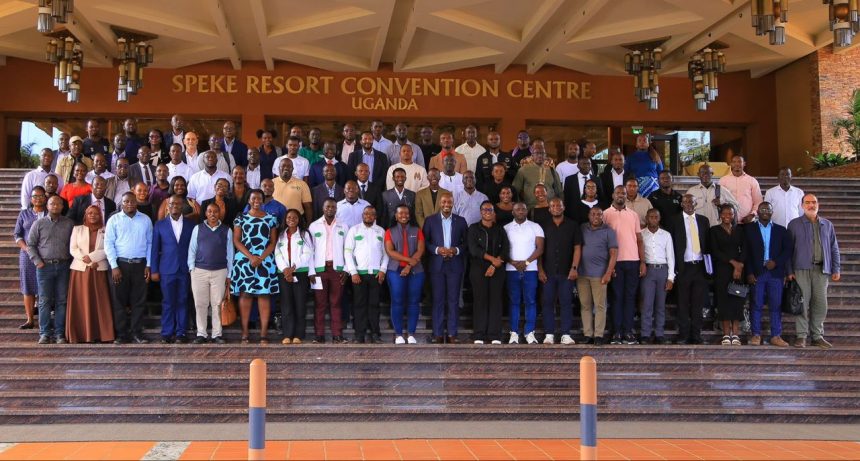
Munyonyo, Uganda – The Tropical Institute of Development Innovations (TRIDI) has unveiled a large-scale plan to turn Uganda into a global silk powerhouse, during a high-level review of STI-OP backed ventures at Speke Resort Munyonyo on Sunday.
The event, convened by the Science, Technology and Innovation Secretariat, Office of the President, brought together innovators to brief newly appointed Minister for Science, Technology and Innovation, Hon. Eng. Jonard Asimwe, on how their work advances Uganda’s ATMS agenda — Agro-industrialisation, Tourism, Mineral-based Industrialisation, and Science, Technology and Innovation — in pursuit of a US$500 billion economy.
From Mulberry to Market
TRIDI’s lead scientist, Dr. Clet Wandui Masiga, presented USILK Revolution 2026, describing it as Africa’s first end-to-end silk value chain. The model goes beyond basic sericulture to cover mulberry growing, climate-smart silkworm rearing, cocoon processing, yarn production, textile manufacturing, and export.
“We are not pursuing piecemeal farming growth. We are establishing an integrated industrial system that reduces risk, draws in private capital, and builds a silk sector that can compete globally,” Dr. Masiga said.

Progress reported between December 2025 and June 2026 includes 46km of access roads, 400+ acres of revived mulberry gardens, factory foundation works completed, and designs approved for all core facilities. TRIDI now manages over 600 acres of mulberry estates with modern water and processing infrastructure.
Markets Already Opening

According to Dr. Masiga, Ugandan silk has passed quality tests with European buyers, and buyers in India, Vietnam, and China are also on board. The institute is targeting 10,000 metric tonnes of silk yarn per year, a volume it projects could yield about US$1 billion in annual export revenue.
Call for Bolder Funding
Dr. Masiga urged a shift from small, phased grants to targeted, high-value investment for innovations already showing commercial viability. STI-OP’s Trever said the Secretariat typically uses phased funding, but can make exceptions for projects with strong market readiness.
Noting TRIDI’s progress, Minister Asimwe tasked Cathy, head of the Ministry’s Support Bureau, and Dr. Joshua Isiko, who leads the Productivity Acceleration Bureau, to help TRIDI secure market sustainability and fast-track commercialisation.
Regional Leadership Ambition
Dr. Masiga also announced plans, approved by President Yoweri Museveni, to convene silk ministers from 21 African countries to draft a continental silk strategy. TRIDI aims to have its processing plant fully operational before the meeting so delegates can see Ugandan silk being produced and value-added on site. Orders for knitting equipment have already been placed to close the textile loop.
A Complementary Ecosystem
Mohammed of Afrosilk Company Ltd showcased a parallel project to produce certified silkworm eggs. Officials noted the two ventures are aligned: Afrosilk will supply farmers with improved eggs, while TRIDI provides industrial capacity to process cocoons. Dr. Isiko said poor egg supply has historically limited sericulture, but the partnership addresses that gap.
Minister Asimwe directed his team to arrange a focused session with TRIDI to examine what sets it apart from other silk efforts and to define the Ministry’s role in scaling it.
He concluded by reaffirming support for innovations that can drive industrialisation, boost exports, create employment, and accelerate Uganda’s path toward a US$500 billion economy.