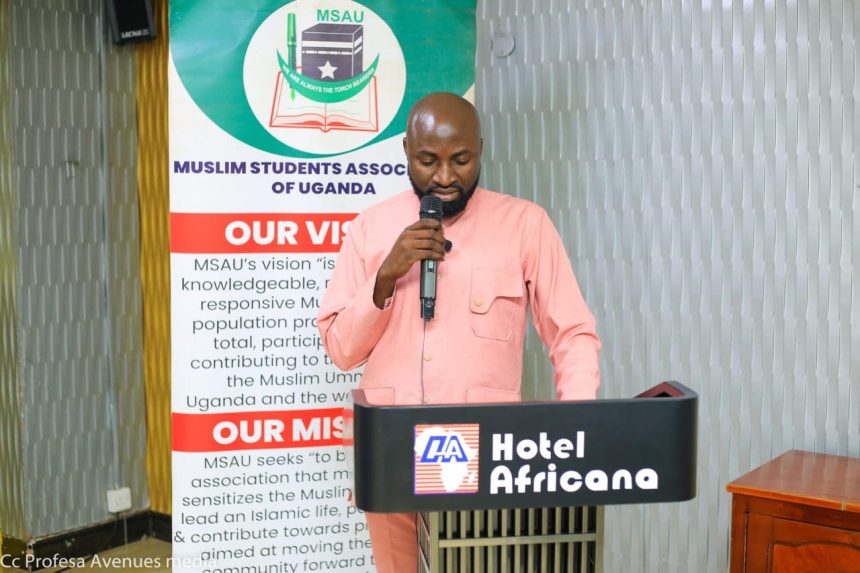
KAMPALA, Uganda — Youth empowerment, unity, and global solidarity were at the center of discussions during the MSAU Ramadhan Iftar Dinner held at Hotel Africana, where young leaders and community members gathered to reflect on the spiritual and social values of the holy month of Ramadhan.
Delivering a keynote address, Luyimbaazi Issah Katungulu, an African Youth Ambassador, researcher, and community leader, called on young people to embrace knowledge, patriotism, and responsible leadership in shaping the future of their communities.
Katungulu began his remarks with greetings inspired by the teachings of Muhammad, emphasizing the importance of unity, learning, and moral character as core values that guide believers.
He urged youth to remain committed to education and self-development, noting that the teachings of Islam encourage the pursuit of knowledge throughout life.
“Effective leadership begins with empowering young people to believe in themselves, develop creative skills, and transform ideas into practical solutions for sustainable development,” Katungulu said.

During the address, he highlighted the importance of patriotism and selflessness among youth, encouraging them to prepare for leadership roles and avoid being influenced by selfish interests that could hinder national and community progress.
Katungulu also stressed the importance of faith-based values in leadership, explaining that spiritual reflection and ethical conduct should guide young people in promoting peace, social cohesion, and community development.

Through initiatives such as the Batenga Foundation, he said efforts are underway to support vulnerable communities by constructing houses for widows, assisting orphaned children, and providing educational opportunities for students from underprivileged families.
The youth leader further called for international solidarity on global humanitarian issues, encouraging young people to promote peaceful dialogue and respect for human dignity in addressing global conflicts.
He noted that Africa’s youthful population presents a major opportunity for development, with nearly 70 percent of sub-Saharan Africa’s population under the age of 30.
“Africa has the youngest population in the world. This is a great opportunity for growth, but only if young people are empowered to realize their full potential,” he said.
Katungulu emphasized that involving young people in leadership and governance is not simply about inclusion but is essential for economic growth, innovation, peace, and security.
He urged leaders and institutions to create platforms where youth can participate actively in decision-making processes and contribute ideas that shape policies and development programs.
“It’s time to engage young people and give them a real seat at the table. Youth have potential and collective power that can drive positive change when guided properly,” he added.
The Ramadhan Iftar gathering brought together community leaders, scholars, and youth from different backgrounds, providing a platform for dialogue on faith, leadership, and the role of young people in building resilient and prosperous societies.
Participants said the discussions offered an opportunity to reflect on shared values and strengthen partnerships aimed at empowering the next generation of leaders.