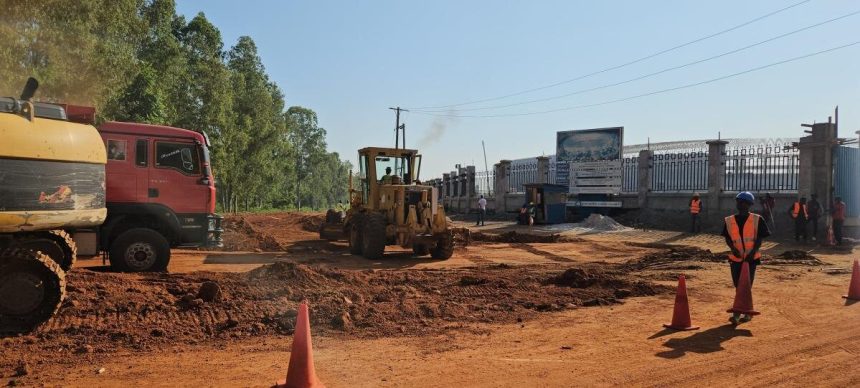
LIRA CITY – A storm of protest is brewing in Lira City following the suspension of works on 18.3 kilometres of access roads earmarked for the multi-billion-shilling Akii Bua Olympic Stadium, with leaders warning that the move risks turning the prestigious facility into an “inaccessible white elephant.”
The suspension has been described by the City Development Forum as a direct threat to the operationalization of the 20,000-seater stadium, which is the single largest public investment in Northern Uganda and is central to the region’s hosting of the 2027 Africa Cup of Nations (AFCON) games.
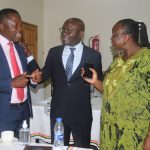
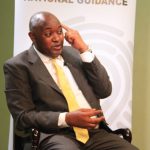
Speaking exclusively to the media on Monday at Lira City Council Hall, the President of the City Development Forum, Emmanuel Akeny, expressed deep concern over the development, stating that the construction of a magnificent stadium without connecting road networks defeats the very purpose of the multi-billion investment.
“The stadium is expected to serve as a regional and national centre for sports excellence, youth development, tourism, commerce and international sporting events. Leaving it inaccessible, isolated and paralysed does not give value for the money already invested there. This is like pouring billions and leaving it disconnected from the rest of the city,” Akeny said.
Lira City Mayor Sam Atul, who joined Akeny in addressing journalists, decried the suspension of the major roads, warning that it will hinder development and compromise the region’s readiness to host the 2027 AFCON games. “Our objective desire is not merely to witness the completion of a magnificent stadium, but to see a fully integrated national sports facility that delivers lasting economic, social and sporting benefits to Uganda,” Mayor Atul stated.

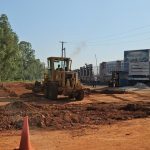
According to documents from the Lira City Development Forum, the roads earmarked for construction under the Design and Build project include Ireda Shamba Road (2.1km), Lumumba Ogengo Road (2.5km), Boroboro Road (5.2km), James Ajal Road (2.5km), Won Nyaci Road (1.7km), Erute Road (1.7km), Dokolo Road (0.5km), Moroto Road (1.5km), and Gapco Odokomit Road (1.5km).
The roads were identified by officials from the Ministry of Works and Transport in coordination with Lira City Council following instructions from the Ministry of Education and Sports. They were designed to ensure the facility is commissioned as a fully functional economic hub rather than an isolated structure.

The petition letter, dated July 13, 2026, addressed to the Minister of Education and Sports, highlights contradictions in the government’s position, noting that while officials confirm the stadium construction will proceed as planned, they simultaneously announce that none of the access roads will be worked on.
“The construction for Akii Bua will go and be completed as planned but that none of the roads will be worked on. This raises many poignant questions,” the petition states.
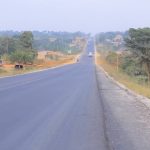
Akeny further questioned the logic behind the government’s decision, stating: “If the above roads have been suspended, then what is the rationale for opening a stadium that is effectively cut off from the rest of the city by poor, potholed and dusty road networks?”
The petitioners have invoked Uganda’s Vision 2040 and the Fourth National Development Plan (NDP IV), which prioritise integrated physical infrastructure, sustainable urbanisation, and enhanced connectivity.
The suspension, they argue, appears inconsistent with the principles embodied in the United Nations Sustainable Development Goals, particularly SDG 9 (Industry, Innovation and Infrastructure), SDG 11 (Sustainable Cities and Communities), and SDG 10 (Reduced Inequalities).
“Under Uganda Vision 2040, Government recognises world-class infrastructure as a critical enabler for socio-economic transformation, regional competitiveness, urban development, sports tourism, investment promotion and improved quality of life,” the petition reads.
The Akii Bua Olympic Stadium, named after Uganda’s first Olympic gold medallist John Akii-Bua