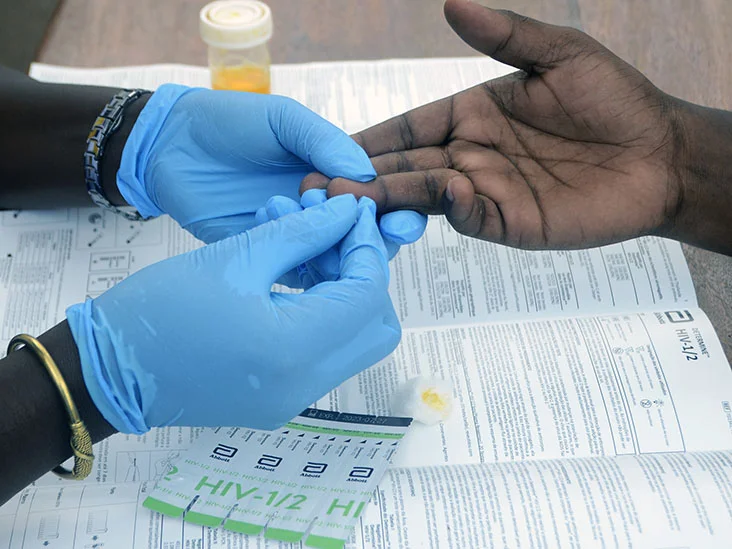
In a recent gathering held at the Uganda Virus Research Institute (UVRI) under the Accelerate the Development of Vaccines and New Technologies to Combat the Aids Epidemic (ADVANCE) Programme, scientists emphasized their efforts to study and understand the types of HIV prevalent in Uganda. The primary aim of the gathering was to enhance the capabilities of scientists in the ADVANCE network, spanning across Africa and India, in the development of an HIV vaccine.
Researchers from the Medical Research Council/Uganda Virus Research Institute and London School of Hygiene and Tropical Medicine (MRC/UVRI/LSHTM) pointed out that the variants of HIV found in Uganda had not been comprehensively studied in the past. Assistant Professor Sheila Balinda, from MRC/UVRI/LSHTM, revealed that they had gathered data indicating a significant increase in contemporary viruses containing a mix of subtypes A, B, or C. Previous research had primarily focused on subtype B, prevalent in the Western world, and subtype C, common in Southern Africa and India.
Assistant Professor Balinda stressed the importance of understanding the prevalent virus types in Uganda and comparing their genetic and phenotypic behaviors to what had been studied previously. The initial challenge of this research was capacity building, which has since been overcome by establishing modern, internationally standard laboratories and developing the necessary cloning skills to grow and study the virus outside the human body in tissue culture.
Dr. Bernard Kulohoma, a participant from the International Aids Vaccine Initiative (IAVI) in Kenya, emphasized that the gathering aimed to strengthen the capacity of scientists within the ADVANCE network across Africa and India for HIV vaccine development. These meetings foster networking and the exchange of state-of-the-art HIV research to bolster both scientific and soft skills. The ADVANCE program, designed to enhance research capacities, particularly in Africa and India, includes the Leadership Development Programme (LDP). The LDP’s goal is to cultivate a strong network of researchers and scientists in African and Indian institutions who contribute to the global effort of identifying, evaluating, and implementing HIV vaccines and biomedical preve
© The Ankole Times. All rights reserved.
No part of this publication or its digital content may be reproduced,
distributed, published, broadcast, rewritten, or redistributed in whole
or in part without prior written permission from The Ankole Times.

For inquiries, contact: [email protected]
Stay informed and ahead of the curve! Follow The Ankole Times on WhatsApp for real-time updates, breaking news, and exclusive content.