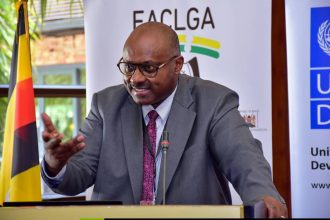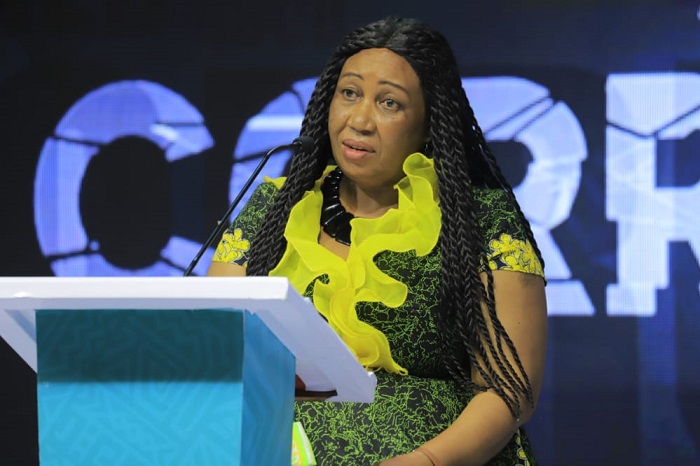
Fresh uncertainty has engulfed the Uganda Human Rights Commission (UHRC) following revelations that Commissioner Lamex Omara Apitta, who was appointed to oversee the Office of the Chairperson during the absence of Chairperson Mariam Wangadya, is reportedly out of the country on official duties.
The development has deepened concerns within the Commission at a time when the institution is facing an ongoing Inspectorate of Government (IGG) investigation into allegations of corruption, maladministration, procurement irregularities and abuse of office. Staff and commissioners are now questioning who is effectively steering the Commission amid growing governance concerns and a perceived leadership vacuum.
Documents seen by this publication indicate that on May 29, 2026, Mr Apitta formally handed over the Office of the Chairperson back to Ms Wangadya after serving in an acting capacity from April 2 to May 29. In his handover report, Mr Apitta outlined key administrative activities undertaken during the period and officially returned responsibility for the office to the substantive Chairperson.
However, in a development that has raised further questions, Ms Wangadya issued another internal memo just three days later, on June 1, informing commissioners and the Acting Secretary that she would once again be “out of office” and directing Mr Apitta to assume responsibility for the affairs of the Office of the Chairperson.
The memo, which was received on June 1, does not indicate the reason for her absence, its duration, or when she is expected to resume official duties.

Complicating matters further are reports that Mr Apitta is currently in Geneva, Switzerland, attending an International Labour Organisation (ILO) meeting in his capacity as a representative of the Federation of Uganda Employers.
The situation has left many within the Commission uncertain about the institution’s current chain of command.

“People are asking who exactly is steering the ship right now,” one insider said. “With the Chairperson away and the commissioner assigned to act reportedly on an international assignment, staff naturally want to know who is exercising authority over the institution.”
Another source described the circumstances as unprecedented.
“It is becoming increasingly difficult for staff to understand who is making critical decisions. The Commission cannot operate indefinitely under uncertainty, especially at a time when it is facing significant internal and external scrutiny,” the source said.
While sources say routine administrative functions continue through the Commission’s technical departments, concerns have emerged regarding strategic and policy decisions that ordinarily require direct oversight from the Commission’s leadership.
Several insiders revealed that some commissioners have privately questioned whether adequate succession arrangements exist for situations in which both the substantive Chairperson and the commissioner designated to act are unavailable.
Others have raised concerns that leadership responsibilities and international engagements appear increasingly concentrated among a small group of commissioners.
According to sources familiar with the Commission’s operations, only a select number of commissioners are regularly nominated for international assignments and official travel. Besides Mr Apitta’s trip to Geneva, Commissioner Crispin Kaheru is reportedly in China attending the Human Rights Action in China 2026 Chongqing Tour.
The travel arrangements have reportedly fuelled discontent among some officials who argue that opportunities and associated benefits are not being distributed equitably across the Commission.
Adding to the institution’s challenges are claims that no formal Commission sittings have taken place since March 2026.
Sources familiar with the matter allege that the absence of Commission sittings has disrupted the institution’s ability to effectively execute some of its constitutional responsibilities.
According to insiders, the situation has contributed to delays in hearing and determining human rights complaints, approving policy decisions and handling other matters that require collective deliberation and approval by commissioners.
The alleged paralysis has raised concerns among stakeholders about the Commission’s capacity to deliver timely justice to complainants and effectively fulfil its mandate of promoting and protecting human rights.
The uncertainty has also cast a spotlight on a series of administrative changes that occurred during Ms Wangadya’s absence.
Mr Apitta’s handover report reveals that on April 9, 2026, Ms Margaret Lucy Ejang formally handed over the Office of the Secretary to the Commission, with Mr Kamadi Byonabye, Director of Research, Education and Documentation, assuming responsibilities as Acting Secretary.
The report further shows that Mr Christopher Turigye, the Director of Finance and Administration, also handed over office during the same period.
The multiple leadership transitions have reinforced perceptions of instability within the institution at a time when it remains under investigation by the Inspectorate of Government.
The IGG probe was launched following complaints by whistleblowers who raised concerns over financial management, procurement processes, human resource decisions and broader governance practices within the Commission.
Although the Inspectorate has not publicly released its findings, the investigation has placed the Commission under heightened public scrutiny.
Governance experts argue that institutions tasked with enforcing accountability and protecting citizens’ rights must themselves be seen to uphold the highest standards of transparency, integrity and good governance.
“When questions arise regarding leadership, accountability and governance within an oversight institution, public interest is unavoidable,” a governance analyst observed.
Sources within the Commission further indicate that tribunal operations may also have been affected by the prevailing uncertainty.
UHRC tribunals play a critical role in hearing complaints, determining compensation awards and adjudicating human rights disputes. Some officials contend that the absence of clear leadership arrangements has complicated scheduling and decision-making on matters requiring collective participation by commissioners.
“There are issues that require active engagement between the Chairperson and commissioners sitting together,” one official said. “When leadership arrangements are unclear, certain processes inevitably become more difficult.”
Other staff members, however, maintain that technical operations continue and that the Commission’s day-to-day service delivery has not entirely ground to a halt.
Behind the scenes, employees are increasingly calling for a clear explanation regarding the institution’s current leadership structure and chain of command.
Several staff members interviewed said transparent communication from the Commission’s leadership could help address speculation and restore confidence.
“There is a need for clarity,” one employee said. “People simply want to know who is responsible for what and how long the current arrangements will remain in place.”
Another official warned that prolonged silence risks further undermining confidence among both staff and stakeholders.
“When information is lacking, rumours fill the gap. Clear communication would go a long way in restoring certainty and allowing staff to focus on their work,” the official said.
The latest developments have added to the growing challenges confronting the Uganda Human Rights Commission during what many insiders describe as one of the most difficult periods in its recent history.
Questions surrounding the Chairperson’s recurring absence, uncertainty over who is exercising authority, the absence of Commission sittings, ongoing leadership transitions and the IGG investigations have combined to place the institution under sustained public scrutiny.
As of press time, neither Ms Wangadya nor the Commission had issued an official statement explaining the circumstances of her latest absence, the duration of the arrangement, or how leadership responsibilities are currently being exercised.
For an institution constitutionally mandated to champion accountability, transparency and the protection of citizens’ rights, the unanswered questions are likely to intensify unless clear and definitive answers are provided.
Until then, uncertainty continues to hang over one of Uganda’s most important constitutional bodies, with staff, commissioners and stakeholders closely watching for clarity on who is ultimately at the helm.