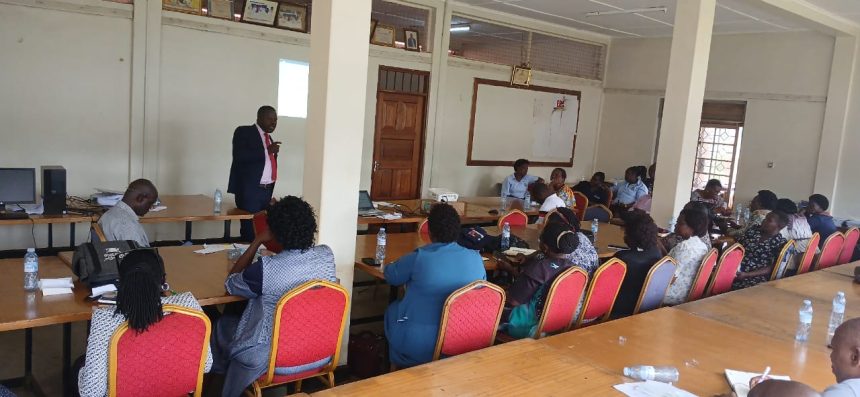
Our Reporter | Mbale City — Mbale Regional Referral Hospital has concluded a two-day capacity-building workshop aimed at strengthening professionalism, improving service delivery, and combating medical negligence among healthcare workers in line with Uganda’s Vision 2040 agenda.
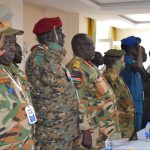
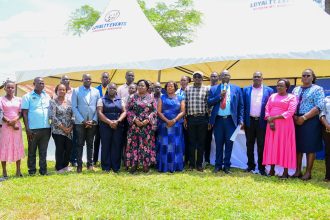
The training, held as the hospital reviewed departmental performance reports ahead of the close of the financial year, brought together senior consultants, heads of departments, human resource personnel, and healthcare professionals from across the Elgon sub-region.
Speaking during the workshop, the Hospital Director emphasized the importance of continuous professional development, saying regular training helps healthcare workers remain conscious of their responsibilities while improving the quality of healthcare services offered to the public.
“Continuous capacity building for our staff and other health facilities across the Elgon region is critical. We must constantly remind ourselves of our roles and responsibilities. Departmental meetings and professional trainings are mandatory because they contribute significantly to improved service delivery,” the Director said.
He noted that Mbale Regional Referral Hospital’s strong performance and ranking among public health institutions can largely be attributed to regular staff training and adherence to professional standards.

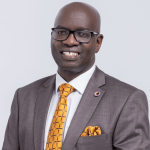
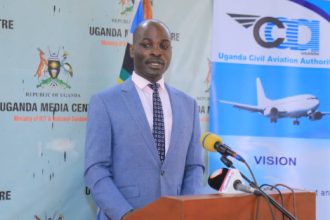
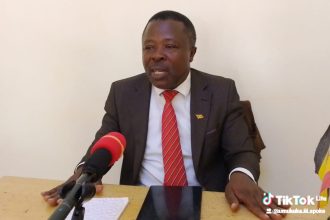
One of the key facilitators at the workshop was Steven Masiga, spokesperson of the Bugisu Cultural Institution, legal consultant, and lecturer, who delivered presentations on medical negligence, professional accountability, and the legal consequences of malpractice.
Masiga defined medical negligence as the failure by a healthcare professional to provide treatment that meets accepted standards of care, resulting in injury, harm, or deterioration of a patient’s condition.

“Medical negligence may occur when a healthcare worker fails to do what a reasonably competent professional would have done under similar circumstances. Examples include poor communication, wrong diagnosis, surgical errors, or leaving medical materials inside a patient after an operation,” he explained.
The training attracted senior consultants and departmental heads from Orthopaedics, Obstetrics and Gynaecology, Internal Medicine, Paediatrics, Ophthalmology, Community Health, Emergency Services, Human Resources, and other specialized units.
Drawing from both local and international case law, Masiga highlighted the legal and financial consequences of negligence in healthcare delivery.
He cited the Ugandan case of Sarah Watsemwa versus the Attorney General, where the government was ordered to compensate the plaintiff after negligent medical management during childbirth allegedly resulted in irreversible brain damage to a newborn child.
According to Masiga, the case underscored the need for strict adherence to medical procedures and standards during patient care.
He also referred to John Wataka versus The AIDS Support Organisation (TASO), where a patient was reportedly misdiagnosed as HIV-positive and placed on treatment despite not having the virus, resulting in substantial compensation.
Using international examples, Masiga stressed the importance of effective communication between healthcare workers and patients. He recounted a case in India where a patient allegedly underwent amputation of the wrong leg due to poor communication and procedural failures.
In another incident, he described how a patient suffering breathing difficulties died after medical staff unknowingly connected him to an empty oxygen cylinder, illustrating the potentially fatal consequences of negligence and inadequate supervision.
“Every incident in medicine is a learning opportunity. Healthcare professionals must remain vigilant, communicate effectively with patients, and always uphold the professional oath they took upon joining the medical profession,” Masiga told participants.
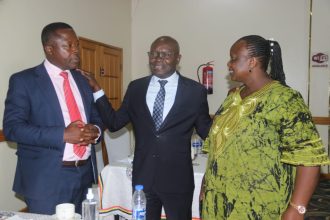
The workshop was chaired by Hospital Planner Tom Wanasolo, who also received departmental reports and responses from various heads of units.
Wanasolo commended the growing collaboration between Mbale Regional Referral Hospital and the Bugisu Cultural Institution, noting that Masiga has supported the hospital’s legal capacity-building efforts for several years.
“We have maintained a close working relationship with the Bugisu Cultural Institution. Mr. Steven Masiga has been part of our legal capacity-building programmes for the last three years, and we continue to rely on his expertise whenever the need arises,” Wanasolo said.
Hospital officials expressed optimism that continued training and professional development would help reduce medical errors, strengthen accountability, and improve healthcare outcomes for patients across Eastern Uganda and neighbouring regions.
The workshop forms part of ongoing efforts by Mbale Regional Referral Hospital to promote excellence in healthcare delivery and align its services with national development priorities under Vision 2040.