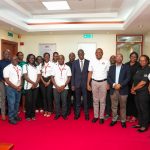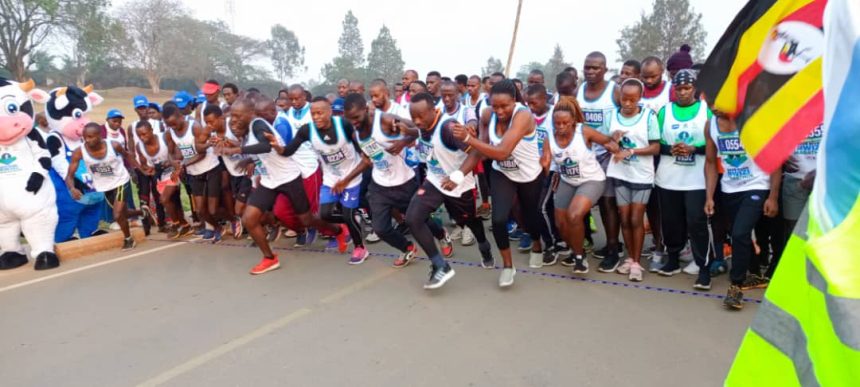
The marathon featured three routes: 5km, 10km, and 21km.
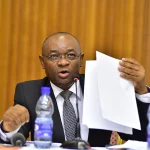
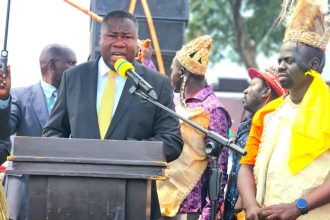
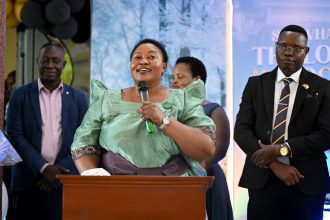
Ivan Tumuhimbise, the Country Director of WWF in Uganda, stated while flagging off the marathon that the main objective of the race was to create awareness about the importance of preserving River Rwizi. The long-term goal is to restore the Rwizi Catchment to its former glory to drive social and economic development within the region.
“We are using the marathon to raise awareness about the dangers of plastic waste and promote effective waste management through the use of constructed waste banks,” he added.
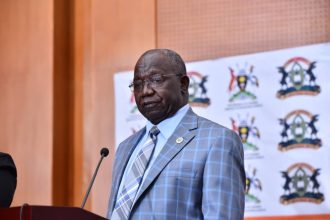
Dr. Callist Tindimugaya, the Commissioner of Water Resources at the Ministry of Water and Environment, emphasized that the annual event has created a platform for collaboration among public and private sector stakeholders to strengthen efforts for the conservation of water and other environmental resources.
“There is growing demand for water due to the increasing population and industrialization of Mbarara City. Therefore, we must safeguard the quality and quantity of water in River Rwizi,” he urged.

Nancy Cheptegei won the 21km race in the Women’s Category and received a cash prize of UGX 2M, while Scarlet Chebet won the 10km race and received UGX 1M.
River Rwizi is a lifeline for an estimated 1.4 million people dependent on its resources. Originating in Buhweju District, it flows through twelve districts up to Rakai before reaching Lake Victoria and neighboring districts. Over the past twenty years, the flow of River Rwizi, in terms of both quality and quantity, has been severely impacted by human activities, including encroachment, brick laying, sand and stone extraction, poor agricultural practices, and pollution.

These activities have taken a heavy toll on River Rwizi, reducing its flow and deteriorating water quality. Although there has been significant improvement in the health of River Rwizi over the past few years, studies indicate that the catchment area remains vulnerable to the impacts of anthropogenic activity and climate change.
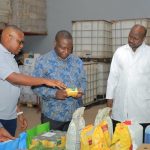
WWF and AB InBev, operating in Uganda as Nile Breweries, are working together to measurably improve water availability, water quality, and freshwater biodiversity around the Rwizi Catchment. Under the project, they are catalyzing key decision-makers to recognize the value of water and improve water governance to address challenges related to water availability and quality. The partnership is also mobilizing investment for sustainable landscape management and implementing solutions to ensure that River Rwizi is managed sustainably and equitably. Specifically, they are working with communities to develop new enterprises and encourage sustainable farming practices to reduce pollution and over-exploitation along the river, thereby securing this valuable water source for people and nature.