Sharks in Brazil Test Positive for High Levels of Cocaine
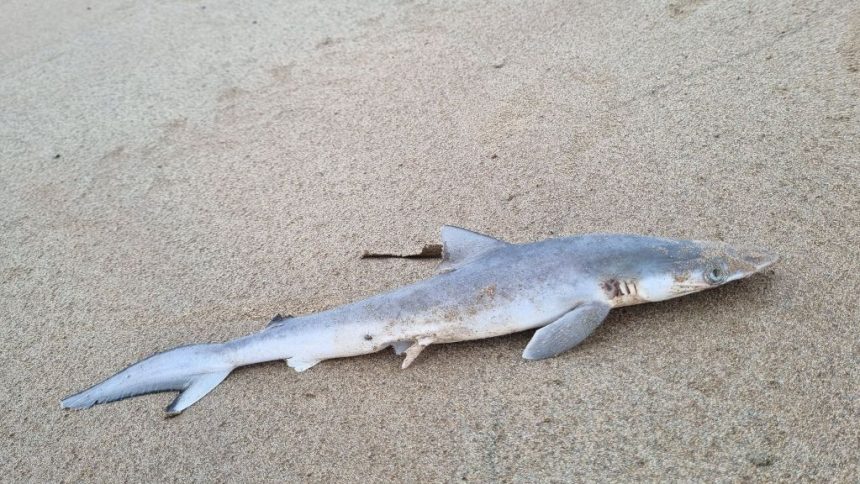
Recent research has revealed that sharks off the coast of Brazil are testing positive for cocaine. A study conducted by the Oswaldo Cruz Foundation discovered that all 13 wild Brazilian sharpnose sharks tested had traces of the drug, with concentrations significantly higher than those found in other aquatic creatures.
The discovery adds to ongoing concerns about the impact of drug pollution on marine life. It has long been suspected that drugs discarded into the ocean by smugglers could affect sea creatures. High quantities of cocaine have been found in waters around Florida, South America, and Central America.
The study focused on the Brazilian sharpnose shark, a species that remains in coastal waters throughout its life and is thus more likely to be exposed to pollution. Researchers obtained these sharks from local fishing vessels and tested their muscle and liver tissues for cocaine and benzoylecgonine, a primary metabolite of the drug. This testing was done using liquid chromatography with tandem mass spectrometry, a method that separates and identifies molecules in a liquid.
The results were striking. Each of the 13 sharks tested positive for cocaine, with concentrations up to 100 times higher than previously reported levels in other aquatic animals. This study is notable as it is the first to detect cocaine in free-range sharks and found that cocaine was more prevalent in the muscle tissue compared to the liver.

The impact of cocaine and benzoylecgonine on marine life remains poorly understood, and this study acknowledges that research in this area is still in its early stages. The findings were published in the journal Science of the Total Environment.
The issue of drug pollution is not new. For instance, in June of the previous year, the US Coast Guard seized over 14,100 pounds (6,400 kg) of cocaine in the Caribbean Sea and Atlantic Ocean, with an estimated value of $186 million (£142 million).