Karamoja, Uganda: Anyone who had traveled to the Karamoja region during ancient times can recount the behavior of Karimojong bandits with guns and the different sounds of gunshots echoing in Karamoja.
Between 1955 to 2000, the Karimojong became very aggressive to the extent of ambushing vehicles, and every day not less than 100 people died on Karamoja roads.
Any important person wishing to travel either from Kenya or Kampala to Karamoja had to be heavily escorted with more than 20 armored cars, but even if they were being escorted, that does not scare Karimojong armed warriors from ambushing vehicles.
The warriors also ambushed President Museveni when he had gone to rally Karimojong to hand over guns to the government.
That conflict left the region without development because attempts by the government to introduce any developmental projects in the region failed due to aggressive armed Karimojong.

The Karimojong had put trust in the gun more than God; that’s why they could kill, including priests, pastors, and nouns.
Talking about Karamoja, Where is Karamoja located?

Karamoja is a semi-arid area covering approximately 27,200 square kilometers. It borders Kapchorwa and Kumi districts to the South, Katakwi and Lira districts to the southwest, Pader district to the West, Kitgum district to the Northeast. It also borders Sudan to the North and Kenya to the East.
Karamoja comprises more than eleven different social groupings with largely similar dialects with the exception of a few that are quite distinct.
The main social group, which constitutes the Karimojong, includes the Matheniko, Pian, Bokora, The other social groups include the Pokot, Tepeth, Nyangia, Nyakwae, Jie, Dodoth, Ik (Teuso), Napore, and Labwor. The Majority of the Karimojong are predominantly pastoral people.
Topographically, Karamoja is a relatively flat plain punctuated by some hills and mountains that include Mount Moroto in the East, Akisim and Napak Mountains to the west and Mount Kadam to the southern border.
The main ecological characteristic of this region is its inadequate and unreliable rainfall. It’s not only little, averaging 350mm to 1,500mm per annum (with a few areas like Namalu in Nakapiripirit district reaching about 1300 MM), but also unreliable with regard to when and where it falls, how much and for how long it falls, what area it will cover.
The rains are scattered, varying in amount from year to year and even from one place to another in the same year. While one place receives a sprinkle, another receives a heavy storm.
The result of this pattern of rainfall is a low resources-based characterized by seasonal variations in productivity, thus presenting patchy conditions even within the same zone where you can have luxuriant vegetation in one location and near emptiness in another.
Because the region generally slopes westward, most of the rivers flow to the west, feeding the perennial swamps that form its boundaries with the neighboring districts such as Katakwi, Amuria, Kumi, Lira, and Kitgum.
Apart from experiencing erratic rainfall, this region is well-vast with minerals, including gold, ruby, iron ore, green garnets, marble, limestone, uranium, mercury, and many others, but these minerals could not be exploited because of the insecurity caused by the armed Karimojong.
Where the Karimojong acquired guns from.
In 1894, Karamoja region remained administered by the British for long because the semi-arid conditions in the region were not attractive for the production of cash crops like cotton and coffee to service the industries in England.
In that time Karamoja, however, offered a significant opportunity for trade in ivory and slaves by Arabs, Greeks but mainly Abyssinian (Ethiopia) and Swahili traders. As the number of elephants in the region reduced, the value of ivory increased, and traders increasingly offered to exchange firearms for ivory.
Modern arms were exchanged for ivory and slaves, which ignited a weapons proliferation in the region.
The arms eased the process of acquiring stock by the Karimojong who began raiding, and this was believed that some of the traders were involved in some of these raids to appease the Karimojong, thereby increasing the scale and intensity of the raids.
Although the protectorate government believed that both the human and economic cost of administering Karamoja region was too high, a decision was made to conquer Karamoja because, in military terms, the British could no longer ignore Karamoja, lest they lose it to traders.
In 1911, the protectorate Government decided to close the district to all traders, allowing only one opening at Mbale in eastern Uganda and with just occasional patrols in the area.
The traders were blamed for the lawlessness in Karamoja. By 1912, a permanent Northern Barracks was established to undertake the pacification of Karamoja. This was achieved by shooting people, burning their huts, and seizing livestock.
In that time the Karimojong acquired many guns through the ivory trade, and these guns that they acquired from Arabs and Abyssinian traders were supplemented by locally made guns.
These guns were used not only for defense purposes but also for raiding. The turning point in armament in Karamoja was in 1979 after the overthrow of the Idi Amin regime. The Karimojong broke into 2nd battalion barracks in Moroto after it was abandoned and helped themselves and took an unspecified amount of arms and munitions.
This development ushered in a new dimension in the politics of Karamoja. Massive armament in the region sparked off a series of unprecedented cattle raids that continued. As a result of this new military might, the Karimojong turned their guns not only at each other but also to neighbors. Since then, the demand for guns went up steadily, and the region provided a market for arms and ammunitions from the conflicts in Uganda, Southern Sudan, Somalia, and Ethiopia. The estimates put the number of guns in Karamoja between 30,000 and 40,000.
Those guns made Karamoja be a no-go area, making it difficult for the people to access the region, and few people dared to go to the semi-arid region.
Action taken.
That conflict forced Uganda’s President Museveni to pitch camp at Morulinga in Napak district spearheading a political mobilization initiative involving government and local officials and leaders from Karamoja, who eventually traversed the entire region from county to county sensitizing the Karimojong about the essence of the exercise and persuading them to hand in their guns.
The first phase of the disarmament exercise comprised a voluntary disarmament carried out between December 2001 and January 2002, but it didn’t yield good results since the armed Karimojong refused to give out the guns and became more aggressive to the army.
After noting that the Karimojong were resisting from giving out guns, the president issued a circular addressed to political leaders and the military in the region outlining the guidelines for the disarmament exercise phase two. The circular outlined the government commitment to the following: Increasing the quantity and quality of the police, intelligence and local defense units (LDUs) to guarantee better protection to the people in the region, Establishing permanent barracks along Kenya and South Sudan borders, Constructing a security road along the border from Namalu in Nakapiripirit district moving northwards to cover Kenya and Sudan border, Recruiting and training of 146 vigilantes per sub-county inside Karamoja and 292 vigilantes per sub-county bordering Kenya and Sudan to be armed and paid salaries by the government and under the command of the army, their mission was to guard against inter-clan raids.
After this circular was received by all leaders in the region, government officials engaged kraal leaders, radio programs were rolled out, telling the public the dangers of possession of illegal weapons.
On the 15th of February 2002, the second phase of the disarmament exercise was launched, and it was largely a military-led exercise with the following components. Shooting on-site persons found with a gun along the roads, Cordoning and searching suspected villages and kraals, Arresting and prosecuting suspected criminals, Curbing cattle raids and strengthening the recovery of livestock, patrolling the international borders with Sudan and Kenya, Recruiting the remaining quota of vigilantes per sub-county.
This second phase of disarmament yielded good results, and by the end of 2003, 10,000 guns were recovered from the Karimojong. The army continued recovering the guns until the date when the region has achieved peace.
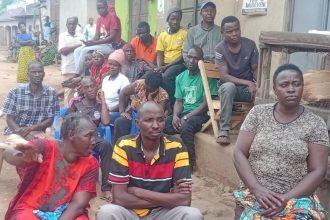
Now, whoever had visited Karamoja and witnessed the insecurity situation and still thinks insecurity in Karamoja is still the same should now forget and take that Karamoja of today has changed. It’s now more than 10 years when the ears of the people of Karamoja rested from hearing gunshots, and now any gunshot makes everybody panic, yet those years, gunshots were listened to as music. Currently, anybody talking about a gun at the moment in Karamoja is something which is very strange to the ears of the Karimojong pastoralists who are now engaged in different activities without the help of a gun.
The region is now very peaceful; there is free movement of people to and from Karamoja, and rampant incidents of road ambushes and cattle rustling are no more, although there may be one or two in a year.
Leisure places such as discotheques, betting, sports, which were unknown in the region, are now in the entire seven Karamoja district. People now party the whole night.
This was after the Uganda government launched the disarmament exercise in Karamoja in 2001 and since then 39,000 guns have been collected and burnt.
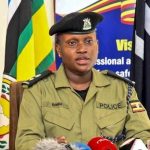
Michael Longole, the Karamoja regional police spokesperson, recalls how the Karimojong pastoralists were resisting handing over guns to the government until when the government applied force.
This publication notes that although there are still some pockets of criminality, like two days ago when the staff of the National Water and Sewerage Corporation was shot dead in Kaabong, but it’s not like how it used to be before the disarmament exercise.