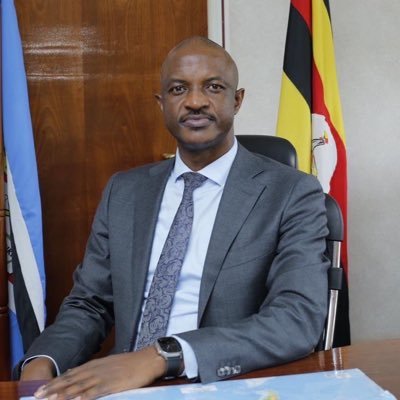
The Finance Ministry recently disseminated the second budget call circular, addressed to all accounting officers and chief executive officers of state-owned enterprises and public corporations. This directive aims to facilitate the finalization of the budget for the upcoming 2024/25 financial year, outlining crucial areas of focus for the forthcoming fiscal period.
Drafted by Permanent Secretary Ramathan Ggoobi, the circular encapsulates recent recommendations put forth by Parliament concerning the National Budget Framework Paper, government expenditure limits for the medium term, and pertinent policy and administrative guidelines. Ggoobi emphasized the government’s commitment to specific priority sectors and initiatives slated for attention in the coming fiscal cycle.
According to the document, the government has earmarked key areas for heightened investment in the 2024/25 fiscal year. These priorities include human capital development, peace and security, infrastructure such as roads and railways, electricity provision, income-generating interventions, efficient disaster management, and meeting international obligations.
Furthermore, the government has outlined a strategic vision to propel economic growth tenfold, from the current base of $49.5 billion to $500 billion over the next 15 years. This ambitious goal is set to commence in the forthcoming financial year and is anchored in initiatives spanning agro-industrialization, tourism promotion, mineral-based industrial development, oil and gas exploitation (including petrochemicals), and advancements in science, technology, and innovation.
Addressing fiscal parameters, the preliminary resource envelope for the fiscal year 2023/24, initially set at shillings 52.723 trillion, has been revised upwards to shillings 53.336 trillion. Domestic revenue is projected to contribute shillings 29.957 trillion, with additional funding from budgetary support and domestic borrowing. Notably, discretionary resources have contracted by shillings 3.469 trillion, underlining the need for judicious allocation, particularly towards fixed costs.

A budget call serves as a formal solicitation for submissions comprising revenue and expenditure estimates from government ministries and executing agencies for the ensuing financial year. It offers detailed instructions and guidelines for preparing budget estimates aligned with developmental objectives. The issuance of this second budget call follows the initial directive dispatched in September 2023, which underscored imperatives such as fostering economic growth, enhancing the business environment, and transitioning to a manufacturing and knowledge-based economy.
© The Ankole Times. All rights reserved.
No part of this publication or its digital content may be reproduced,
distributed, published, broadcast, rewritten, or redistributed in whole
or in part without prior written permission from The Ankole Times.

For inquiries, contact: [email protected]
Stay informed and ahead of the curve! Follow The Ankole Times on WhatsApp for real-time updates, breaking news, and exclusive content.
Join The Ankole Times WhatsApp News Channel