
Every year on May 22, the world commemorates the United Nations International Day for Biological Diversity, a global event aimed at raising awareness about the accelerating loss of species and ecosystems across the planet.
The day serves as a reminder that protecting biodiversity is not only about conserving wildlife and forests, but also about safeguarding food security, clean water, and climate stability for future generations.
This year’s global theme, “Acting locally for global impact,” emphasizes the growing recognition that meaningful environmental protection begins at the community level. While international agreements and global conservation frameworks set ambitious targets, experts say real and lasting change depends on local action.
For the past 27 years, Environmental Conservation Trust of Uganda (ECOTRUST) has positioned itself as one of the leading organizations demonstrating how empowering local communities can drive large-scale biodiversity restoration and climate action.
Operating as a bridge between international climate financing and rural communities, ECOTRUST channels resources directly to Ugandan smallholder farmers, enabling them to actively participate in conservation while improving household livelihoods.

At the center of this effort is the organization’s Trees for Global Benefits (TGB) program, which has become a practical example of how local environmental restoration can contribute to global biodiversity and climate goals.
Through the initiative, thousands of families across Uganda are encouraged to integrate indigenous trees into their farming systems under a performance-based payment model that rewards sustainable land restoration practices.

According to ECOTRUST, more than 51,000 households in 26 districts have so far benefited from the program. The initiative has helped place over 34,000 hectares under active restoration, creating a growing woodland network projected to absorb more than 7.5 million tonnes of carbon dioxide from the atmosphere.
Environmental experts say the success of such programs lies in recognizing that biodiversity conservation cannot be separated from economic survival.
For many rural households, protecting forests and ecosystems becomes difficult when communities are struggling with poverty, food insecurity, and lack of reliable income.
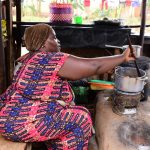
To address this challenge, ECOTRUST supports farmers in developing environmentally sustainable businesses such as beekeeping and shea nut production, helping communities earn income while preserving natural ecosystems.
The organization’s work has also expanded into restoring critical wildlife habitats and reducing human-wildlife conflict in environmentally sensitive regions.
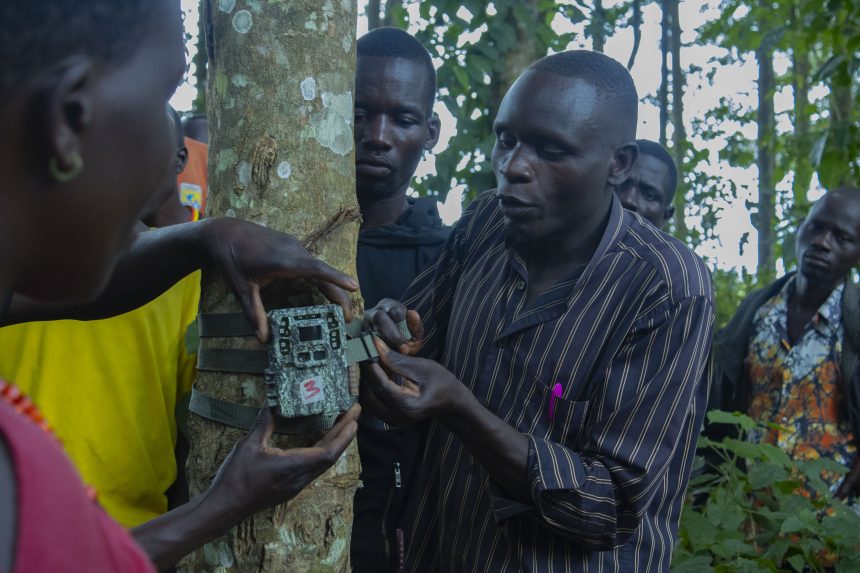
In the Murchison-Semliki landscape, ECOTRUST works with private landowners to restore fragmented forest corridors that are essential for wildlife movement, particularly endangered chimpanzees whose habitats have increasingly been disrupted by agricultural expansion.
Further north, the organization recently launched the Transformative Approach to Sustainable Landscapes and Livelihoods (TASLL) project in the climate-vulnerable Agoro-Agu region.
Supported by the UK’s Foreign, Commonwealth and Development Office, the initiative aims to conserve 65,000 hectares of natural forest through the planting of six million indigenous trees while promoting social inclusion among vulnerable groups, including refugees in the Palobek settlement.
As global conversations increasingly shift toward nature-based solutions, ECOTRUST is also pushing for new environmental financing models that go beyond carbon trading alone.
During this year’s Uganda Water and Environment Week, the organization introduced its Nature Credit Solutions framework, designed to reward communities for protecting watersheds and establishing environmentally friendly enterprises such as sustainable wild beekeeping.
Environmental advocates say ECOTRUST’s 27-year journey offers an important lesson to governments, conservation agencies, and development partners: meaningful biodiversity restoration succeeds when local communities are trusted, empowered, and included at the center of environmental action.
As the world marks the International Day for Biological Diversity, Uganda’s growing community-led conservation efforts are increasingly being viewed as a model for how local action can create global environmental impact.