
Let your living water
flow over my soul,
Let your Holy Spirit
come and take control of every situation…
That song. I have fond memories of it being sung in church. It always followed a praise-and-worship session. A session of aggression. A session during which everyone would jump and dance and sweat like they were digging trenches or running a marathon.
Then everything would slow down. The music would soften and the choir would relax. Everyone would close their eyes and summon the Holy Spirit from the deepest, sincerest chambers of their souls. And he — or it — would answer. This faceless man, the Holy Spirit, would fill the room, the church or wherever we had gathered for prayers and take the control we had been singing for him to take.
This is the point at which people would usually become unreasonable.
People would lose their heads and speak languages nobody else could understand. They would hear voices and talk back to them in the language of animals. Some would fall on the floor, but carefully enough not to harm themselves. Others would shake violently and speak with deep, frightening voices. Then there were the hard guys; the nonchalant people who simply sat and watched everything unfold as if they were attending a conference on human behaviour. I was one of those guys. If I ever attended a hard guys’ conference, I would take a seat at the high table and become a keynote speaker.

Not once in my church-going days did I summon the Holy Spirit and feel his hands on me or the living water flowing over my soul. Never have I heard the voice of God or talked back to him. Maybe he only understands the language of the anointed and sadly, I cannot speak it. Or maybe God is awake but numb to my words. Not that I mind, but eh!
There’s a madness that comes with being a zealous Christian that prays and loses touch with the reality. The hard guys and those peeping through the windows cannot fully understand it. Outside the church building, it becomes a psychiatric disorder, and you will be given lots and lots of pills if you consistently exhibit such behaviour. But in God’s house, nobody will judge you.

Today is May 24, 2026. In the Roman Catholic Church, it is thePentecost Sunday; the day Christians celebrate the descent of the Holy Spirit upon the apostles. In modern Christianity, it is a day for zealots to not just remember that the Holy Spirit once descended upon the apostles but to live the experience themselves. They take off their masks, open their souls to the Holy Spirit and express themselves in the way they know best. In church, we call it divine. People speak in tongues. They fall. They shake. They cry. They hear and respond to voices. The body behaves in ways that, outside church, would immediately attract clinical attention.
This year, Pentecost Sunday falls on World SchizophreniaAwareness Day.
That coincidence forces an uncomfortable comparison. The two are certainly not the same, but from a distance, they can look disturbingly similar. In one setting, the explanation is spiritual: the Holy Spirit has arrived and made the believers catatonic. In another, the explanation is clinical: hallucinations, altered perception, disorganized thought. Let’s just say the person will be called mad. The difference lies not in what is seen; the signs can look identical. The real difference is in how society chooses to name the experience.
If we are fellowshipping, we shall explain away the catatonia by agreeing that a brother has been touched by the Spirit of God. In Western Uganda, we shall say, “yasinda omwooyo.” If you come to my office on Monday morning exhibiting the same signs, I will quietly call a psychiatrist and we shall discuss something about functional psychosis.
Church language interprets such experiences through belief and doctrine. Questions are not welcome there. Clinical language interprets them through diagnosis and impairment. Both the church and the clinical setting are systems of authority. Both decide what reality means once human behaviour moves outsideof the accepted patterns. And this raises a difficult question: when does an unusual experience become a sacred encounter, and when does it become a pathological one? Who draws the boundary? On whose authority do they act?
Since it’s a day for schizophrenia awareness, let me just remind you that Psychiatry defines Schizophrenia as a severe mental disorder affecting thought, perception, emotion and behaviour. The condition is commonly associated with hallucinations, especially hearing voices, delusions, paranoia, disorganized speech and withdrawal from reality. The word itself was coined in 1908 by Eugen Bleuler, though human beings have probably lived with the condition for as long as consciousness has existed. Before medicine attempted to explain such experiences scientifically, societies explained them spiritually. People who heard voices were prophets, mediums, cursed individuals or people chosen by invisible powers.
Even now, many communities still struggle to separate mental illness from spirituality. In some African homes, schizophrenia is not discussed as a medical condition but as witchcraft, demonic attacks or ancestral punishments. Families first consult pastors before psychiatrists. Some patients spend years moving from prayer mountain to prayer mountain while their condition quietly worsens underneath Bible verses and anointing oil.
And honestly, one can understand why the confusion exists.
One of the most common symptoms of schizophrenia is hearing voices that are not physically present. Christianity itself is built on people hearing voices nobody else in the room could hear. Moses hears God from a burning bush. Samuel hears his name being called in the night. Paul hears the voice of Jesus on the road to Damascus. Pentecost itself is centred on the firstbelievers behaving so strangely that onlookers assumed they were drunk.
The difference, again, is interpretation.
A man standing in Kampala saying invisible beings are speaking to him may be considered unstable. We shall drag him by the shirt and dump him in Butabika, and he will be sedated. Put the same man in scripture and give history enough time, and he may become a prophet. Catholicism will call him a saint.
This is where religious people become uncomfortable, because faith survives on hope and Insha Allah. The church, conveniently, does not have enough room for conversations on where divine encounters start and stop. It does not listen to the idea that there can be a psychiatric disturbance. Science is even more intolerant. In its pursuit of measurable explanations for every claim, it often dismisses the concept of God entirely because only African pastors and biblical characters seem to have encounters with him. At the end of the day, human behaviour is rarely neat enough to satisfy either side completely.
Of course, schizophrenia is not simply “being spiritual.” The illness can be devastating. Many patients struggle to work, maintain relationships or care for themselves. Some become consumed by paranoia. Others withdraw entirely from society. The condition can flatten emotion, distort thought and make reality itself unreliable. There is real suffering there, and reducing it to “madness” alone would be dishonest.
Still, the overlap in outward appearance remains impossible to ignore. A person might shake uncontrollably, hear voices nobody else hears, speak a language nobody can interpret, and become convinced invisible forces are acting upon, for or against them. In church, that may become a powerful testimony. In psychiatry, it becomes a syndrome. What gladdens my heart is the fact that I sit on the fence in these matters and may not be smart enough to understand where the line ought to be drawn. Testimonies make sense to me, but so does science.
The days have collided and I will celebrate them at a local joint where I’ll quietly eat my pork and Nile Special as I scroll my phone.
I wish a happy Pentecost Sunday to all Christians. I hope the Holy Spirit visits you so powerfully that when we meet again, you will have testimonies for us. Happy World Schizophrenia Awareness Day as well to mental health advocates fighting to make people understand that not every voice is a demon and not every mentally ill person belongs on a prayer mountain. Some people need deliverance, some need antipsychotics, and wisdom is knowing the difference.
About the Author:
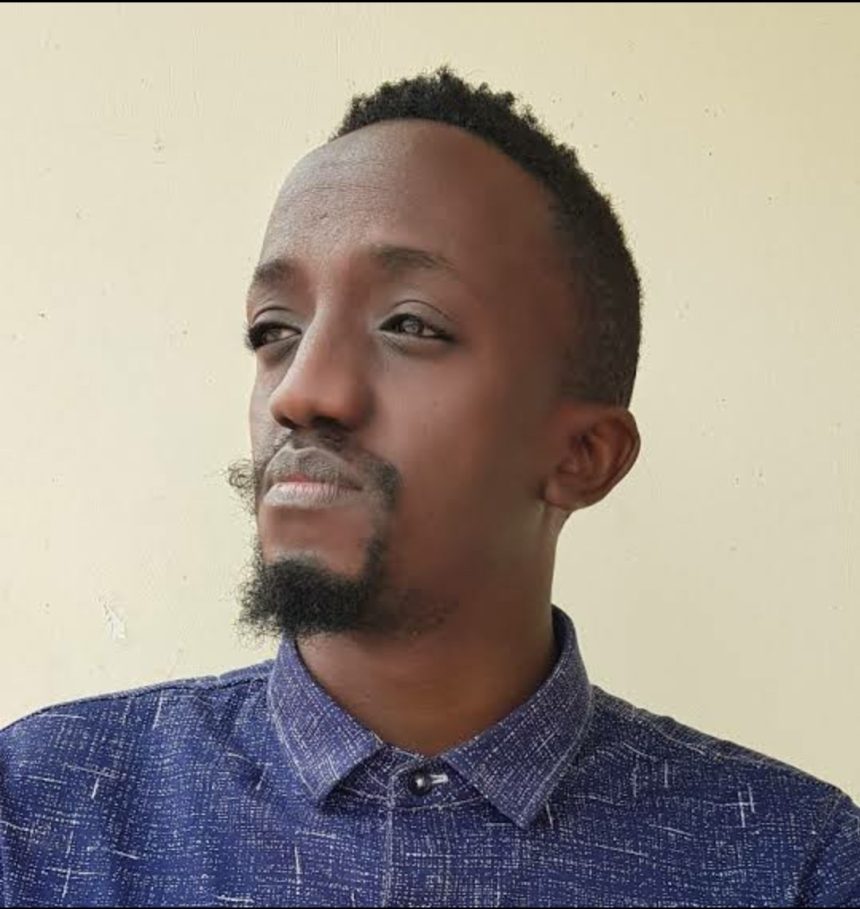
Daniel Kakuru is a writer of poetry and prose. His debut poetry collection – We Chose Fire – has been forever forthcoming. He drinks, smokes and hopes to die by suicide.