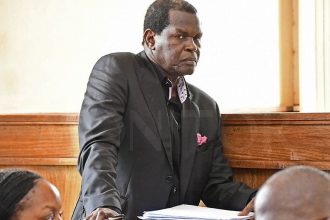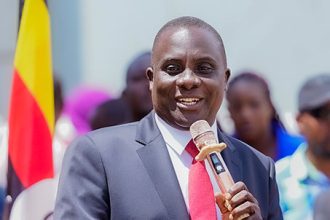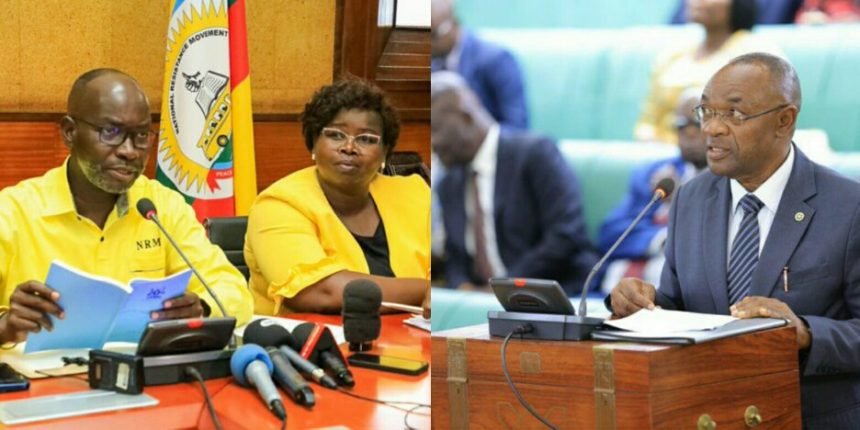
State House, Entebbe — Lawmakers of the ruling National Resistance Movement (NRM) have thrown their weight behind a government proposal to split Tororo district, creating Tororo City and three new districts, as well as dividing Bundibugyo into two. The decision was made during the NRM Parliamentary Caucus meeting on September 12, 2025, chaired by President Yoweri Museveni at State House Entebbe.
Government Chief Whip Hamson Denis Obua revealed the resolutions while addressing journalists at Parliament. “Having received the report of the Minister of Local Government, the caucus resolved to support the creation of Mukuju District, Mulanda District, Kisoko District and Tororo City in the financial year 2025/2026, subject to the law. We also supported the creation of Bughendera District out of Bundibugyo District,” Obua said.
The move comes just months before Uganda heads to the 2026 general elections, raising questions about timing and possible political motives.
MAGYEZI DEFENDS MOVE
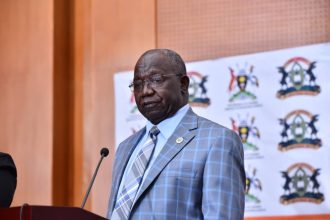
Minister for Local Government Raphael Magyezi dismissed claims that the creation of new administrative units amounted to gerrymandering. “Now, where is gerrymandering in that? The other time we created two constituencies in Nakawa, they were taken by the opposition, have we complained? We are doing this for service delivery, for peace and security, for administration,” he argued.

Magyezi explained that the government is acting on council resolutions and carrying out technical studies before presenting proposals to Cabinet and Parliament. He also highlighted Uganda’s growing population and rapid urbanisation.
“Yes, there’s no doubt it has a cost, but it also has an advantage. Uganda remains finite but the population keeps increasing and people need services. Urbanisation is growing at 5.3 percent annually, faster than any other country in Africa,” Magyezi said.

The minister noted that about UGX 26 billion will be required to operationalise the new districts and Tororo City. He urged Ugandans to focus on the benefits rather than the financial burden, stressing that the new units will bring services closer to citizens.
IMPACT ON PARLIAMENT AND ELECTIONS
If approved, the new administrative units will add more representatives to Parliament. “When you subdivide Tororo, today it has one woman Member of Parliament. With the new arrangement, each of the three districts will have a woman MP. The city will also have a woman MP, and its two divisions will each have a directly elected MP,” Magyezi explained.
He added that the Attorney General and the Electoral Commission will decide when elections in the new constituencies can take place, in line with existing laws.
“A district created after a general election shall take effect six months prior to the next election of January 2026. That is why we are talking about deeming them created in July. The Electoral Commission will handle that together with the Attorney General,” he clarified.
WHAT IT MEANS
The creation of Mukuju, Mulanda, Kisoko, and Tororo City, along with Bughendera District, is expected to ease service delivery and address long-standing ethnic tensions in the affected regions. However, it will also push the number of legislators beyond the current 500, further stretching the national wage bill.
As Uganda prepares for the 2026 elections, the debate over new administrative units is likely to remain a key talking point between government, opposition, and voters.