In the remote villages of the Agoro-Agu Landscape in Northern Uganda, radio is becoming more than a source of information — it is emerging as a powerful tool for social, environmental, and economic transformation.
Through the Transformative Approaches to Sustainable Landscapes and Livelihoods (TASLL) Project, implemented by ECOTRUST with funding from the Foreign, Commonwealth & Development Office (FCDO), rural communities are harnessing the power of Farmers’ Voice Radio (FVR) to access practical knowledge, share experiences, and develop solutions to challenges affecting their livelihoods.
The Farmers’ Voice Radio methodology, designed by the Lorna Young Foundation (LYF), is a participatory radio approach that brings farmers to the centre of learning. Through short, focused broadcasts, interactive call-ins, and community discussions, farmers in hard-to-reach areas gain access to valuable information on agriculture, environmental conservation, climate resilience, and sustainable livelihoods.
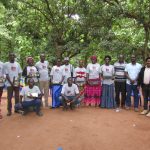
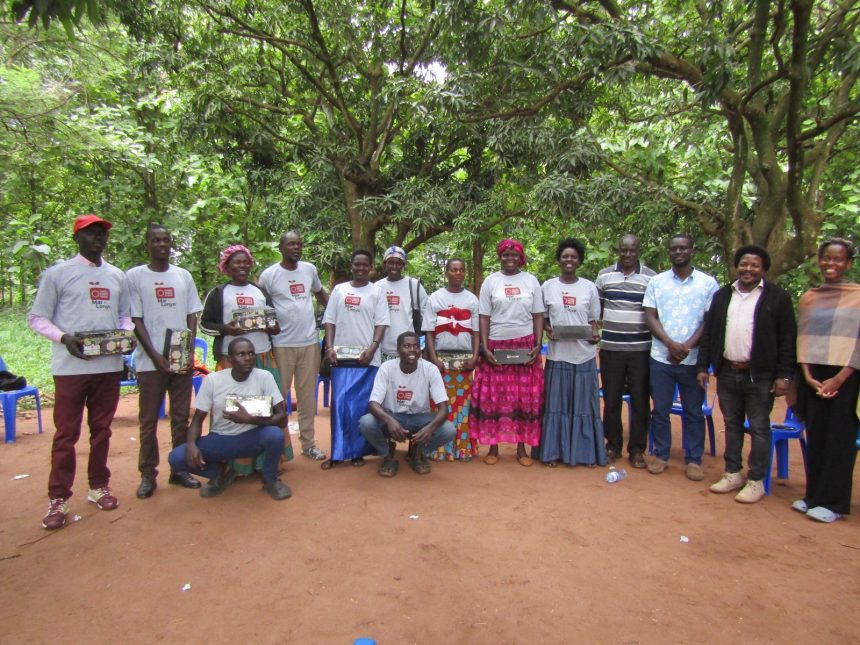
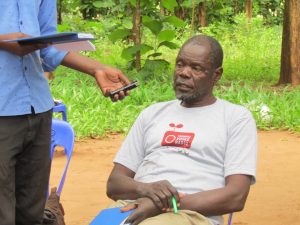
For Jimmy Lapat, Chairman of the Mar-Lonyo Group in Kitgum District, the journey has been one of transformation — from a farmer struggling with limited technical knowledge to a community leader championing sustainable agriculture and collective prosperity.
The name Mar-Lonyo, meaning “Love is Wealth,” reflects the group’s belief that unity, cooperation, and shared responsibility are the foundation of lasting success.

Before joining the Farmers’ Voice Radio programme, Lapat was already engaged in forestry activities. However, despite his commitment, he lacked the technical knowledge required to properly manage his woodlots. Poor practices often resulted in damaged trees, reduced productivity, and financial losses.
The introduction of FVR became a turning point. Through lessons on silviculture and modern agroforestry practices, Lapat learned how proper tree management techniques, including effective pruning, could improve timber quality and increase the value of his forestry investments.

“Farmers were not only given information; they were empowered with practical knowledge they could apply directly in their fields,” he explains.
The programme also challenged traditional farming practices that negatively affected the environment. Like many farmers in the region, Lapat had relied on burning crop residues as a way of clearing agricultural waste. However, through FVR, he learned the importance of composting and allowing organic materials to naturally decompose into nutrient-rich manure.
The shift transformed his farming approach. By returning organic matter to the soil, he improved soil fertility, increased moisture retention, and achieved better crop yields while contributing to environmental conservation.
The results of adopting these sustainable practices were visible both economically and socially. Increased agricultural productivity translated into improved household income, enabling Lapat to make investments that strengthened his family’s future.
Among his key investments were acquiring additional land to expand agricultural production, purchasing a grinding machine that has become a local agro-processing resource, and buying a motorcycle that has improved his ability to transport farm produce and access markets.
Beyond financial growth, the Farmers’ Voice Radio programme also influenced a major transformation within his household — the recognition of women as equal partners in agricultural development.
Through discussions on gender inclusion and family-based enterprise management, Lapat embraced a more collaborative approach to farming. His wife now plays a central role in value addition, transforming sesame seeds into profitable sesame cakes, creating an additional income stream for the family.
For Lapat, sustainable wealth is not created by individuals working alone but through shared effort and inclusion.
As Chairman, he has also helped transform the Mar-Lonyo Group from a simple community gathering into a structured economic organisation built around cooperation and collective action.
One of the most important lessons members gained through FVR was the power of collective farming and bulk marketing. Previously, individual farmers often depended on middlemen who offered low prices because farmers lacked bargaining power.
By joining forces, aggregating their produce, and marketing collectively, members have been able to negotiate better prices and access wider markets.
The group continues to strengthen its knowledge-sharing culture through monthly meetings where farmers discuss challenges and explore solutions affecting their communities. These discussions cover sustainable land management, tree planting, climate-smart agriculture, and important social issues such as Gender-Based Violence (GBV).
To ensure that knowledge gained through the radio programmes leads to real action, each farmer maintains a reflective diary. The diaries help members track their progress, record lessons learned, and monitor the implementation of improved farming practices.
As the formal Farmers’ Voice Radio broadcast cycle comes to an end in June, the Mar-Lonyo Group is already preparing for life beyond the programme.
The members have established a shared commercial enterprise, Mar-Lonyo Beekeeping, which serves as both an income-generating venture and a platform to maintain their unity and collaboration.
The group is also working towards becoming a legally recognised organisation, ensuring that the relationships, knowledge, and economic opportunities created through the programme continue for years to come.
“We shared phone contacts with each other, and this business will enable us to always meet and discuss important issues that will help us grow,” Lapat says. “We are making plans to have it formally registered.”
Through the power of radio, practical knowledge, and community action, Jimmy Lapat’s story demonstrates that transformation does not always begin with large investments. Sometimes, it begins with a simple message reaching a farmer at the right time.
For the Mar-Lonyo Group, love has indeed become wealth — wealth built on knowledge, cooperation, environmental stewardship, and a shared vision for a better future.