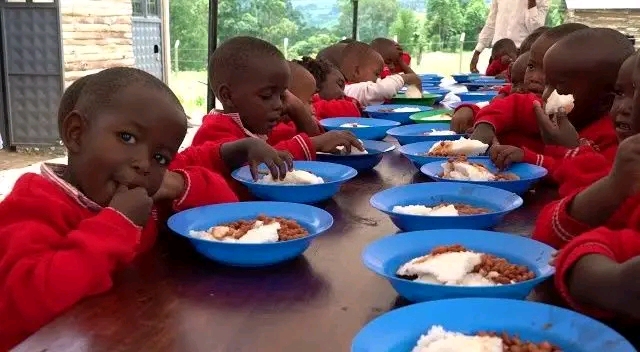
The Government of Uganda is preparing to roll out a national school feeding policy aimed at improving learning outcomes, retention and nutrition for learners in public schools across the country.
Education stakeholders say a well‑executed school feeding policy could significantly redefine performance in Uganda’s education system, particularly in hunger‑prone and rural areas.
The policy development comes amid longstanding concerns that many learners attend school on empty stomachs, which affects concentration, attendance and overall academic performance. Reports have highlighted that without regular meals at school, pupils are more likely to miss classes or drop out, especially in low‑income communities.

In recent years, the government has taken steps toward structured feeding programmes. The Ministry of Education and Sports approved proposals to include school feeding in the national budget for the 2025/26 financial year, marking a departure from past policy where parents were primarily expected to provide food for their children.

Under the new approach, the government plans to provide meals to learners in government schools, starting with priority interventions and linking them to broader education goals. Discussions include establishing permanent budget lines and national guidelines to ensure that feeding is sustainable, nutritious and reaches children across regions.
Civil society organisations have welcomed the move but also cautioned that adequate funding, clear implementation plans and strong monitoring frameworks will be essential to success. Some advocacy groups have pushed for the policy to be fully integrated into Uganda’s national development and budget priorities, arguing that feeding programmes are proven to increase enrolment, attendance and cognitive performance.
Already, partnerships with organisations such as the United Nations World Food Programme (WFP) are demonstrating the benefits of school meals. In the Karamoja sub‑region, WFP‑supported feeding programmes provide daily nutritious meals to hundreds of thousands of learners, boosting attendance and community food security.
The policy is also circulating in public conversation after comments by political figures, including former presidential candidate Robert Kyagulanyi Ssentamu (Bobi Wine), who pledged during his campaign to improve school feeding schemes if elected, highlighting public demand for stronger social support systems.
As the government finalises the policy, parents, educators and development partners continue to advocate that nationwide school feeding should become a central pillar of Uganda’s education and child welfare agenda.