Several investors who are rushing to Karamoja are only focusing on mineral exploitation such as marble, limestone, gold, and other underground minerals, but they have not noticed that the Karamoja region has another lucrative natural product called Gum Arabic.
What is Gum Arabic?
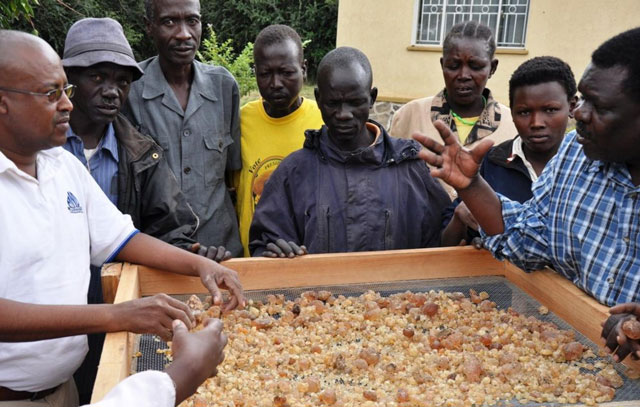
Gum Arabic is a type of gum that is used in everything from food stabilizers to inks and textiles. It comes from the hardened sap of the Acacia senegal and Acacia seyal trees, which grow widely in the Karamoja region.
There are two types of trees that produce sap that can turn into Gum Arabic. These include Acacia senegal and Acacia seyal. Both of these are native to the Arabian Peninsula, which many scholars believe is why the gum is known as “Arabic.”
This gum forms naturally when sap comes into contact with air, as happens when the heat of the desert cracks the tree trunks or when birds or other insects bore holes into the tree bark.

Apart from being used in textiles, this gum is also used in printing, photography, and pharmaceutical industries, and in making soft drinks, syrups, sweets, glue, paints, and other combined products as a binder.
For the trees to release the gum, they must be stressed by a hot climate, requiring temperatures of about 31 degrees for a period of 21 days, with humidity below 40 percent and enough wind to cause the trees to rub against each other, creating openings for the gum to come out.

This gum is in high demand both within Uganda and internationally.
When this gum leaves Karamoja for Mombasa, the price ranges between US$900 and US$1,000 per tonne (approximately UGX 2.3 million).
This is another lucrative venture that would benefit Karamoja if investors become interested in establishing a processing and packaging factory for this gum.
Any investor interested in this should first ensure that locals in the region are sensitized to stop bush burning, since the trees that produce the gum grow in the wilderness.
The writer is a senior veteran journalist: [email protected]