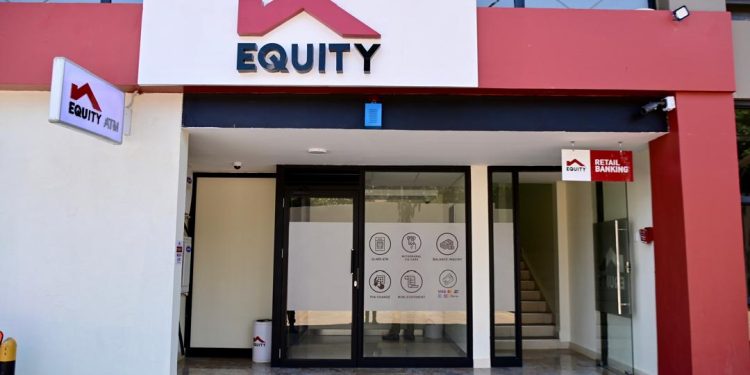
KAMPALA, Uganda — A recent High Court decision allowing Equity Bank Uganda to proceed with the recovery of more than Shs1.3 billion from Ratidu Trading Ltd has reinforced borrower accountability while setting stricter standards for delaying the enforcement of court judgments.
In a ruling delivered by Justice Susan Odongo, the court dismissed an application by Ratidu Trading and its director, Titi Kayondo Kabi, who had sought to halt execution of earlier court orders pending an appeal.
The decision gives the bank the green light to continue recovery proceedings and underscores a key legal principle: parties seeking to delay enforcement of judgments must meet strict procedural and evidential thresholds.
The case stems from a loan facility extended by Equity Bank to Ratidu Trading Ltd, which later defaulted, prompting the bank in 2023 to move to recover more than Shs1.3 billion.
Ratidu Trading contested the claim, maintaining that it was not indebted to the bank and arguing that it had already paid over Shs700 million toward the facility. However, the company failed to produce documentary evidence to support that position, leading the court to rule in favour of the bank.

Following that decision, Ratidu Trading sought a review of the judgment, asking the court to set it aside on grounds that its previous lawyers had been negligent and had failed to attach proof of payment. The company argued that this omission unfairly prejudiced its case and denied it a fair hearing.
However, the court rejected the argument, holding that the responsibility to present evidence ultimately lies with the litigants, not solely their legal counsel. It also noted that the alleged “new” evidence was already available to the applicants and therefore could not justify reopening the case.

After the review application was dismissed in August 2025, Ratidu Trading filed a notice of appeal to the Court of Appeal and returned to the High Court seeking a stay of execution to prevent Equity Bank from enforcing the judgment before the appeal could be heard.
The company warned that immediate execution would cause serious financial damage, including the possible collapse of the business and the forced sale of valuable properties. It further argued that its intended appeal had strong chances of success and expressed willingness to provide security as required by law.
Equity Bank opposed the application, arguing that it lacked legal foundation and was intended to delay lawful recovery. Through its lawyers, the bank maintained that the order sought to be stayed was a “negative order,” which cannot be stayed, and challenged the validity of the intended appeal.
Justice Odongo agreed with the bank’s position and dismissed the application, effectively allowing execution to proceed.
Legal observers say the ruling reaffirms that courts will not easily grant stay of execution orders simply because a losing party has filed or intends to file an appeal. Applicants must demonstrate actual substantial loss, a valid appeal process, and compliance with procedural requirements.
The judgment also highlights the risks businesses face when they fail to properly document loan repayments or rely on post-judgment arguments based on counsel negligence.
For lenders, particularly commercial banks managing non-performing loans, the decision strengthens confidence in judicial enforcement mechanisms and may reduce delays in recovering defaulted facilities.
For borrowers, it sends a strong warning that courts expect prompt and well-documented defence of claims rather than repeated attempts to reopen concluded matters.
The ruling comes at a time when financial institutions are tightening credit risk controls amid rising defaults in the business sector, particularly among trading firms facing liquidity constraints and high borrowing costs.
As commercial litigation involving loan recovery continues to rise, the dispute is likely to serve as an important judicial marker on where the balance lies between protecting borrowers’ rights and ensuring creditors can enforce legitimate claims without prolonged procedural delays.