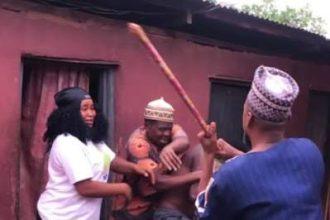
Instead of a celebration of culture, families in South Africa are mourning deaths related to traditional circumcision. The problem has not been circumcision itself, but rather the failure to regulate and control who is permitted to perform the procedure.
In the Bugisu region, the next circumcision season is about 200 days away, as the official timelines are usually August and December. This gives us an opportunity to draw lessons from what has happened in South Africa.
While listening to a British Broadcasting Corporation (BBC) programme that carried out an in-depth investigation into these botched circumcisions, the central issue that emerged was the failure to regulate and register traditional surgeons. This failure reportedly resulted in the deaths of 48 Imbalu candidates (bamukhwetha).

Recently, as a cultural institution, we cautioned all traditional surgeons in the Bugisu region to strictly adhere to all Imbalu regulations put in place by His Highness the Umukuka regarding safe male circumcision. Notable among these protocols is the requirement that surgeons undergo training in standard operating procedures and submit to formal registration.
The cultural institution intends to ensure that all trained traditional surgeons are awarded certificates. Those found not competent will be guided on the appropriate next steps.
Our cultural protocols do not permit individuals who are too old to circumcise to participate. Those with terminal illnesses such as epilepsy, as well as surgeons previously implicated in unacceptable practices such as the circumcision of corpses, are also strictly forbidden from taking part in Imbalu ceremonies.
The leadership of His Highness the Umukuka III is committed to ensuring that our culture is practiced in a safe and dignified environment. Accordingly, any traditional surgeon planning to participate in cultural activities must fully comply with the current protocols laid down by the cultural institution.
The South African situation is deeply saddening, but it offers invaluable lessons. Cultural institutions and communities that practice circumcision—such as the Bakonzo in Kasese and the Sabiny in Kapchorwa—must put in place strong regulations to avert similar calamities.
As the Bugisu Cultural Institution, we are working closely with the Ministry of Health, the Government of Uganda, and the AIDS Commission to ensure that both Imbalu candidates and traditional surgeons are tested for sexually transmitted infections before circumcision.
Whereas in South African culture “particularly among the Xhosa community in the Cape” Imbalu candidates recuperate on their own in remote mountainous areas, among the Bamasaaba people the initiates (bafulu) receive close care and attention, as this is a very delicate period.
In South Africa, when Imbalu candidates die during the circumcision period due to poor hygiene or lack of proper care in the mountains, only the stick and blanket of the deceased are returned home. This is an extremely painful experience, and such practices need serious review.
Among the Bamasaaba, the actual day of circumcision marks the climax of the celebration. In contrast, in South Africa, celebrations begin only after the candidates return home fully healed, often during a full moon or shortly thereafter.
As a culturalist, I appeal to the South African community ‘especially Xhosa parents” to ensure that bamukhwetha (initiates) are adequately protected during the circumcision period and not abandoned in remote areas.
The Bugisu Cultural Institution is in advanced discussions, through the Ministry of Gender, to offer cultural support to the Xhosa community in South Africa, one of the tribes that practices circumcision as a rite of passage into manhood.
The writer is the spokesperson of the Bugisu Cultural Institution.