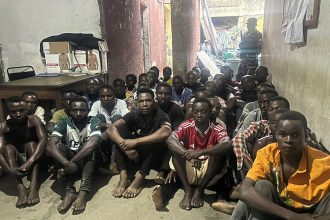
The Ugandan government has successfully evacuated at least 43 students who had been stranded in Iran following a sharp escalation of hostilities in the Middle East.
The students, who were studying at universities in Tehran, were transported by road to the Türkiye–Iran border and are currently under the care of Uganda’s Embassy in Ankara as arrangements for their return home are finalized.
Ministry of Foreign Affairs Permanent Secretary Vincent Bagiire confirmed the evacuation on Monday, describing it as a swift and coordinated response.
“We had around 43 students in universities in Tehran that the embassy quickly organized and transported by road to the Turkish-Iran border, where they were received by our mission in Ankara,” Bagiire said.
“These students are part of the Ugandan community that our embassy in Tehran has constantly been in touch with,” he added.

The security situation in Iran deteriorated sharply at the end of last week following reports of the killing of Iran’s Supreme Leader, Ali Khamenei, in missile strikes around Tehran attributed to Israel and the United States. The developments triggered fears of wider regional instability, prompting several countries to move quickly to secure their nationals.
Sources familiar with the operation said the evacuation process began on Saturday after Uganda’s embassy in Ankara received distress notifications from students seeking urgent assistance.

“Our embassy in Ankara received notifications on Saturday from students stranded in Iran who needed evacuation. The embassy had to act swiftly,” a source who preferred anonymity said.
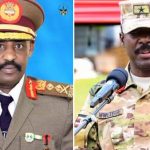
Following the alerts, Uganda’s Chief of Defence Forces, Gen Muhoozi Kainerugaba, together with officials from the Ministry of Defence and the Ministry of Foreign Affairs, drew up a rapid evacuation plan.
The strategy prioritized assembling the students in Tehran and transporting them out of the country before the situation worsened. Uganda’s Defence Adviser in Türkiye, Major General Bob Ogiki, was tasked with coordinating the ground operation.
“To ensure the success of the operation, Maj Gen Ogiki was assigned to coordinate the ground operation,” the source said.
Meanwhile, Uganda’s Embassy in Ankara worked to secure transit visas for the group to enable their legal entry into Türkiye. Within 24 hours, the students had travelled by bus to the border, where they were received by embassy officials and later transferred to the Ugandan Embassy in Ankara for temporary accommodation.
Bagiire said the government is now focused on repatriating the students to Uganda.
“We are hoping that by the end of the week, they will have arrived back home in Uganda,” he said.
Diplomatic sources indicated that verification efforts are ongoing to determine whether additional Ugandans remain in Iran and may require evacuation assistance.
Uganda maintains diplomatic missions in both Tehran and Ankara, a factor officials say enabled smooth coordination during the crisis. The longstanding engagement between the embassy in Tehran and the Ugandan community in Iran also made it easier to quickly account for students and initiate the evacuation.
Authorities say they remain on alert as tensions continue across the Middle East, ready to respond should further evacuations become necessary.