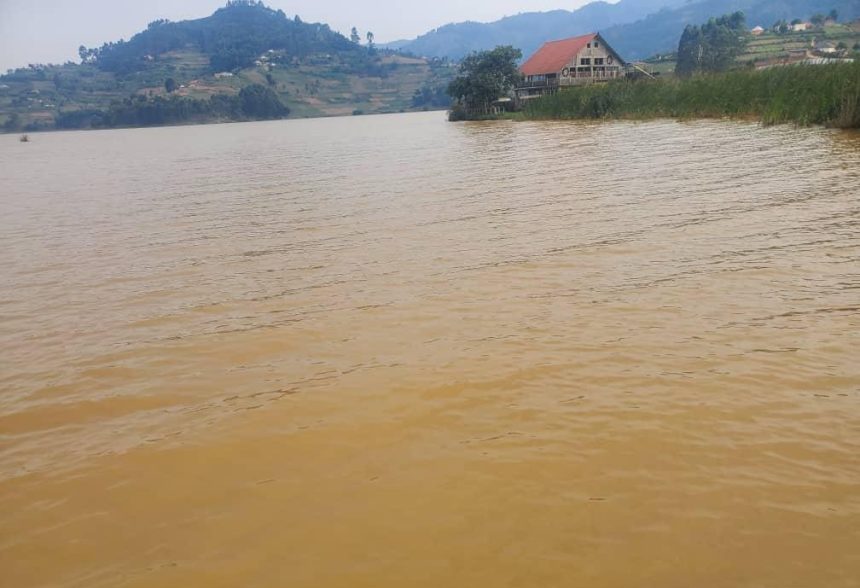
KABALE, UGANDA — The Ugandan government has finally responded to growing public concern over the deteriorating state of Lake Bunyonyi, whose waters have recently turned brown and foul-smelling, raising alarm among residents, environmentalists, and tourism stakeholders.
In a statement released on September 2, 2025, the Ministry of Water and Environment confirmed that both natural processes and human activities are threatening the lake’s fragile ecosystem.
A rapid assessment by the ministry revealed that the discoloration, typically seen briefly after heavy rainfall, has now persisted for more than three weeks, signaling a more serious environmental issue.
Residents who rely on the lake for domestic water use have begun turning to alternative sources, as the National Water and Sewerage Corporation (NWSC) struggles to treat the increasingly turbid water.

Situated in the Ruhezamyenda Catchment, straddling Kisoro and Rubanda districts, Lake Bunyonyi is a renowned natural treasure, famous for its 29 islands, terraced hills, and deep freshwater ecosystem. With an average depth of 39 metres and a reported maximum of 900 metres, the lake is a key tourism asset and ecological hub in southwestern Uganda.
The ministry’s findings cited multiple causes for the current situation. Heavy rainfall triggered lake turnover, a phenomenon where deeper, colder water mixes with surface layers, leading to increased turbidity. Agricultural runoff, stone quarrying, and iron ore mining have worsened siltation, while poor waste management, particularly at Harutindo Landing Site and at several of the 46 hotels around the lakeshore, has introduced pollutants, causing the discoloration, foul odor, oily film, and floating whitish cream observed on the lake’s surface.

Water quality tests revealed mean dissolved oxygen levels of only 1.60 mg/L, far below the minimum needed to support most fish species. This oxygen depletion has driven aquatic life to crowd the surface in search of breathable water. The ministry also dismissed public speculation about volcanic activity, stating that no tremors or seismic disturbances had been recorded in the area.
In response, the government announced a range of interventions. In the short term, it plans to review and enforce environmental regulations on businesses operating around the lake, launch public awareness campaigns, and upgrade NWSC’s capacity to treat the increasingly turbid water. Medium- and long-term measures, spanning up to five years, include enhancing catchment protection, promoting sustainable farming practices, and introducing alternative livelihoods to reduce pressure on the lake.
The government also intends to collaborate with local leaders to implement modern sanitation and waste management systems to prevent untreated discharge into the water.
Officials have urged all stakeholders to treat the crisis as a wake-up call, emphasizing the need to preserve Lake Bunyonyi’s ecological integrity and tourism potential. With swift and sustained action, authorities believe the lake can be restored for future generations to enjoy and benefit from.