Uganda’s 2026/27 Budget Speech signals a turning point in the country’s development model: mineral‑based industrialisation has moved from political rhetoric to an economic doctrine backed by numbers, infrastructure, and presidential resolve. For decades, Uganda’s mineral wealth lay dormant, trapped in cycles of raw export and foreign‑dominated extraction. Today, government policy is deliberately rewriting that history by positioning minerals as the backbone of a new industrial economy. The economics behind this shift are clear — minerals offer higher value, faster growth, and deeper structural transformation than any other sector currently available to Uganda.
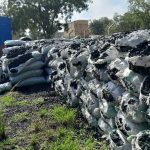
President Museveni has long argued that Uganda’s minerals must serve Uganda first. His stance is uncompromising: “We cannot continue exporting raw materials and importing finished products. That is economic slavery.” This philosophy is now embedded in the Budget Speech, which insists on domestic value addition as a prerequisite for mineral exploitation. The shift is not symbolic; it is structural. Uganda is moving from being a supplier of raw ore to becoming a manufacturer of steel, fertilisers, ceramics, batteries, and other mineral‑based products. This is the essence of mineral‑driven industrialisation — converting underground wealth into national wealth.The numbers in the budget speech reveal the scale of Uganda’s mineral potential and the seriousness of government investment. Geological surveys funded over the last five years have mapped over 300 million tonnes of iron ore, 560 million tonnes of limestone, over 50 million tonnes of phosphates, and commercially viable deposits of copper, wolfram, and rare earth elements. These figures place Uganda among the most mineral‑endowed countries in East Africa. The sector has attracted USD 1.2 billion in new investment commitments in just three years, a sign that the global market recognises Uganda’s emerging industrial capacity.
Industrial parks are the most visible evidence of this transformation. The Sukulu Phosphate and Steel Project in Tororo is already producing fertiliser and is expected to generate over 1,000 direct jobs once fully operational. The Mbarara Iron and Steel Industrial Zone is being expanded to host smelters, rolling mills, and fabrication plants. The government is also preparing the Buhweju and Kigezi mineral belts for regulated exploitation of wolfram and rare earths. These parks are strategically located near mineral deposits to reduce transport costs and attract investors. Museveni has repeatedly emphasised this logic: “Industries must follow raw materials. That is how you build efficient production.”
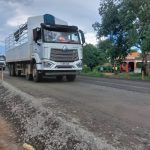
Infrastructure development is the second pillar of mineral‑based industrialisation. Minerals are heavy, bulky, and expensive to move. Without reliable transport and energy, value addition collapses. The budget outlines major investments: 400km of new transmission lines, upgrades to the Malaba–Kampala corridor, and accelerated work on the Standard Gauge Railway. These projects are not generic infrastructure; they are industrial arteries designed to move minerals from mines to factories and from factories to markets. Uganda currently generates 1,500MW of electricity, with plans to expand to 2,000MW by 2027, and industrial parks are being prioritised for stable supply. Tariffs for large manufacturers have been reduced to encourage mineral processing. The government understands that smelting, refining, and fabrication require uninterrupted power.
Regulation is another area where government has tightened its grip. The new licensing framework requires companies to demonstrate clear plans for local processing, environmental protection, and community benefit. This is a departure from the past, when licenses were issued liberally and oversight was weak. Today, the government is asserting control over the sector, ensuring that mineral wealth is not squandered or mismanaged. Museveni has been blunt on this point: “If you want to mine in Uganda, you must add value here. We shall not allow parasites.” This regulatory discipline is essential for building investor confidence and protecting national interests.

The budget speech also emphasises geological mapping and mineral quantification. Uganda cannot industrialise what it cannot measure. For years, mineral potential was discussed in vague terms. Now, the government is investing heavily in scientific mapping to determine exact quantities and commercial viability. This data‑driven approach is crucial for attracting serious investors and planning long‑term industrial strategy. Mineral‑based industrialisation requires precision, and Uganda is finally building the technical foundation to support it.Minerals are not an end in themselves; they are inputs for industries. Iron feeds steel. Steel feeds construction. Copper feeds electrical manufacturing.
Limestone feeds, cement, Phosphates feed fertiliser. The government’s strategy integrates minerals into broader manufacturing value chains. Tax incentives for value addition, public‑private partnerships in mineral processing, and targeted support for local manufacturers are all part of this ecosystem. The goal is not just to mine minerals but to build industries around them.Uganda is also positioning itself as a regional mineral processing hub.

Neighbouring countries such as South Sudan, Rwanda, and the DRC have abundant minerals but limited processing capacity. Uganda’s emerging industrial parks, improved infrastructure, and stable investment climate make it an attractive centre for regional mineral value chains. This regional integration could significantly boost exports and foreign exchange earnings.
Challenges remain
Environmental concerns, community displacement, and corruption risks must be addressed. Mineral wealth has historically been a source of conflict in many countries. Uganda must avoid these pitfalls by enforcing strict environmental standards, ensuring fair compensation for affected communities, and maintaining transparency in licensing and revenue management. The budget speech acknowledges these risks and commits to stronger oversight, but implementation will be the true test.Human capital is another critical factor. Minerals do not transform economies; people do. Uganda needs engineers, geologists, metallurgists, technicians, and industrial managers.
The government’s investment in technical education, vocational training, and STEM programmes is therefore essential. Without skilled labour, mineral‑based industries will rely heavily on foreign expertise, limiting local benefit. Ultimately, Uganda’s mineral‑based industrialisation strategy is a bold attempt to rewrite the country’s economic destiny. For decades, Uganda relied on agriculture as its economic backbone.
While agriculture remains vital, minerals offer a new frontier — one that can generate higher value, faster growth, and deeper structural transformation. The 2026/27 Budget Speech presents mineral‑based industrialisation not as an isolated initiative but as part of a broader economic vision anchored in infrastructure expansion, regulatory reform, and regional integration.
If implemented effectively, mineral‑based industrialisation could be the catalyst that propels Uganda into a new era of economic strength.
The Author is The Deputy RCC For Nakawa Division.