In 2025, Uganda took a decisive leap toward economic transformation with the commissioning of two landmark projects in the Bukedi sub-region: the Wagagai Gold Refinery in Busia and the launch of the Standard Gauge Railway (SGR) construction in Busia and Tororo.
These twin developments—one rooted in mineral value addition, the other in transport infrastructure—are poised to reshape the economic landscape of Bukedi and ripple across the national economy. Their convergence in time and geography is no coincidence; it reflects a deliberate strategy to unlock the region’s latent potential and position Uganda as a competitive player in the East African industrial corridor.
The Wagagai Gold Refinery, commissioned by President Yoweri Museveni on August 16, 2025, is Uganda’s largest and most technologically advanced gold processing facility. Located in Alupe village, Busia Municipality, the $150 million investment by Wagagai Mining (U) Limited sits atop a deposit that accounts for over 25 million tonnes of gold ore—nearly 80% of Uganda’s total reserves.
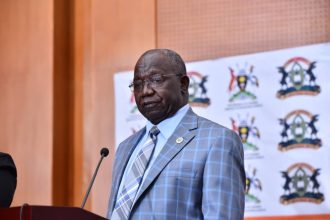
According to the Ministry of Energy and Mineral Development, the refinery is capable of refining gold to 99.99% purity and producing up to 1.5 tonnes annually. This marks a significant departure from Uganda’s historical reliance on exporting raw minerals, a practice that President Museveni has repeatedly criticized as “cheating Uganda.” During the commissioning, he remarked, “For decades, we exported blister copper and other unprocessed minerals. That cycle was a loss to the country. When you export unprocessed minerals, you are cheating Uganda. I want to thank Wagagai for listening to my message from the beginning and fully processing the gold. Uganda will get more money”.
The economic implications of this shift are profound. The refinery is expected to generate over $100 million annually for the next 21 years, contributing significantly to Uganda’s GDP and tax revenues. More importantly, it will create over 5,000 direct jobs, with the first phase already employing 2,000 Ugandans in skilled and semi-skilled roles. Ruth Nankabirwa, Minister of Energy and Mineral Development, emphasized that the project aligns with Uganda’s fourth National Development Plan (NDPIV), which aims to grow the economy to $500 billion by 2040. “This project reflects our commitment to local value addition and job creation. It is a model for how Uganda can harness its mineral wealth responsibly,” she stated.

The refinery’s impact extends beyond employment and revenue. It is a catalyst for industrialization, providing refined gold for use in electronics, jewelry, and precision manufacturing. The General Manager of Wagagai, Tan Jiuchang, noted that the company plans to invest an additional $100 million in expanding the facility, including establishing a gold-based industrial park. “We are not just refining gold; we are laying the foundation for a broader industrial ecosystem,” he said. This vision resonates with President Museveni’s call to use mineral revenues to build “permanent and most durable assets,” such as power stations and transport infrastructure.
Which brings us to the second pillar of transformation: the Standard Gauge Railway. Officially launched on November 21, 2024, the SGR project represents Uganda’s most ambitious transport infrastructure undertaking in decades. The first phase, spanning approximately 272 to 332 kilometers from Malaba to Kampala via Busia and Tororo, is being constructed by Turkish firm Yapı Merkezi under a €2.7 billion contract. The railway is designed to carry up to 25 million tons of cargo annually, with cargo trains reaching speeds of 100 km/h and passenger trains up to 120 km/h. The Ugandan government has allocated Shs2.175 trillion ($595.5 million) in the 2025/2026 national budget to support the project, signaling strong political and financial commitment.

The SGR’s development is expected to generate thousands of jobs across 12 districts, particularly during the construction phase, which includes land acquisition, environmental assessments, and civil works. Beyond direct employment, the railway will reduce transport costs and transit times, cutting cargo delivery from Mombasa to Kampala from five days to under 24 hours. This efficiency is projected to reduce freight costs by up to 40%, enhancing Uganda’s competitiveness in regional trade. Currently, over 93% of Uganda’s cargo is transported by road, a statistic that has strained infrastructure and inflated logistics costs. The SGR will alleviate this pressure and open new avenues for industrial growth.
Tororo and Busia, long considered peripheral in Uganda’s development narrative, are now emerging as strategic nodes in the East African transport and trade network. The railway will connect Uganda to Kenya, Rwanda, South Sudan, and the Democratic Republic of Congo, positioning Bukedi as a gateway for regional commerce. Gen. Edward Katumba Wamala, Minister of Works and Transport, underscored this vision in the SGR Strategic Plan: “Transport development is at the forefront of our economic growth strategy. The SGR will reduce transportation costs, attract investment, and open up new production areas. It is a cornerstone of our Vision 2040”.
The synergy between the Wagagai refinery and the SGR is particularly potent. Refined gold and other mineral products can now be transported efficiently to regional and international markets, enhancing Uganda’s export capacity. Conversely, the railway will facilitate the import of machinery, technology, and inputs needed for further industrialization. This virtuous cycle of production and transport is expected to attract foreign direct investment, especially in agro-processing, manufacturing, and logistics.
For the people of Bukedi, these projects offer more than economic statistics—they represent hope and opportunity. Youth unemployment in the region has long been a challenge, with limited access to formal jobs and vocational training. The refinery and railway projects are already providing training programs in mining, engineering, and logistics, equipping young Ugandans with skills that are transferable and future-proof. Local leaders have hailed the developments as a turning point. Busia Municipality Mayor, Geoffrey Wanyama, stated, “For years, we have been sidelined in national development. These projects are not just infrastructure—they are instruments of empowerment.”
The ripple effects are also being felt in urbanization and service delivery. Increased economic activity is driving demand for housing, healthcare, education, and retail services in Busia and Tororo. Real estate developers are reporting a surge in land purchases, while banks and microfinance institutions are expanding their footprint to support small businesses. The Uganda Investment Authority has identified Busia as a priority zone for industrial parks, citing its proximity to the refinery and railway as key advantages.
Politically, the twin projects may serve as a powerful narrative for government-led development, especially as Uganda approaches the 2026 elections. The visible transformation of Bukedi could bolster public confidence in the National Resistance Movement’s economic agenda and provide a platform for mobilizing support. President Museveni has repeatedly emphasized that mineral wealth must be used to build lasting assets and empower citizens. “This mineral money must give us permanent and most durable assets. We must wake up in the minerals sector. Full value addition creates more jobs, consumes more electricity, and gives us more money,” he declared during the Wagagai commissioning.
In sum, the Wagagai Gold Refinery and the Standard Gauge Railway are not isolated projects—they are interlinked engines of transformation. Together, they embody a strategic vision for Bukedi and Uganda: one that leverages natural resources, modern infrastructure, and human capital to drive inclusive growth. Their success will depend not only on technical execution but also on sustained political will, community engagement, and transparent governance. If managed well, these twin pillars could elevate Bukedi from the margins to the mainstream of Uganda’s development story, setting a precedent for how infrastructure and industry can work hand in hand to build a resilient and prosperous nation.
The writer is the Deputy Resident City Commissioner for Nakawa Division in Kampala.