Israeli Prime Minister Benjamin Netanyahu has said Israel will continue its military operations against Iran, emphasising that the decision on when the war ends rests with Israel, not the United States.
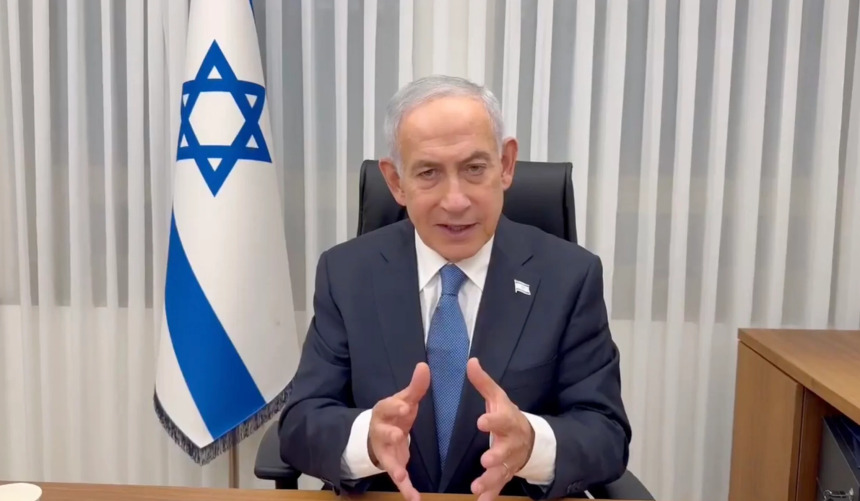
Speaking in a video message posted on X, Netanyahu indicated that Israel would press on with its offensive while diplomatic efforts continue.
His remarks came shortly after U.S. President Donald Trump announced that the United States had held what he described as “productive conversations” with Iran regarding a potential end to hostilities. Trump also revealed that he had temporarily halted plans to strike Iran’s power infrastructure, which had been scheduled to begin if Tehran failed to meet U.S. demands, including reopening the Strait of Hormuz.
In his statement, Netanyahu said he had spoken with Trump and acknowledged the cooperation between Israeli and U.S. forces, noting that there may be an opportunity to achieve war objectives through a negotiated agreement that protects Israel’s strategic interests.
מוקדם יותר היום שוחחתי עם ידידנו הנשיא טראמפ.
הנשיא טראמפ מאמין שיש סיכוי למנף את ההישגים הכבירים שהשגנו עם צבא ארה"ב, כדי לממש את יעדי המלחמה בהסכם – הסכם שישמור על האינטרסים החיוניים שלנו.
במקביל, אנחנו ממשיכים לתקוף גם באיראן וגם בלבנון. אנחנו כותשים את תוכנית הטילים… pic.twitter.com/EHG9geofkl
— Benjamin Netanyahu – בנימין נתניהו (@netanyahu) March 23, 2026

However, he made it clear that military operations would continue in the meantime.
“We are striking the missile programme and the nuclear programme, and we will continue to deal severe blows to Hezbollah,” Netanyahu said, adding that operations would also extend to targets linked to the group in Lebanon.

Netanyahu’s comments followed earlier warnings from Trump, who had given Iran a 48-hour ultimatum to reopen the Strait of Hormuz or face targeted strikes on its power facilities.
The developments come amid escalating tensions in the region. Over the weekend, Iran launched a missile strike on Israel that reportedly injured 180 people in the town of Arad, marking one of the most significant attacks in recent weeks.
Meanwhile, global oil markets have reacted sharply to the conflict. Prices surged from $67.02 per barrel before the outbreak of hostilities in late February to nearly $98 last week. However, following Trump’s announcement of a pause in planned strikes, prices eased to around $88.95 per barrel.
Despite the reported diplomatic engagement, Iranian state-linked media denied that any direct talks with the United States had taken place.