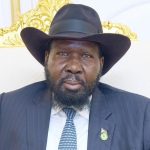
(Juba) – When it comes to pushing deadlines, South Sudan seems to be setting new records. President Salva Kiir Mayardit and his administration made the grand announcement on Friday that the long awaited national election will, unfortunately, have to wait a little longer—two years longer, to be exact. That means the December 2024 election date has officially been postponed to December 22, 2026. And while most nations might raise an eyebrow at the news, South Sudanese citizens, weary from years of civil strife and political gridlock, are likely shrugging their shoulders, as if to say, Aiyaiyai, another one?
This is not the first time South Sudan has hit the brakes on a major political event. This time, the postponement comes with the justification of protecting the fragile peace process. Peace agreements in South Sudan can be as shaky as a korojo shelter during rainy season – sometimes standing strong, but often needing patching up after every storm.
South Sudan’s current transitional government, led by President Kiir and his civil war nemesis turned co-partner, First Vice President Riek Machar, has been at the helm since the 2018 peace deal. Kiir and Machar share a partnership that can be best described as two bulls tethered together under the same tree – each one eyeing the green pasture but knowing they can not wander too far without pulling the other back. The electoral process, scheduled for 2024, was supposed to signal an end to this power sharing arrangement. That is now on hold, much like trying to plan a wedding during the dry season, only for a sudden flood to wash away your tent.
Since 2018, South Sudan has been “at peace” if by peace we mean a series of uneasy truces punctuated by bursts of violence in different parts of the country, then sure – things have been “quiet.” But those living in cattle camps and across rival communities will tell you that the violence never truly stopped. The peace is more like a jieng ox—sometimes it appears calm and steady, but every once in a while, it kicks and causes mayhem.
The new December 2026 date has been set, but many South Sudanese will recall the many previous attempts to get this election machine moving. You would think with so many delays, they would eventually get a timetable as smooth as a Juba tea seller’s transactions, but apparently not.

So why the delay? According to the presidency’s office, it is a matter of stabilizing the peace process. Some skeptics might say it is just another two years for the current transitional government to figure out how to coexist without starting another civil war. After all, peace in South Sudan is like a tukul (hut) during the windy season—everybody knows it needs maintenance, but getting around to it is another story.
Kiir’s office, in a brief Facebook post, casually mentioned the extension as though it were simply rescheduling a neighborhood wrestling match. But this is not the first, second, or even third time South Sudan has faced delays on such matters. In fact, if we are being honest, the political calendar might need a full overhaul. Maybe they should just get used to the idea of “elections postponed” as a regular fixture of the political scene, like wrestling matches or cattle raids that are expected but often delayed for one reason or another.

Table: Timeline of Delays in South Sudan’s Elections
| Year | Event | Initial Plan | New Date | Reason for Delay |
|---|---|---|---|---|
| 2011 | Independence referendum | January 2011 | On time | Nationhood achieved |
| 2015 | First national election | July 2015 | Postponed | Civil war between Kiir and Machar |
| 2018 | Peace deal | April 2018 | N/A | Peace agreement signed |
| 2020 | Planned elections | 2020 | Postponed to 2024 | Ongoing conflict, transitional government |
| 2024 | National elections scheduled | December 2024 | Postponed to 2026 | Extension of the transitional period |
As the table suggests, South Sudan’s political journey has been a winding road, more like trying to navigate the Sudd wetlands than walking down a well paved street in Juba. Perhaps, by the time December 2026 rolls around, the country’s politicians will have found a way to work together, not like a bull and lion forced to share a kraal, but like a herd of cattle, finally moving in the same direction. Or maybe, we’ll just hit the snooze button again.