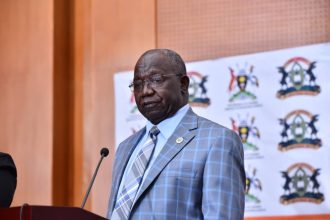

Kampala Uganda — President Yoweri Kaguta Museveni has called on all Ugandans living abroad to formally register with government-linked structures, emphasizing the need to identify citizens “name by name, country by country” to facilitate better national planning.
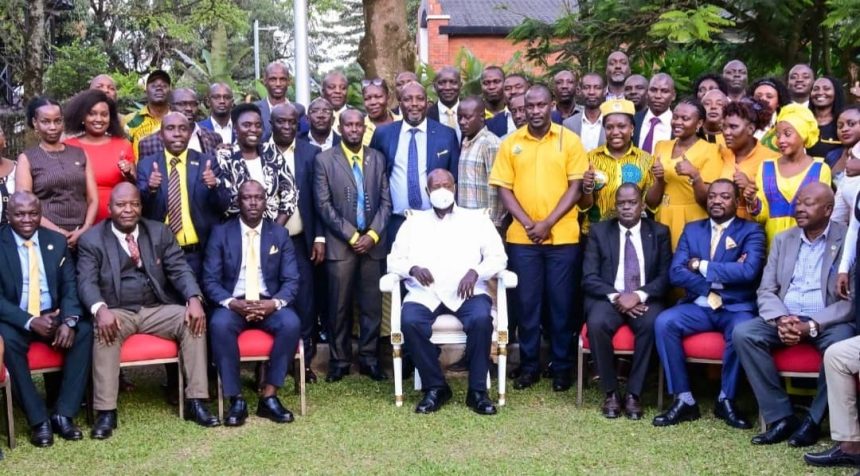
Addressing a delegation of NRM Diaspora members representing over 20 countries—including the USA, Canada, China, UK, Scotland, Australia, New Zealand, Germany, Netherlands, Thailand, Kenya, Tanzania, Turkey, Wales, UAE, Qatar, South Africa, Egypt, Sudan, and South Sudan—Museveni stressed the inclusivity of the registration process.
“We need to know all the diaspora, whether they are NRM or not,” the President declared. “Then the NRM people will elect their own leadership, and even other larger diaspora groups, if they wish, can establish their own structures, regardless of their political affiliations.”
Held at Nakasero State Lodge, the meeting received enthusiastic support from representatives across various countries for a comprehensive diaspora registration. Museveni highlighted the importance of conducting a census within NRM diaspora branches similar to the recent national update of the NRM members’ register, to establish accurate and meaningful membership data.
To lead this initiative, he appointed Maj. (Rtd) Awich Pollar, Director for External Affairs at the NRM Secretariat—representing Rt. Hon. Richard Todwong—alongside Ambassador Abbey Walusimbi, Senior Presidential Advisor on Diaspora Affairs. These two officials have been tasked with collaboratively coordinating registration efforts across broader diaspora communities.

On political inclusion, Museveni noted, “Regarding the representation of the Diaspora on the NRM CEC, this would be a very positive step that would enable them to contribute to discourse and strategic decision-making at the highest level in the party.”
He further explained their respective roles: Maj. (Rtd) Awich Pollar will manage NRM diaspora issues within the party secretariat, while Ambassador Walusimbi will coordinate diaspora affairs more broadly, irrespective of political alignment. Meanwhile, Mr. Mohammed Bagonza, Head of the State House Diaspora Unit, was assigned the critical role of strengthening connections between Ugandans abroad and their homeland.

To deepen diaspora engagement in Uganda’s national development, President Museveni pledged a strategic position within the Uganda Investment Authority. “Therefore, for the investments, I will appoint one of you once you recommend him or her as a deputy director of the Uganda Investment Authority. So when you come, you go directly to that person without going through others.”
Ambassador Johnny Muhindo, Head of Diaspora Affairs Department in the Ministry of Foreign Affairs, revealed that there are ongoing interagency coordination efforts between the Ministry, State House, and President’s Office. These consultations with Ugandans overseas aim to formulate a diaspora policy, which may be launched by December 2025.
Museveni called on the diaspora community to mobilize resources for foreign direct investment, combat malicious propaganda, and build upon the foundations laid to safeguard and advance Uganda’s achievements. This initiative marks a new chapter in Uganda’s relationship with its diaspora, ensuring that citizens abroad are formally recognized, empowered, and closely connected to the country’s investment and development agenda.