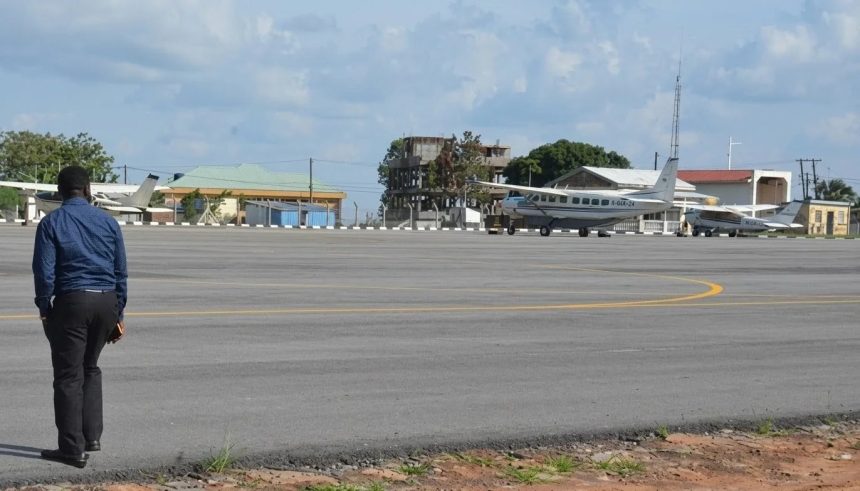
The Uganda Civil Aviation Authority (UCAA) is preparing to launch one of the country’s most transformative aviation projects following the African Development Bank Group’s approval of €155.99 million to upgrade Arua Airport.
The financing marks a major step toward modernizing regional air transport and strengthening Uganda’s position as a growing hub for trade, tourism, and cross‑border connectivity.
UCAA, operating under the Ministry of Works and Transport, will oversee the implementation of Phase 1 of the Uganda Airports Development Programme, which aims to elevate Arua Airport to international standards.
Located approximately 450 kilometres from Kampala, Arua serves as the principal gateway to the West Nile region and neighbouring markets in South Sudan and the Democratic Republic of Congo. Despite its strategic importance, the region has long suffered from limited aviation infrastructure, restricting its economic potential.
The newly approved financing will enable UCAA to undertake a comprehensive upgrade of the airport’s facilities. Central to the project is the construction of a 3.5‑kilometre paved runway, capable of accommodating wide‑body aircraft such as the Boeing 777.

The programme will also include new taxiways, expanded aprons, and a modern passenger terminal designed to handle up to 700,000 travellers annually.
In addition, a dedicated cargo terminal with a capacity of 25,000 tonnes per year will be constructed to support regional trade and agricultural exports.

UCAA will also oversee the installation of a new control tower, improved access roads, expanded parking areas, and state‑of‑the‑art safety and navigation systems. These upgrades are intended to enhance operational efficiency, strengthen safety compliance, and ensure the airport’s resilience to climate‑related challenges.
Of the total programme cost of €157.76 million, the African Development Bank Group will provide the bulk of the financing. This includes an African Development Bank loan of €141.15 million and an additional €14.84 million from the African Development Fund, the Bank’s concessional lending arm. The Government of Uganda will contribute €1.77 million in‑kind, mainly through land and administrative support.
The Bank Group’s Director for Infrastructure and Urban Development, Mike Salawou, emphasized the broader significance of the project, noting that the airport upgrade is not merely an infrastructure investment but a catalyst for economic transformation.
“This project is about more than an airport. It is about connecting people to opportunity, opening new markets for businesses, supporting tourism, and strengthening Uganda’s role as a regional trade and logistics hub,” he said.
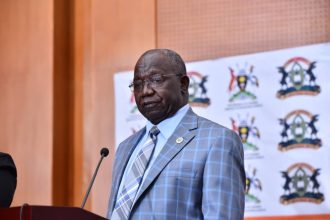
UCAA Director General Fred Bamwesigye welcomed the financing as a major milestone for the Authority and the country. He described the Arua Airport upgrade as a “significant development for Uganda,” one that will reinforce national aviation infrastructure and expand regional connectivity.
Bamwesigye highlighted that Arua is currently the second‑busiest airport in Uganda after Entebbe International Airport, underscoring its potential for growth and its importance as an alternative airport during emergencies. He added that UCAA is “highly grateful to the African Development Bank for its invaluable partnership and support in this transformative project,” noting that the upgraded airport will stimulate social and economic development across the West Nile region.
Arua and the surrounding districts are endowed with mineral resources, fertile agricultural land, cultural heritage sites, and emerging tourism attractions. The region’s proximity to international borders makes it a natural hub for trade, logistics, and regional integration. Improved air access will enable farmers and businesses to transport perishable goods to regional and international markets more efficiently and at lower cost.
The upgraded airport will also enhance access to tourist destinations in northwestern Uganda. More than 500,000 residents of Arua City and Arua District are expected to benefit directly from the airport upgrade, while the wider West Nile region—home to over 3.3 million people—will gain from improved transport, investment, and employment opportunities.
The programme is projected to create about 500 direct jobs during the construction phase and more than 1,400 indirect jobs in sectors such as tourism, agriculture, and trade. UCAA will also facilitate skills development for at least 100 young people, including women, in engineering, construction, and equipment operation.
The initiative aligns with the African Development Bank’s Ten‑Year Strategy 2024–2033 and Uganda’s Country Strategy Paper 2022–2026, both of which prioritize sustainable, high‑quality infrastructure to enhance market access and competitiveness. With financing secured and implementation preparations underway, UCAA is now positioned to begin the next phase of transforming Arua Airport into a modern aviation gateway that will drive regional growth for decades to come.