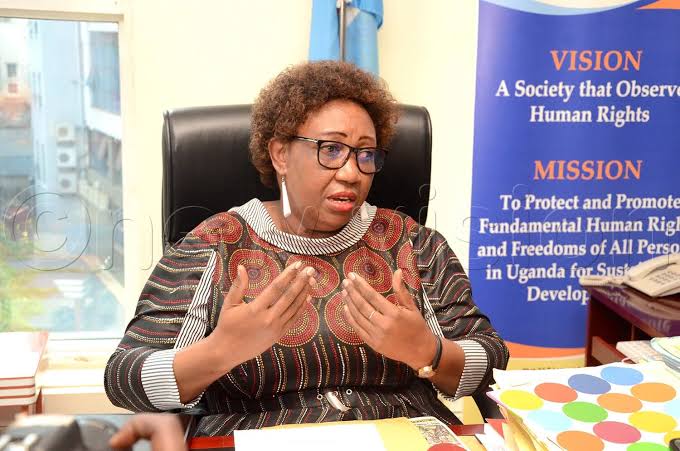

Mariam Wangadya, Chairperson of the Uganda Human Rights Commission (UHRC), has recently been targeted by a smear campaign designed to damage her reputation. This attack, mostly spread by certain media outlets, coincides with a highly competitive race for the position of Deputy Chief Justice (DCJ) of Uganda. The position became vacant when Dr. Flavian Zeija was elevated to Chief Justice, and now, political forces are at play to determine who will succeed him. While Wangadya has not publicly expressed interest in the role, sources suggest that she, along with others like Justice Musa Ssekaana, is being considered for the position. Her growing prominence in the race has made her a target for those who wish to block her path to power.
The process of selecting the new Deputy Chief Justice has sparked political maneuvering, with various factions lobbying for their preferred candidates. Among these groups, Muslim leaders from the Uganda Muslim Supreme Council and the Kibuli-based Supreme Mufti leadership have been advocating for the appointment of a Muslim lawyer. However, President Yoweri Museveni has reportedly emphasized that the candidate for the role must be someone with a proven track record of integrity and no ties to corruption. This has made the search for a suitable candidate more difficult, as many judicial officers have been implicated in corruption-related reports.
Wangadya, known for her strong stance on anti-corruption and her leadership of the UHRC, is seen as a prominent figure in this race. However, her success and effectiveness in fighting corruption have also made her the subject of smear tactics. Recently, a whistleblower’s report accusing her of corruption was circulated. The report was filed with the IGG’s office, the State House Anti-Corruption Unit, and the Police Criminal Investigation Department. While no formal investigation has been completed, the smear campaign has gained significant attention.
Why Is Mariam Wangadya Being Targeted?
Mariam Wangadya’s qualifications make her a top contender for the Deputy Chief Justice role. As the Chairperson of the Uganda Human Rights Commission, she has overseen a dramatic improvement in the speed and efficiency of the commission’s work. On average, she delivers 20 decisions in just two days—far more than the Court of Appeal justices, who are expected to deliver the same number in four months. Her work ethic and ability to produce results have earned her respect in Uganda’s legal community.
In addition to her efficiency, Wangadya’s leadership qualities have positioned her as a strong candidate in a race that President Museveni is reportedly keen to see a woman win. Past female Deputy Chief Justices, such as Justice Alice Mpagi Bahegeine and Justice Constance Btamugisha, have left a strong legacy. Their tenures were marked by a steady strengthening of Uganda’s appellate courts and global recognition. Critics argue that appointing a female leader could restore balance within the judiciary, especially after a period of strained relations between the Bar and the Bench under male leadership.
Despite her qualifications, Wangadya has made enemies, particularly due to her role in exposing corruption within Parliament. Her investigation into the budget-making process helped uncover numerous corrupt practices, leading to the arrest of several MPs, including Lwengo District Woman MP Cissy Namujju and Paul Akampa. Although the charges were eventually dropped, the incident tarnished the government’s image on corruption and may have prompted the attacks on Wangadya.

The Political Nature of the Smear Campaign
The smear campaign against Wangadya is part of a broader political struggle for the Deputy Chief Justice position. As her name has risen in the list of potential candidates, political factions have launched an effort to discredit her. The whistleblower report alleging corruption is one such example of how these factions are trying to weaken her standing. The fact that the report was circulated without a formal investigation further suggests the political motivations behind these smear tactics.
Justice Musa Ssekaana, another key figure in the race for the DCJ role, has also faced similar attacks. Ssekaana, once seen as a potential candidate for Chief Justice, has been criticized for various reasons, including accusations of bias in handling a case involving Juma Zukuli. His decision to imprison Sheikh Khalifa Lutaaya and Sheikh Hassan Kinene for contempt of court further fueled discontent. Critics also accuse him of being intolerant of social media criticism and of personalizing issues during court hearings.
The Path to the Deputy Chief Justice Appointment
The Deputy Chief Justice position is one of the most important in Uganda’s judiciary. Historically, President Museveni has appointed Deputy Chief Justices from the Court of Appeal, including figures like Justice Geoffrey Kiryabwire, Justice Barishaki Cheborion, and Justice Egonda-Ntende. To qualify for the position, candidates must have a law degree and must have served as judges in the Court of Appeal, Supreme Court, or High Court, or have practiced law for at least 15 years.
Sources close to President Museveni indicate that he is eager to make the appointment soon to avoid any leadership vacuum in the judiciary. The president has also set a deadline for local village leadership elections to be completed by May 2026, signaling his desire to make quick and decisive decisions.
As the race for the Deputy Chief Justice continues, the smear campaigns targeting both Wangadya and Ssekaana are likely to escalate. These attacks reflect the ongoing political and judicial struggles within Uganda’s leadership. The outcome of this contest will have lasting effects on the direction of Uganda’s judiciary, and both Wangadya and Ssekaana are likely to play pivotal roles in shaping the future of the legal system in Uganda.